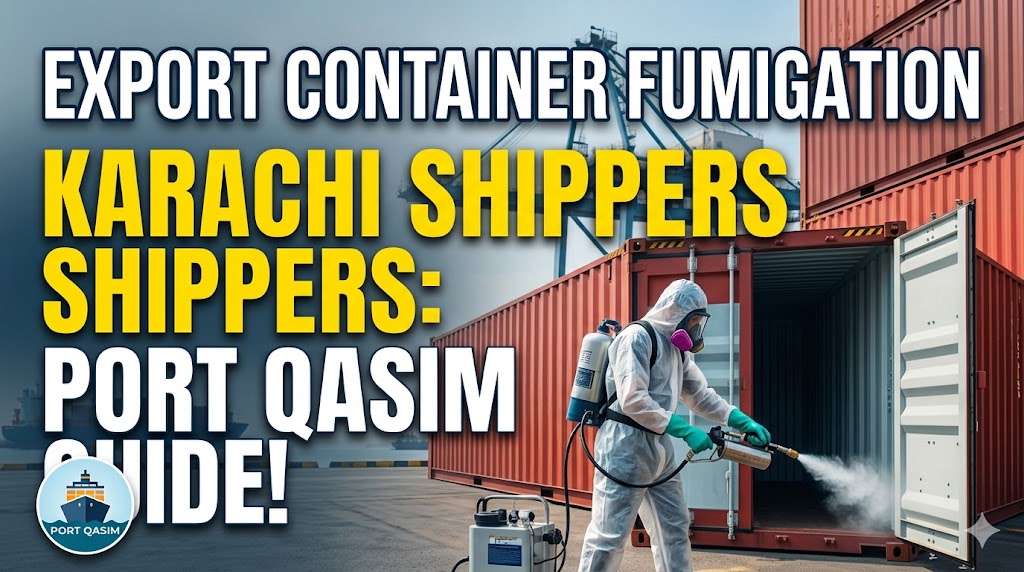
Export container fumigation in Karachi is required only when the importing country or the commodity demands it. When it does, the treatment must match the destination’s conditions, be carried out by a qualified provider, and be recorded on paperwork that the Department of Plant Protection (DPP) endorses. Get any of those wrong and the cargo can be delayed, re-treated, re-exported or destroyed, even if the gas itself did its job.
This guide is for shippers, freight forwarders and export managers working through Port Qasim and Karachi Port. It covers when fumigation is required, which fumigant fits, how the process and timing work, and what to do if a shipment is rejected.
When Is Container Fumigation Required for Export?
Fumigation is not universally mandatory. It depends on what you ship and the importing country’s phytosanitary conditions, so get those conditions from your buyer or forwarder in writing before you book. Common triggers:
- Plants and plant products such as grains, pulses, rice, spices and dried fruit often need a phytosanitary certificate, and many destinations also require a documented treatment such as fumigation
- Wood packaging (pallets, crates, dunnage, wooden spools) must be treated and marked under ISPM 15, the international standard for wood packaging. Approved treatments are heat treatment (including dielectric heating), methyl bromide fumigation and sulfuryl fluoride fumigation. Phosphine is not an ISPM 15 treatment
- Strict-biosecurity destinations such as Australia and New Zealand, which inspect closely and publish their own treatment specifications
- Any shipment where the importer’s permit, letter of credit or regulator specifically asks for treatment or phytosanitary certification
Methyl Bromide, Phosphine or Sulfuryl Fluoride: Which Fumigant Applies?
The importing country’s conditions decide the fumigant, not the fumigator’s preference. Your forwarder or the destination’s import conditions will name the acceptable one.
| Fumigant | Typical use | Exposure | Points to know |
|---|---|---|---|
| Phosphine (aluminium phosphide tablets or generated gas) | Grains, pulses and other stored products | Several days, set by destination and temperature | Needs a gas-tight sealed container; not an ISPM 15 treatment for wood packaging |
| Methyl bromide | Quarantine and pre-shipment uses; ISPM 15 wood packaging | About a day, often 24+ hours as specified | Ozone-depleting, so restricted and not accepted everywhere |
| Sulfuryl fluoride | ISPM 15 wood packaging | About a day, per destination specification | Approved ISPM 15 alternative to methyl bromide |
Whatever is applied must be recorded accurately in the treatment documentation. A mismatch between the paperwork and the actual treatment can get a consignment rejected.
The Phytosanitary Certificate: What It Is and Who Issues It
A phytosanitary certificate confirms that a consignment has been inspected and meets the importing country’s phytosanitary requirements. In Pakistan it is issued by the Department of Plant Protection, which sits under the Ministry of National Food Security and Research, is headquartered at Malir Halt in Karachi, and works under the Plant Quarantine Rules 2019.
Where a treatment is required, a qualified fumigation provider carries it out and issues the treatment documentation that goes to DPP with your application. DPP’s own guidance stresses qualified personnel for container fumigation, so confirm with DPP or your forwarder that your provider is acceptable for your commodity and destination before booking. A treatment DPP will not accept leaves the shipment without its certificate.
You can check our credentials on our pest control license page. For what to ask any provider, see five questions to ask before hiring a fumigation company in Karachi and how registered and unregistered pest control companies differ.
The Container Fumigation Process Step by Step
- Loading: the container is loaded with cargo. Wooden pallets must carry an ISPM 15 mark from an authorised treatment provider, or they need treatment too.
- Application: the team seals the container, introduces the fumigant, places gas-concentration monitoring points, and fixes warning labels and seals.
- Exposure: the container stays sealed for the period the fumigant and destination require. This has to fit before the vessel’s cut-off.
- Aeration: the container is opened in a controlled area, and gas readings are confirmed safe before handlers approach.
- Documentation: the provider issues the treatment certificate, which is submitted to DPP for the phytosanitary certificate.
How Early Should You Book Before the Port Cut-Off?
This is where many shippers get caught. Exposure time is non-negotiable, and cutting it short produces a treatment that does not meet the specification. If your cut-off is in 36 hours and your destination calls for several days of phosphine exposure, that vessel is already out of reach.
Our recommendation: book phosphine fumigation at least a week before cut-off. For methyl bromide or sulfuryl fluoride, allow a few days. In both cases, check DPP’s availability for certificate endorsement that same week. Port and terminal delays can squeeze your window, so build fumigation into the schedule when the order is confirmed, not as a last-minute check.
Shippers in the Korangi and Landhi industrial zones should still allow the full lead time, because proximity to the port does not shorten exposure. If you dispatch regularly, see why Korangi and Landhi industrial units need fumigation contracts. For stock held before shipping, read about warehouse and godown fumigation in Karachi.
What to Do When a Shipment Is Rejected at the Destination Port
If cargo is flagged for pest or phytosanitary non-compliance, you typically face three options: treatment at the destination (costly and run by their providers), re-export (often impractical), or destruction. Who pays depends on your sale terms, so confirm that with your buyer and forwarder before shipping.
Rejections commonly trace back to a treatment that did not meet the specification, the wrong fumigant for the destination, insufficient exposure, or paperwork that does not match what was applied. To avoid them, use a qualified provider acceptable to DPP, get the fumigant and dose for your destination in writing, allow the full exposure, and confirm the phytosanitary certificate is endorsed before the container is loaded.
Frequently Asked Questions
Can wooden pallets be treated with phosphine for ISPM 15?
No. The approved ISPM 15 treatments are heat treatment (including dielectric heating), methyl bromide and sulfuryl fluoride. Phosphine may be fine for the cargo itself, but it will not make wood packaging compliant.
If my pallets already carry the ISPM 15 mark, does the container still need fumigation?
The mark covers the wood packaging only. Your cargo and the importing country’s conditions may still call for a separate treatment and a phytosanitary certificate, so check the import conditions for your commodity.
Who pays if a fumigated shipment is rejected?
It depends on your contract and sale terms, which decide who carries the risk at each stage. Clarify this with your buyer and forwarder before the shipment leaves, not after it is flagged.
Can the container be treated at the destination instead?
Some importing countries allow treatment on arrival, but it usually costs more and uses their providers on their timeline. Check the destination’s import conditions before relying on it.
Book Export Container Fumigation in Karachi
For export container fumigation at Port Qasim or Karachi Port, contact us through our booking page. We carry out the treatment and issue the fumigation documentation you submit to DPP. Review commercial fumigation rates on our charges page and confirm our credentials on our pest control license page.

Rehan Khan is the founder of Accurate Fumigation and an entomologist. He holds an M.Sc. in Entomology and a B.Sc. in Environmental Science, and has worked in pest control in Karachi for three decades. He founded the company in 2005 and writes about the pest and water problems the city deals with each season. Accurate Fumigation is ISO 9001:2015 certified and a member of the National Pest Management Association.
Questions about a service, or need a certificate for an inspection? Call the office on 0330-2533480. Read Rehan’s full profile.