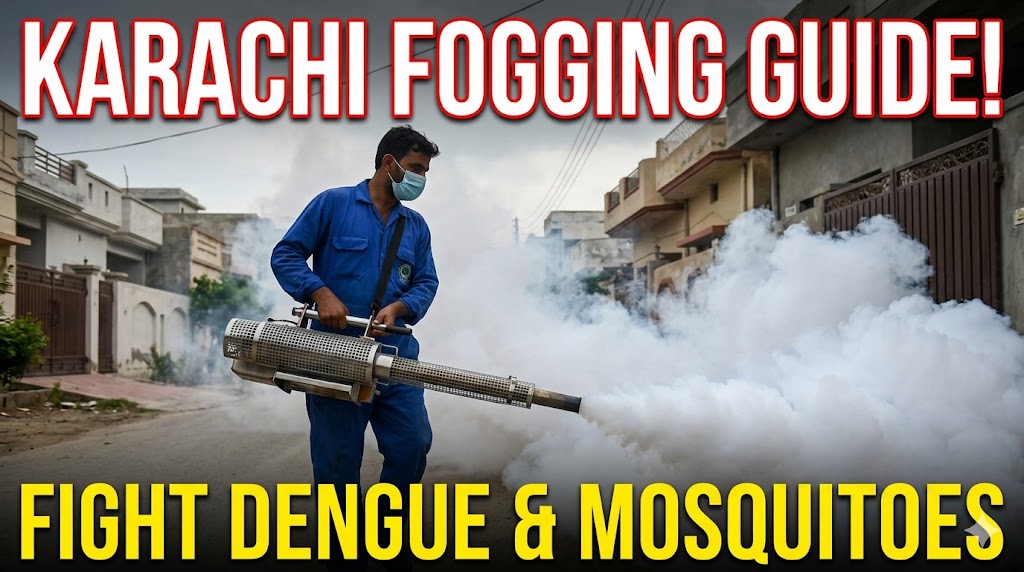
Dengue risk in Karachi climbs sharply in the weeks after the monsoon, when leftover rainwater gives Aedes aegypti mosquitoes thousands of small places to breed. The most effective protection combines three steps: emptying or covering standing water every week, sealing your water tank, and using professional larvicide and fogging for the water and mosquitoes you cannot deal with yourself.
For most Karachi families, the end of the monsoon (roughly July to September) is a relief: cooler air and no more flooded streets. For mosquitoes, it is the start of their best season. Rooftops, empty pots, blocked drains, construction sites and roadside puddles all hold water for days or weeks, and mosquito numbers rise fast. This guide explains the risk window, what fogging and larvicide actually do, and how to protect your home.
Why Is Dengue Worst After the Monsoon in Karachi?
Dengue is spread by the Aedes aegypti mosquito, a small black-and-white striped species. Unlike the common house mosquito, it breeds in small, clean, stagnant water: the tray under a flowerpot, a bottle cap, or the fold of a tarpaulin. It does not need a pond or a drain.
Monsoon rain creates hundreds of these micro-breeding sites across the city. Aedes eggs hatch within a day or two of touching water, and the larvae can develop into biting adults in about a week. In Karachi, dengue cases usually start climbing in the weeks after the rains and peak in the autumn months, so the risk window runs well past the last rainfall. Aedes also bites mainly during the day, most actively in the early morning and late afternoon, which is why evening-only precautions are not enough. Aedes aegypti is only one of several species in the city; our guide to mosquito species in Karachi explains how they differ, and the Karachi monsoon pest guide covers the other pests the rains bring.
Low-lying, poorly drained areas such as Korangi, Landhi and Malir are hit hardest. Overwhelmed drains leave puddles and flooded plots that persist long after the rain stops. Residents there can find more local detail in our Malir pest control guide.
Where Do Aedes Mosquitoes Breed Around Your Home?
Source elimination is the foundation of mosquito control. Check these spots first:
- Rooftop and overhead water tanks with missing, cracked or loose lids and broken inlet covers
- AC drip trays, condensate outlets blocked with debris, and water cooler trays
- Plant pot trays, vases and any decorative container that holds water
- Old tyres, buckets and discarded containers on rooftops or in courtyards
- Blocked roof drains and gutters where water pools
- Construction site water sumps and uncovered material storage
Empty or scrub anything that holds water at least once a week, and cover storage containers tightly. Bags, tarpaulins and debris outside the home also collect rainwater, so clear them too.
Can Your Water Tank Breed Mosquitoes?
Yes. An overhead tank with a cracked lid, a missing cover or a damaged seal gives mosquitoes direct access to the stored water, and even a small gap is enough. Sediment and organic buildup inside the tank also supports larvae. Rain-fed contamination is a separate concern, covered in our post on monsoon water contamination in Karachi.
A professional water tank cleaning service inspects the cover, seals gaps and removes sediment. If you cannot remember when your tank was last cleaned, the post-monsoon period is the right time; our guide on how often to clean your water tank in Karachi helps you set a routine.
Fogging vs. Larvicide: What’s the Difference?
Many Karachi households treat fogging and larvicide as the same thing. They are not: each targets a different stage of the mosquito life cycle.
| Method | What it targets | How long it helps | Best used for |
|---|---|---|---|
| Source elimination | Eggs and larvae | Lasts as long as you keep up the routine | Everything you can drain, cover or throw away |
| Larvicide | Larvae in water that cannot be drained | Longer than fogging; depends on the product and how often the water is refilled | Drainage channels, low-lying plots, tanks and sumps |
| Fogging | Adult flying mosquitoes only | A few days | Quick reduction in biting, and before gatherings or during a local surge |
Fogging disperses a fine insecticide mist, typically pyrethroid-based, that knocks down adults on contact. It has no effect on larvae already in the water, so mosquitoes return unless the source is dealt with. Larvicide is applied directly to standing water and stops larvae from becoming adults. In areas such as Surjani Town and New Karachi, where open drainage channels and low plots hold water after rain, larvicide treatment of common areas is especially important. Using all three methods together gives the most reliable protection.
How Do You Prepare Your Home for Mosquito Fogging?
- Cover or remove food, utensils and dishes from countertops
- Move pets and birds outside or to a closed, separate room, and keep children and elderly family members out of the area
- Cover fish tanks and disconnect their air pumps
- Close windows and interior doors before fogging starts
- Stay out for as long as the technician advises, since the time depends on the product and the size of the space
- Open windows and ventilate the space before resuming normal activity
If you have young children or pets at home, read our answer on whether pest control is safe for children and pets before the visit.
How Can You Protect Your Family From Dengue Day to Day?
- Fit and maintain screens on windows and doors
- Use nets or repellent for children and elderly relatives who nap during the day, because Aedes bites in daylight
- Apply repellent and wear long sleeves in the early morning and late afternoon, especially outdoors
- Check dark, cool corners indoors, such as under beds and behind curtains, where Aedes rest
Dengue has no specific cure, so prevention matters. If someone in your home develops a sudden high fever with severe headache, pain behind the eyes, body aches or a rash, see a doctor promptly and get tested. Avoid aspirin and ibuprofen unless the doctor advises them.
Why Do You Need Professional Fogging and Fumigation?
Municipal fogging vehicles make periodic passes through neighbourhoods, but they cannot treat inside compounds, courtyards or rooftops, which are the private spaces where Aedes breed most densely. A professional team can reach those areas, find hidden breeding sites, apply targeted larvicide and carry out indoor and outdoor fogging. Because fogging wears off within days, treatments are repeated over the risk window; see how often you should get fumigation done in Karachi. If you are weighing options, our comparison of DIY pest control vs professional fumigation sets out where each makes sense.
Accurate Fumigation provides mosquito fogging and control for homes, housing societies and commercial properties across Karachi. Cost depends on the size of the property and the level of infestation, so review our service charges before you get in touch.
Frequently Asked Questions
When is dengue season in Karachi?
Dengue season follows the monsoon. Cases usually begin rising in the weeks after the rains and peak in the autumn months, so the risk continues long after the streets have dried.
Does fogging kill mosquito larvae?
No. Fogging kills only adult flying mosquitoes. Larvae in standing water need larvicide or removal of the water itself, otherwise new adults keep emerging.
Can mosquitoes really breed in a bottle cap of water?
Yes. Aedes aegypti lay eggs in very small amounts of clean water, so flowerpot trays, bottle caps, AC drip trays and tarpaulin folds are all enough.
Is municipal fogging enough to protect my home?
Usually not. Street-level fogging does not reach inside compounds, courtyards or rooftops, where most Aedes breeding happens. It also affects only adult mosquitoes for a short time, so household-level checks and treatment are still needed.
How often should I empty standing water at home?
At least once a week, and more often after rain. Scrub the inside of containers as well, since eggs stick to the walls and can survive dry spells.
Should I wait for dengue cases in my area before acting?
No. By the time cases are reported locally, mosquito numbers are already high. Removing breeding sites and treating early is far more effective than reacting later.
Act Early: Dengue Risk Rises Fast After the Monsoon
The first four to six weeks after the rains are the highest-risk period for exposure. Eliminating breeding sites, sealing your water tank and scheduling professional larvicide and fogging now can significantly reduce your household’s risk. To book a post-monsoon mosquito control inspection for your home or commercial property, visit our contact page today.

Rehan Khan is the founder of Accurate Fumigation and an entomologist. He holds an M.Sc. in Entomology and a B.Sc. in Environmental Science, and has worked in pest control in Karachi for three decades. He founded the company in 2005 and writes about the pest and water problems the city deals with each season. Accurate Fumigation is ISO 9001:2015 certified and a member of the National Pest Management Association.
Questions about a service, or need a certificate for an inspection? Call the office on 0330-2533480. Read Rehan’s full profile.