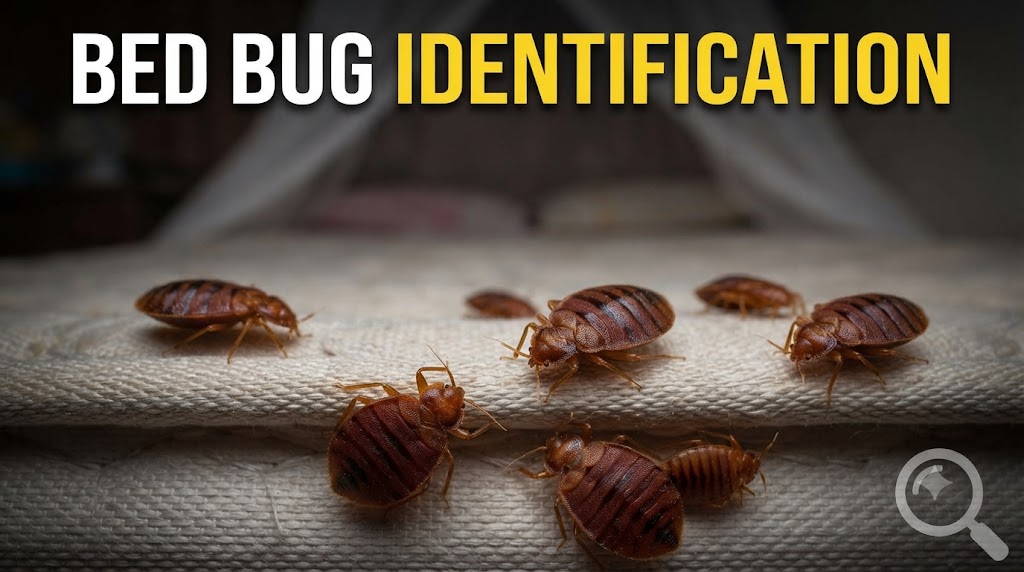
Bed bugs are flat, oval, reddish-brown insects about the size of an apple seed (5–7 mm). They hide in mattress seams and furniture joints by day and feed on sleeping people at night. The surest signs are itchy bites in a line or cluster, rust-coloured spots on sheets, and tiny pale shed skins along the mattress piping. Between cross-city house moves, secondhand furniture bought on OLX and Facebook Marketplace, and a steady flow of guests through Karachi’s homes and hotels, they’ve become one of the most common calls we get at Accurate Fumigation.
This guide covers what bed bugs look like at every life stage, how they behave inside a Karachi home, and how to tell a real infestation from a false alarm. If you already know you have a problem, go straight to our bed bug fumigation service in Karachi. Understanding the pest first, though, helps you avoid the mistakes that make it worse.
What Do Bed Bugs Look Like?
Bed bugs pass through several visibly different stages before adulthood, which is why the early signs are so easy to miss:
| Stage | Size | Colour | What to know |
|---|---|---|---|
| Egg | About 1 mm, like a pinhead | Pearly white | Glued into seams and cracks; a female lays a few a day and hundreds over her life |
| Young nymph | 1–2 mm, like a poppy seed | Pale, almost see-through | Nearly invisible until it feeds, when it shows a red dot of blood |
| Older nymph | 2–4 mm | Light to mid brown | Moults five times, needing a blood meal before each moult, and leaves a pale skin behind every time |
| Adult (unfed) | 5–7 mm, like an apple seed | Reddish-brown, very flat | Flat enough to hide in a gap the thickness of a visiting card |
| Adult (fed) | Longer and swollen | Darker red | Retreats to its hiding spot within minutes of feeding |
The common bed bug is Cimex lectularius. In warm climates like Karachi’s, the tropical bed bug, Cimex hemipterus, also turns up. The two look almost identical to the naked eye and are treated the same way, so the distinction matters more to entomologists than to homeowners.
Why Are Bed Bugs So Common in Karachi Homes?
Bed bugs don’t care about income or cleanliness. All they need is a regular blood meal and somewhere to hide nearby, and several things about Karachi life make both easy to find.
- Dense apartment living. In blocks across Gulshan-e-Iqbal and North Nazimabad, bed bugs move between flats through shared walls, wiring conduits and false ceilings. Our guide to bed bug and cockroach problems in Bahadurabad apartments shows how quickly that happens in one building.
- Constant guests. Relatives staying for weddings and Eid, domestic staff, and visitors from other cities all bring luggage and bedding that bed bugs can hitchhike in. It’s one reason calls rise during wedding season in Karachi.
- Older buildings and furniture. Homes across Saddar, Garden and parts of Nazimabad have more cracks and loose skirting. Traditional wooden beds, charpais and floor gaddas also offer endless joints and folds to hide in.
- Secondhand furniture. Used mattresses, sofas and beds bought through classifieds or left behind in rental flats are among the biggest sources of new infestations.
How Do Bed Bugs Behave?
When Do Bed Bugs Bite?
Bed bugs are drawn to the carbon dioxide and body heat of a sleeping person, so they usually feed at night, most often in the hours before dawn. In a heavy infestation, hunger overrides the clock and they’ll feed during the day too. A feed takes only a few minutes before the bug retreats to digest.
Adults can survive for several months without feeding. A flat that has stood empty between tenants, or a guest room nobody has used since last Eid, can still be infested when someone finally sleeps in it.
Where Do Bed Bugs Hide?
Despite the name, bed bugs don’t only live in beds. They cluster in narrow, dark gaps close to where people sleep or sit for long periods:
- Mattress seams and piping
- Bed frame joints and behind headboards
- Inside electrical sockets
- Curtain folds and along skirting
In heavier infestations they spread to sofas, floor cushions, dewan seating and even picture frames.
How Do Bed Bugs Spread?
Bed bugs don’t fly or jump. They walk, and they hitchhike. Inside a home they move room to room along pipes, wiring and shared walls. Between homes they travel in suitcases, used furniture, cardboard boxes and folded clothing. That’s why household shifting is such a common trigger, and why it’s worth following a pest checklist when moving into a new Karachi home.
How Do You Know If You Have Bed Bugs?
Most people notice bed bugs through indirect evidence rather than seeing the insect itself. Watch for:
- Bites in a line or small cluster on skin exposed during sleep — arms, shoulders, neck and legs.
- Rust or dark red spots on sheets and mattress seams. These are digested blood, not the bugs.
- Pale shed skins in mattress folds and furniture joints.
- A faint, sweetish, musty smell in heavily infested rooms.
- Live bugs in the seams, especially near the head of the bed.
To check properly, strip the bed and run a torch and the edge of a plastic card slowly along every seam, tuft and joint of the mattress and frame. Checking an hour or two before dawn gives you the best chance of catching them active.
Bites alone aren’t proof. Reactions vary widely, bites can take a day or more to appear, and some people don’t react at all — which is why one person in a shared bed may be “bitten” while the other isn’t. A physical inspection is far more reliable than the bite pattern.
What Else Could It Be? Common Bed Bug Lookalikes
We regularly get “bed bug” calls that turn out to be something else. Treatments differ completely between pests, so getting this right matters:
| Lookalike | How it differs from a bed bug | Where you’ll usually find it |
|---|---|---|
| Cockroach nymph | Faster, longer legs, long antennae, less flat — see our guide to cockroach species in Karachi | Kitchens, bathrooms, drains |
| Flea | Jumps rather than crawls; bites concentrate around the ankles — see flea infestations in Karachi | Carpets, pet bedding, homes with cats or dogs |
| Carpet beetle larva | Fuzzy, bristly and slow; doesn’t bite or feed on blood | Wardrobes, stored woollens, under carpets |
| Booklouse | Tiny, pale and soft-bodied; feeds on mould, not blood | Damp bookshelves, stored papers, humid rooms |
What Should You Do If You Find Bed Bugs?
Start with what not to do. Many bed bug populations have developed resistance to common household insecticide sprays. Their eggs are largely unaffected by surface treatments, and bug bombs or foggers tend to drive them deeper into walls and neighbouring rooms.
Two common Karachi habits are also worth avoiding:
- Putting kerosene or petrol on beds. It’s a serious fire risk and doesn’t reach the eggs.
- Leaving the mattress out in the sun. Surface heat rarely reaches deep into the seams and stuffing for long enough to kill every egg.
Our comparison of DIY pest control vs professional fumigation explains where home methods fall short.
A proper plan combines a detailed inspection of mattresses, furniture and sockets, targeted treatment, and follow-up visits to catch anything that hatches after the first round. Depending on the home, treatment may be chemical, heat-based or a combination — our guide to bed bug treatment in Karachi: heat vs chemical explains the trade-offs.
Cost depends on the number of rooms and how far the infestation has spread; our charges page shows how residential pricing works. If you run a guesthouse, hostel or rental property, you can also review our licensing and compliance information. As a full-service pest control company in Karachi, we treat bed bugs in apartments, family homes and guest accommodation citywide, from DHA and Clifton to Malir and Korangi.
Frequently Asked Questions
How can I tell bed bug bites from mosquito bites?
Bed bug bites usually appear in a line or tight cluster on skin exposed during sleep, and they show up after a night in bed. Mosquito bites are more randomly scattered and can happen outdoors at any time of day. If the same pattern appears morning after morning, inspect your mattress seams. If the bites happen outdoors or by day, our guide to mosquito species in Karachi may be more relevant.
Can bed bugs live in air conditioners or false ceilings?
They can travel through them. In apartment buildings, bed bugs move through gaps around AC piping, false-ceiling voids and shared electrical conduits. That’s why an infestation can reappear from a neighbouring flat even after your own unit has been treated.
Do bed bugs spread disease?
Bed bugs are not known to transmit disease to humans. The real impact is itching, skin irritation from scratching, and in longer infestations, lost sleep and stress. Numbers still grow quickly, so treat an infestation promptly.
Will I need to throw away my mattress?
Usually not. Most mattresses can be treated and kept if the infestation is caught before the interior is heavily infested or torn. Throwing an infested mattress out without treating the room also rarely helps, since the bugs are already in the frame and furniture around it.
How long does bed bug treatment take to work?
Eggs keep hatching for a week or two after the first treatment. Most professional plans therefore include at least one follow-up visit, to catch newly hatched nymphs before they mature and start laying eggs themselves.
Can I sleep in another room until the bed bugs are gone?
It often makes things worse. Bed bugs follow their host, and you can carry them or their eggs in clothing, bedding and bags. You risk ending up with two infested rooms instead of one.
Get a Proper Inspection Before It Spreads
Bed bugs rarely stay in one corner of a home for long. If you’ve spotted any of the signs above, a proper inspection beats guesswork with home sprays. Contact Accurate Fumigation to schedule a bed bug inspection anywhere in Karachi, and we’ll walk you through exactly what treatment your home needs.

Rehan Khan is the founder of Accurate Fumigation and an entomologist. He holds an M.Sc. in Entomology and a B.Sc. in Environmental Science, and has worked in pest control in Karachi for three decades. He founded the company in 2005 and writes about the pest and water problems the city deals with each season. Accurate Fumigation is ISO 9001:2015 certified and a member of the National Pest Management Association.
Questions about a service, or need a certificate for an inspection? Call the office on 0330-2533480. Read Rehan’s full profile.