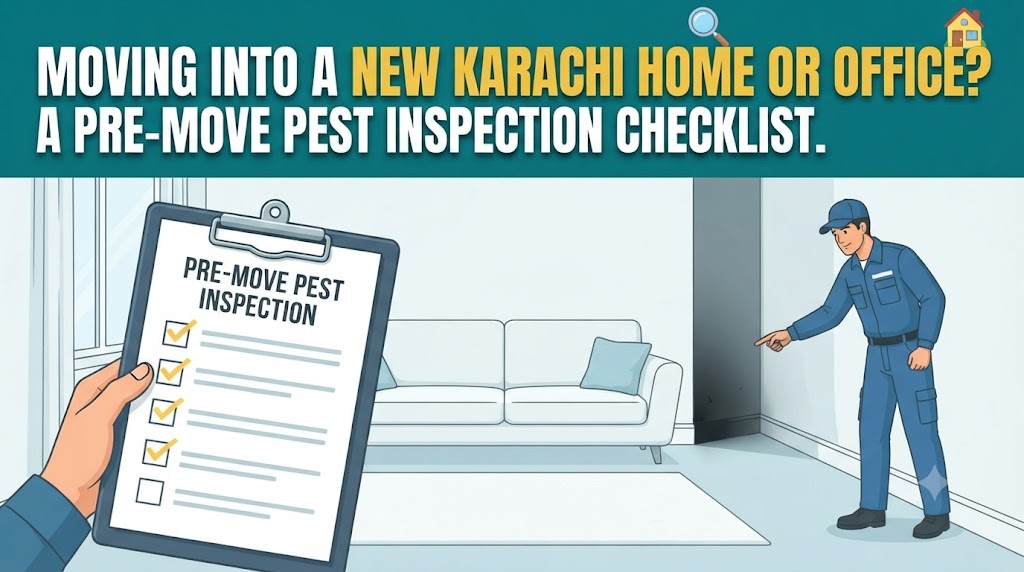
Before moving into a new home or office in Karachi, there are five things to check:
- The woodwork, for termites.
- The water tanks — get them cleaned.
- Any secondhand or left-behind furniture, for bed bugs.
- The kitchen and pipe gaps, for cockroach and rodent signs.
- The last pest control dates — get them in writing.
If anything needs treating, do it 3–5 days before your furniture arrives.
Move-in day rarely leaves room for anything beyond boxes and utility calls, which is exactly why so many pest problems trace back to it. A property that looked clean at the viewing can still hide termites in the door frames, a tank nobody has touched in years, or a previous tenant’s bed bugs in the furniture they left behind. A short inspection costs far less than dealing with any of that later, and it’s a job our pest control company in Karachi handles regularly for both homes and offices.
Move-In Pest Inspection Checklist: Room by Room
You don’t need to be an expert to catch the early warning signs. Work through the property with a torch and use this as your checklist:
| Where to look | What to look for | What it points to |
|---|---|---|
| Door frames, skirting, window sills, built-in cupboards | Soft or crumbly wood, a hollow sound when tapped, thin mud tubes up walls or foundations | Termites — needs termite control before you move in |
| Ceilings, wall corners, under windows | Water stains, peeling paint, damp patches | Moisture that draws termites, cockroaches and silverfish |
| Kitchen — behind the fridge and stove, inside cabinets | Pepper-like droppings, empty egg cases, a musty smell, ant trails near old spill marks | Active cockroaches or ants living on leftover residue |
| Under-sink pipe gaps, door thresholds, vents and ducts | Gaps, droppings, gnaw marks, greasy rub marks along walls | Rodent entry — get a rats and rodent control check before kitchen supplies go in |
| Bathroom and balcony floor drains | Missing covers, dry traps, cockroaches near the grate | A direct path from the sewer for drain cockroaches |
| Mattresses, beds and sofas left behind | Rust-coloured spots and pale shed skins along seams and joints | Possible bed bugs — treat or remove before use |
| Overhead and underground tanks | Loose or cracked lids, sediment, no clear last-cleaning date | Book water tank cleaning before using the taps daily |
| Offices — server rooms and electrical risers | Chewed cable insulation, droppings near equipment | Rodents in a space that sat vacant |
What to Ask Before You Sign the Lease
The best time to find a pest problem is before you’re committed, while you still have room to negotiate repairs or walk away. Ask the landlord or previous tenant directly:
- When was pest control last done?
- Has the property ever had a termite treatment?
- When were the overhead and underground tanks last cleaned?
- Have there been any recurring problems?
Vague answers are an answer in themselves. If you spot anything wood-related, our guide to identifying termite damage in Karachi homes helps you judge how serious it looks before you commit.
Why the Water Tank Comes First
This is the step people skip most often, and it matters most in a property that has been empty. Water left standing in a tank for weeks or months during a vacancy goes stale. Overhead tanks in Karachi’s heat build up sediment and algae quickly, and a loose lid lets mosquitoes breed inside. Clear water isn’t proof of a clean tank, since bacteria and fine sediment are often invisible.
If nobody can give you a clear cleaning date, assume it hasn’t happened and get it done before you rely on that water for cooking and bathing. Our guide to the signs your water tank needs cleaning covers what to look for when you lift the lid.
Why Empty Properties Have Their Own Pest Risks
A vacant unit isn’t a pest-free unit. In some ways it’s more exposed, because there’s no daily activity to disturb anything. Rodents nest undisturbed in kitchens and storerooms. Floor drain traps dry out over a few weeks, opening a path for sewer cockroaches. Bed bugs can survive several months without feeding, waiting for the next person to sleep in the room — our guide to bed bug identification and behaviour explains how.
Newer high-rise flats aren’t automatically safe either. In developments across Gulistan-e-Jauhar and Scheme 33, shared parking, basements and garbage areas can bring rodents and roaches up through service ducts. Ongoing construction on nearby plots adds pressure of its own, as our guide to pests in Bahria Town and Scheme 33 new construction explains.
Secondhand Furniture and Moving Boxes
The move itself is a common way pests arrive. Secondhand mattresses, sofas from storage and furniture left behind by a previous tenant are the classic route for bed bugs. Check every seam, piping and joint before any of it goes near a bedroom. Cardboard moving boxes are a favourite hiding place for small kitchen cockroaches, especially boxes that sat in a godown or someone else’s storeroom. Unpack them within a few days, don’t leave them stacked in a spare room, and get the cardboard out of the house.
Shared moving trucks carry the same risk, so it’s worth a quick look at anything that was loaded alongside other people’s goods.
Moving Into an Office: What’s Different
Commercial handovers have their own blind spots. Inspect the previous tenant’s pantry or break room the way you would a home kitchen. Don’t overlook server rooms, electrical risers and false ceilings either — rodents chewing through cabling is a common and expensive problem in offices that sat empty. Some landlords and building managements also ask for a fumigation certificate at handover, so confirm what yours expects before move-in rather than after.
We carry out this kind of inspection regularly for our commercial clients. Our guide to a pre-handover pest inspection covers the full commercial process, including what a proper inspection report should include.
Timing Treatment Around Your Move
If the inspection finds something, schedule treatment 3–5 days before your furniture arrives. That gives the property time to air out and the treatment time to settle before your family or staff are in the space full-time. An empty property is also the easiest one to treat properly. Technicians can reach every cabinet, skirting line and wall void, and termite drilling along floors and frames is far simpler with no furniture in the way.
If you’re painting, re-doing the kitchen or changing woodwork before moving in, finish that work first and treat afterwards, since fresh carpentry and disturbed walls create new entry points. Our post-renovation pest prevention guide covers that sequence. While the place is empty, it’s also the ideal time to seal door gaps and fit mesh using our DIY guide to pest-proofing doors and windows.
Get It in Writing: Landlords, Tenants and Documentation
Whatever the inspection turns up, record it before you move in rather than relying on a verbal assurance. Add a short note to the lease or handover documents confirming:
- The last pest control date
- The last tank cleaning
- Any treatment done for the move-in
That protects both sides if something appears later, and it avoids the usual argument over who was responsible.
For commercial leases, check who issued any fumigation certificate you’re handed, and whether that company can be verified. An unverifiable certificate offers no real protection if a problem shows up a few months in. It helps to know what a genuine pest control license and industry membership means. Our comparison of PPMA-registered vs unregistered pest control companies explains how to check.
Frequently Asked Questions
The previous tenant had pest control done recently — do I still need a check?
Ask for the date and, if possible, a record of what was treated. A recent treatment won’t cover new sources, like furniture you’re bringing in, or separate issues like an uncleaned tank. A quick check of your own is still worth it.
Does a brand-new flat need pest control before moving in?
Usually an inspection at least. New buildings can have termites in the surrounding soil if no pre-construction treatment was done, as well as construction debris and pests pushed in from nearby building sites. Tanks in new buildings also collect dust and debris during construction and should be cleaned before first use.
Who pays for pre-move pest control in Karachi — landlord or tenant?
There’s no universal rule; it depends on your agreement. Raise it during lease negotiations rather than assuming. Many landlords will cover or split the cost as part of handover, especially on commercial leases.
What’s the difference between an inspection and a full fumigation?
An inspection is a visual check, sometimes with instruments, to find active pests or risk areas. No treatment is applied. Fumigation or spraying is the treatment itself, and it’s only needed if the inspection finds something worth treating.
How much does a move-in inspection and treatment cost?
Treatment cost depends on the property size, which pests are found and how many services you need, such as tank cleaning alongside pest control. See our charges page for how pricing works; an inspection gives you an exact quote.
Start the Lease Pest-Free, Not Just Clean
A property that looks spotless on move-in day can still hide problems that only show up months later, and this checklist is meant to close that gap. If you’d rather have someone experienced walk through your new home or office before the boxes arrive, get in touch and we’ll schedule a free inspection around your move-in date — early enough that there’s time to treat and air out before you move.

Rehan Khan is the founder of Accurate Fumigation and an entomologist. He holds an M.Sc. in Entomology and a B.Sc. in Environmental Science, and has worked in pest control in Karachi for three decades. He founded the company in 2005 and writes about the pest and water problems the city deals with each season. Accurate Fumigation is ISO 9001:2015 certified and a member of the National Pest Management Association.
Questions about a service, or need a certificate for an inspection? Call the office on 0330-2533480. Read Rehan’s full profile.