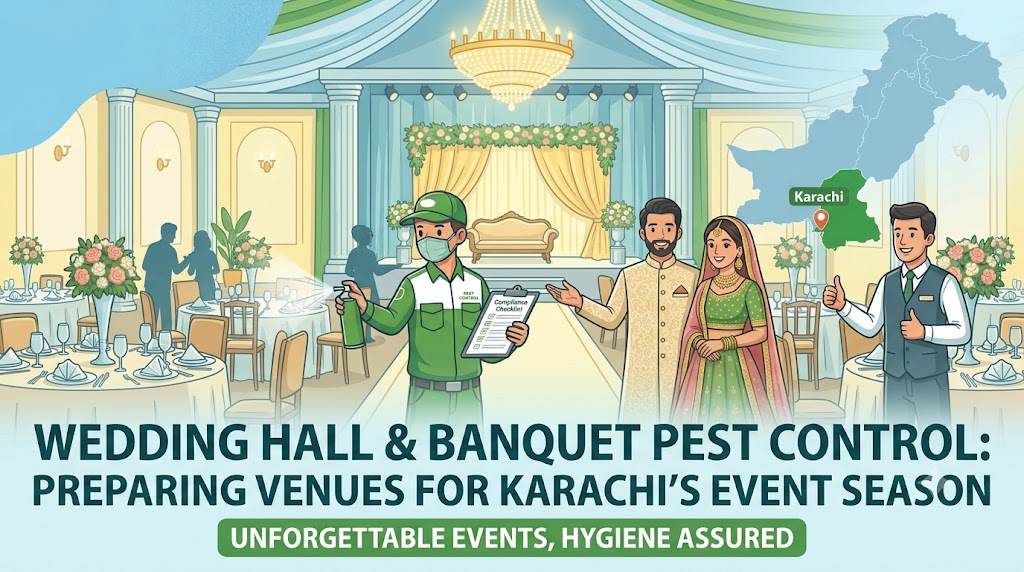
From October through February, Karachi’s wedding halls barely get a night off. Mehndi one evening, barat the next, walima the day after — often for three different families in the same week. Between the back-to-back bookings, the buffet counters that stay out for hours, and the kitchens working overtime, banquet halls and marquees end up carrying a pest load that most venue managers only notice when a guest complains, or worse, posts about it.
For a venue that depends entirely on its reputation, a single cockroach sighting during a walima dinner can undo months of good word-of-mouth. Getting ahead of this with a proper fumigation service in Karachi — scheduled around your booking calendar rather than squeezed in whenever there’s a gap — is one of the most overlooked parts of running a wedding venue in this city.
Why Banquet Halls Are Pest Magnets
A few things make marquees and banquet halls harder to keep pest-free than an ordinary restaurant or home.
- Commercial kitchens running at full capacity for hours at a stretch, with grease, food residue, and standing water building up faster than a normal cleaning schedule can keep up with.
- Buffet and dessert counters left out for extended service windows, which is exactly the kind of exposed food source that draws ants and flies within a single event.
- Storage rooms for crockery, linen, and decor that sit closed between events, undisturbed for days or weeks — ideal conditions for rodents and cockroaches to settle in.
- Guest washrooms and ablution areas seeing hundreds of visitors in a single evening, several times a week, putting real pressure on drainage and water tank systems.
Pre-Event Pest Control Checklist
Cockroaches in Commercial Kitchens
The banquet kitchen is almost always where problems start. Grease traps, warm equipment, and food debris behind cooking stations give cockroaches everything they need. A proper cockroach control service focused on the kitchen, service corridors, and dishwashing areas — done between events rather than the morning of a wedding — gives the treatment time to work before guests arrive.
Rodents in Storage and Decor Rooms
Linen stores, decor rooms, and dry-ration stores that sit closed between functions are a common place to find rodent droppings when nobody’s been in for a week. Beyond the obvious hygiene concern, rats and mice chew through electrical wiring and decor fabric, which becomes an expensive surprise right before a big event. Scheduled rats and rodent control with sealed bait stations in these rooms is far more practical than reacting once damage is already visible.
Ants and Flies Around Buffet and Dessert Counters
Sugar-heavy dessert counters and long buffet service lines are an open invitation for ants, particularly in the warmer months. A targeted ants control service around service areas, combined with proper waste management between courses, keeps this from becoming visible to guests mid-event.
Bed Bugs in Green Rooms and Bridal Lounges
Bridal lounges and green rooms with sofas, cushions, and drapery used by multiple families every week are worth checking periodically too — soft furnishings that see constant use and infrequent deep cleaning can pick up bed bugs from guests’ bags and clothing over time. A periodic bed bug fumigation service for these lounge areas is a small addition to a venue’s overall pest plan but avoids an awkward complaint from a bridal party.
Monsoon Season and Water Tank Hygiene for Guest Washrooms
Karachi’s event season overlaps with both the peak summer heat and the tail end of monsoon rains, both of which affect water quality in overhead and underground tanks. With hundreds of guests using washrooms and ablution areas at a single function, a hall’s water tank works harder than almost any residential tank in the city. Sediment build-up, algae, and contamination from rainwater seeping into poorly sealed tank lids are common findings during inspection. A scheduled water tank cleaning service — ideally timed at the start of wedding season and again mid-season — keeps guest washrooms and any drinking water points running clean through months of heavy use.
Timing Treatments Around a Packed Booking Calendar
The single biggest constraint for any venue is that there is rarely a full day free between bookings. This means pest control has to be planned like any other vendor service — booked in advance for the narrow gaps between events, using treatments that don’t require guests or staff to stay out for long periods, and avoiding strong-smelling chemicals that could carry into the next day’s decor and food. Venue managers who treat this as a recurring contract, rather than an emergency call after a complaint, get far more consistent results and avoid last-minute scrambling before a big function.
Halls Across Karachi’s Event Hubs
Karachi’s marquees and banquet halls are concentrated in a handful of areas — from the larger venues along Shahra-e-Faisal and Karsaz, to the upscale halls of DHA and Clifton, and the mid-sized community halls found around PECHS. Whatever the scale of the venue, the same core pressures apply: heavy kitchen use, constant guest turnover, and very little downtime between events.
Coordinating With Caterers, Decorators, and Event Planners
A wedding hall’s pest control is rarely the only thing happening on-site — caterers are moving equipment in and out, decorators are setting up hours before an event, and planners are coordinating vendor access on a tight schedule. Treatment plans work best when they’re shared with these other vendors in advance, particularly around kitchen access and storage room use, so nobody accidentally undoes a treatment by propping open a door for hours during setup or leaving food uncovered overnight after a late-running function. Some venues find it useful to include a short pest-management briefing in their standard vendor agreement, covering things like keeping kitchen doors closed when not in active use and reporting any pest sightings to venue management immediately rather than waiting until the next event.
What Venue Owners Should Ask a Pest Control Company
Before signing a contract, it’s worth asking a few direct questions: is the company a registered member of a recognised pest management body, do they issue a written treatment report after each visit, and can they show a track record with other commercial venues rather than only homes. You can check a provider’s licensing and registration details and review their existing commercial clients before committing. It’s also reasonable to ask for a clear breakdown of charges for a recurring venue contract versus a one-time treatment, since the pricing structure for a hall booked several times a week looks very different from a single household visit.
Karachi’s Wedding Calendar and Planning Treatment Around It
Wedding season in Karachi follows a fairly predictable rhythm: a heavy rush from October through February once the summer heat breaks, a quieter stretch during the peak of summer when outdoor and lawn functions slow down, and a smaller secondary wave around winter holidays and school breaks. Venue managers who know this pattern can plan pest control the same way they’d plan any other seasonal maintenance — a more intensive treatment cycle heading into the October rush, lighter maintenance visits through the summer lull, and another check before the calendar fills up again in November and December.
This kind of planning matters more than it might seem. A venue that only calls for help once bookings are already at full capacity is always treating on the back foot, working around events rather than ahead of them. Building the pest control calendar around the same planning cycle used for catering contracts, decor bookings, and staff scheduling means treatments land in the actual quiet periods, rather than getting pushed back indefinitely because there’s never a convenient day.
Frequently Asked Questions
How often should a wedding hall get pest control during peak season?
Most active venues benefit from monthly treatment during peak wedding months (roughly October to February), with kitchen and storage areas checked more frequently if the hall is booked multiple times a week.
Can pest control be done between two back-to-back bookings in the same day?
Light maintenance treatments in kitchens and storage rooms can often be scheduled in short gaps, but a full treatment is best planned for a day with no events, or very early morning before the next setup begins.
Will fumigation leave a smell that affects the decor or food the next day?
A professional treatment using appropriate indoor products and adequate airing time should not leave a lingering smell by the time the next event’s decor and catering are set up, but this is worth confirming with your provider in advance.
Do banquet halls need a different pest control plan than restaurants?
The core pests are similar, but banquet halls deal with far higher guest volume in short bursts, larger storage and decor areas, and long gaps between uses in some rooms — all of which shape a different treatment schedule than a restaurant open every day.
Is water tank cleaning really necessary for a wedding hall?
Yes — with hundreds of guests using washrooms and ablution areas per event, a hall’s water tank sees far more demand than a typical household tank, making regular cleaning an important but often overlooked part of venue hygiene.
Protecting Your Venue’s Reputation
A wedding hall’s reputation is built one event at a time, and undone just as quickly by a single bad experience. A recurring pest control contract, built around your actual booking calendar rather than a generic monthly visit, is one of the more practical investments a venue owner can make. If you manage a hall or marquee anywhere in Karachi and want a treatment plan built around your event schedule, contact us for a free site assessment.

Rehan Khan is the founder of Accurate Fumigation and an entomologist. He holds an M.Sc. in Entomology and a B.Sc. in Environmental Science, and has worked in pest control in Karachi for three decades. He founded the company in 2005 and writes about the pest and water problems the city deals with each season. Accurate Fumigation is ISO 9001:2015 certified and a member of the National Pest Management Association.
Questions about a service, or need a certificate for an inspection? Call the office on 0330-2533480. Read Rehan’s full profile.