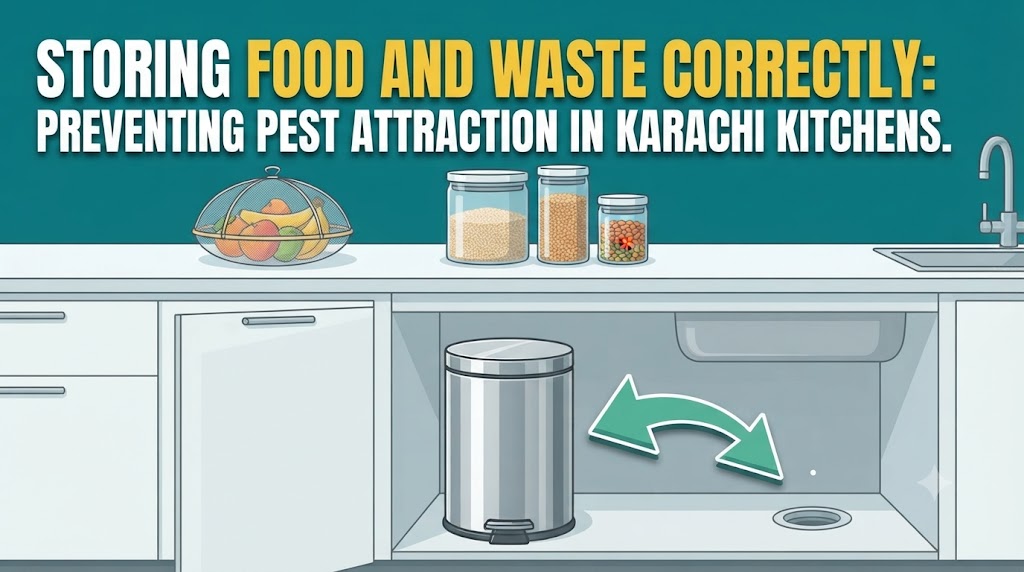
The fastest way to keep pests out of a Karachi kitchen is to cut off their food, water and shelter. Move dry food out of its packaging into airtight containers the day you buy it, use a lidded bin that’s emptied every day, fix leaks under the sink, and clean behind appliances every few weeks. Most of the cockroach and ant calls we get start with something small — a half-open sack of atta, a bin left for two days, a spill behind the fridge. Kitchens are the single biggest driver of repeat pest control service in Karachi bookings, and a lot of it is preventable.
These habits won’t replace professional treatment once pests are established. They will stretch the time between visits and make any treatment you get last longer.
Why Karachi Kitchens Are Especially Vulnerable
Heat and humidity work against you all year. Warm, moist air speeds up spoilage and makes uncollected waste smell sooner. It also keeps pests active through a winter that never gets cold enough to slow them down.
Many buildings also have ageing drainage, gaps where pipes enter the wall under the sink, and garbage collection that varies by street and building. You can’t fix those from inside your kitchen, which is exactly why storage and waste discipline matter more here than in most cities.
How to Store Dry Food So Pests Can’t Get In
Cardboard and paper packaging is one of the most overlooked attractants. It isn’t only the food inside — the glue and starch in the packaging itself can feed cockroaches. Decanting groceries into airtight glass, steel or thick food-grade plastic containers removes that risk almost entirely. Here’s what to watch for with common pantry staples:
| Item | Main pest risk | Best way to store it |
|---|---|---|
| Rice, daal, chana | Rice weevils (susri), pantry moths | Airtight container; check bulk sacks before decanting |
| Atta, maida, besan, suji | Flour beetles, moths, cockroaches | Airtight container; buy in smaller batches in summer |
| Sugar, gur, honey, jams | Ants | Screw-top jars; wipe jar rims and sticky drips |
| Spices and dry masalas | Beetles and moths | Small airtight jars away from stove heat |
| Dry fruit and nuts | Pantry moths | Airtight; keep in the fridge during hot months |
| Onions, potatoes, garlic | Fruit flies, rats | Ventilated basket raised off the floor; remove soft ones quickly |
| Pet food | Cockroaches, ants, rats | Sealed bin; don’t leave bowls out overnight |
A few habits make the system work:
- Keep containers off the floor and a few centimetres away from walls, not tucked into corners.
- Use first-in, first-out, so nothing sits forgotten at the back of a cabinet for months.
- Wipe up spilled flour, sugar or grain right away rather than sweeping it later. Sweet spills are what start ant trails in Karachi kitchens.
- Check loose and bulk items for small holes, webbing or clumping before you buy.
- For large bulk purchases of flour or grain, freeze a batch for about four days before storing it. This kills insect eggs that may already be inside.
Fridge and Perishables
Refrigeration slows pests down but doesn’t stop them. Cockroaches are drawn to the warmth of the compressor at the back. Many fridges also have a drip tray underneath that collects defrost water, and if nobody empties it, it becomes standing water feeding roaches and small flies.
Pull the fridge out and clean the tray and the floor behind it every few weeks. Wipe drips inside as they happen, and don’t let expired items linger. Avoid packing shelves so tightly that air can’t circulate, because poor airflow causes condensation and mould. The fruit bowl matters too: one over-ripe banana or mango left out is all fruit flies need.
Waste Management — The Part Everyone Skips
This is the biggest lever most households have. Rats and cockroaches are opportunists, and an overflowing or unlined bin is the easiest meal in the house. A lidded, lined bin emptied daily — not every other day — makes more difference than almost any spray. In neighbourhoods like Saddar or Bahadurabad, where collection timing varies by street, build your own daily routine rather than waiting on the pickup schedule.
- Tie waste bags securely before they leave the kitchen.
- Don’t leave bagged waste by the front door or gate overnight. It’s the first thing cats, crows and rats tear open.
- If collection is delayed, rinse containers that held meat, dairy or sugary drinks before binning them.
- Wash the bin itself every week or two. Residue at the bottom is where fly larvae develop — our guide to houseflies in Karachi explains why.
- Watch for gnaw marks or droppings near bins. These are early signs worth a rats and rodent control check before numbers grow.
- Be extra strict in ground-floor and garden-facing kitchens, since outdoor pests have direct access. Our guide to rat-proofing your Karachi home covers the entry points.
Kitchen Hotspots You Might Be Missing
A spotless countertop doesn’t mean the kitchen is clear. The gap under the sink where pipes enter the wall, the space behind the fridge and stove, and the inside of cabinet hinges are classic hiding spots for cockroaches. Those are exactly the places the indoor-breeding German cockroach prefers, as our guide to cockroach species in Karachi explains.
Degrease the stove, backsplash and exhaust hood regularly — cooking oil residue is a major food source. Sealing gaps around pipes with basic filler closes off many access points. Our kitchen pest prevention guide covers sealing and appliance checks in more detail.
Moisture: Leaks, Drains and Your Water Tank
Pests need water as much as food, and in most kitchens that water comes from plumbing rather than spills: a slow drip under the sink, a leaking pipe joint inside the wall, or a damp cabinet base that never fully dries. A kitchen floor drain that’s rarely used is another weak point. Once its trap dries out, it opens a direct path from the sewer for drain cockroaches, so pour water down it every few days.
Your water supply matters for a different reason. If the tank feeding your kitchen taps is dirty, everything you wash — vegetables, dishes, cutting boards — gets rinsed in that water. If your tap water looks discoloured or smells off, check the signs your water tank needs cleaning and book a proper water tank cleaning alongside your kitchen routine.
For Restaurants and Commercial Kitchens
Commercial kitchens face the same risks at a much larger scale, with a regulatory layer on top. Food storage, waste handling and pest control are all areas Sindh Food Authority inspectors look at, so storage discipline is about passing inspections as well as avoiding infestations. Our guide to fumigation certificate requirements for Karachi restaurants covers what to keep on record.
We support a number of commercial clients across the city with scheduled kitchen pest control. Before you rely on any provider’s certificate for compliance, it’s worth knowing what a genuine pest control license and industry membership actually covers.
Ramadan, Eid and Bulk Buying — When Storage Gets Tested
Karachi households stock up hardest at the same few times each year: grocery runs before Ramadan, a freezer full of meat after Eid-ul-Adha, and stockpiling when prices are expected to rise. That’s exactly when your storage system has the least room for error. Decant bulk purchases into airtight containers the same day, rather than leaving sacks in a pantry corner “until there’s time.” That short window is a common reason we see a spike in ant and pantry moth activity right after these periods.
Waste needs the same attention. Ramadan brings extra fried-food grease. Eid-ul-Adha brings meat trimmings, bones and blood-soaked packaging, which draw flies and rats within hours in Karachi’s heat. Double-bag animal waste, get it out of the house the same day, and empty bins more often for a week or two. Our guide to the Karachi Eid pest surge covers the full picture.
Frequently Asked Questions
There are tiny insects in my rice or atta — can I still use it?
If it’s heavily infested, with webbing, clumps or lots of live insects, throw it out and wash the container before refilling it. For a light infestation, many households sieve flour or pick through rice and then freeze it to kill any remaining eggs. Either way, check nearby containers too, since pantry insects spread between packets.
Do neem leaves, bay leaves or dried chillies keep insects out of rice?
They’re traditional remedies that may deter some insects slightly, but they won’t stop an infestation on their own. An airtight container does far more than anything you put inside it.
Can good storage alone stop an infestation?
No. Storage and waste habits make your kitchen less attractive and help treatments last longer, but they won’t remove a population that’s already established. Once you’re seeing pests regularly rather than the occasional stray, it’s time for treatment, not more prevention.
Are cockroaches and ants attracted to the same things?
Partly. Both go for crumbs, sugar and moisture, but cockroaches focus more on grease and warmth. Ants are especially persistent about sweet residues and will follow a scent trail a long way to reach them.
Is it safe to spray insecticide in my kitchen?
Shop-bought sprays near food, utensils and cooking surfaces are best avoided. They also tend to scatter cockroaches rather than eliminate them. Professional kitchen treatment relies on targeted methods like gel baits placed in cracks and hinges, away from where food is prepared.
Prevention Buys You Time, Not a Guarantee
Good storage and waste habits will cut how often you need help, but they work best alongside a proper treatment schedule rather than instead of one. If your kitchen still shows regular activity despite doing everything right, get in touch and we’ll take it from there.

Rehan Khan is the founder of Accurate Fumigation and an entomologist. He holds an M.Sc. in Entomology and a B.Sc. in Environmental Science, and has worked in pest control in Karachi for three decades. He founded the company in 2005 and writes about the pest and water problems the city deals with each season. Accurate Fumigation is ISO 9001:2015 certified and a member of the National Pest Management Association.
Questions about a service, or need a certificate for an inspection? Call the office on 0330-2533480. Read Rehan’s full profile.