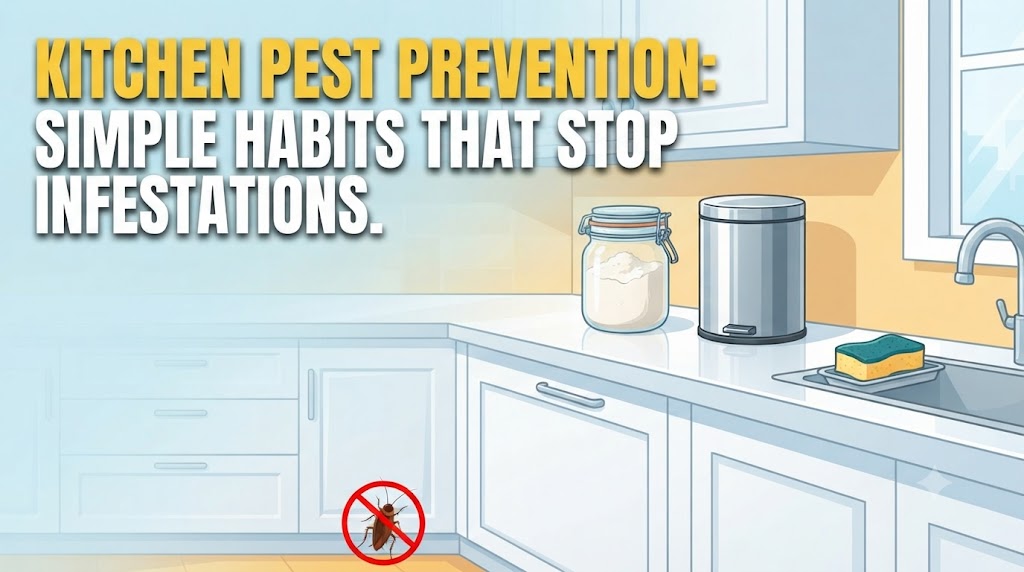
To keep pests out of a Karachi kitchen, take away the three things they need: food, water, and hiding places. Bin food waste daily, store dry goods in airtight containers, fix drips and cover stored water, and clean behind your stove and fridge every month. Small daily habits stop most kitchen infestations before they start, so this is not a one-time deep clean.
Most kitchen infestations in Karachi don’t come from a dramatic failure. They build up slowly around grease, damp, and gaps that are easy to fix once you know where to look. Food, warmth, and moisture around the sink and stove are exactly what cockroaches, ants, and the occasional rat want. Habits won’t fully clear an infestation that is already established. At that point a proper pest control service in Karachi needs to step in. For prevention, though, the daily basics matter more than most people expect.
Why Do Pests Target the Kitchen First?
A kitchen offers food residue, moisture, and warm, dark hiding spots. Grease behind a stove, a damp sponge left in the sink overnight, or a gap behind loose skirting near the fridge motor each tick one of those boxes. Cockroaches need very little. A smear of grease and a few drops of water can sustain a small population indefinitely, which is why “I clean regularly” doesn’t always mean “pest-free” if the cleaning misses the spots pests actually use. Karachi’s heat and humidity speed up breeding, and in apartment buildings, shared service shafts and drainage ducts let pests travel between flats.
Which Kitchen Habits Prevent Pests?
Deal With Food Waste the Same Day
An uncovered bin overnight, or scraps left in the sink drain basket, gives cockroaches and ants an easy meal. Use a bin with a tight lid, empty it daily rather than every few days, and rinse the drain basket before bed instead of in the morning. Our guide to storing food and waste correctly goes into more detail.
Store Dry Goods in Sealed Containers, Not Bags
Flour, rice, lentils, and spices left in paper or plastic packaging are an open invitation, especially to ants and, in older buildings, rodents. Moving dry goods into airtight containers is one of the highest-impact changes you can make, because it removes a whole category of food source rather than just tidying up.
Fix Drips and Cover Stored Water
A dripping tap, a leaking pipe under the sink, or condensation pooling under the fridge gives pests water even when food is scarce. Cockroaches can survive far longer without food than without water, so a persistent drip can be a bigger draw than crumbs on the floor. Many Karachi households also keep water in buckets and drums because supply is irregular. Keep these covered, since open stored water is an easy source for roaches and a breeding spot for mosquitoes.
Don’t Leave Pet Food Out Overnight
Food left out overnight attracts ants and roaches alike. Feed on a schedule, pick up the bowl once your pet is done, and store pet food in a sealed container like rice or flour.
How Often Should You Clean the Kitchen to Keep Pests Away?
| How often | What to do | Why it matters |
|---|---|---|
| Daily | Empty the bin, rinse the sink and drain basket, wipe stovetop grease | Removes the overnight food and moisture that sustain cockroaches and ants |
| Weekly | Check under the sink for damp, wipe inside cabinets, clean the floor drain, sweep behind the fridge if space allows | Catches leaks and crumb build-up before they become a harborage point |
| Monthly | Pull out the stove, fridge, and microwave and clean behind and underneath; inspect dry goods for pests; check pipe entry points for gaps | Appliances create warm, hard-to-reach spaces where grease and crumbs pile up unnoticed |
| Seasonally | Replace worn storage containers; book a professional inspection if activity keeps recurring | Catches problems that routine cleaning can’t reach |
Why Do Cockroaches Keep Coming Back to the Kitchen?
Cockroaches are resilient and breed quickly, and they hide during the day, so seeing one or two at night usually means a larger population is already established out of sight. Different species behave differently; our guide to cockroach species in Karachi helps you identify what you’re dealing with. If you keep seeing activity despite good habits, daily cleaning is no longer enough. A cockroach control treatment aimed at the actual harborage points behind cabinets and under appliances is the more reliable route, and our guide to cockroach control cost in Karachi explains what affects the price.
Are Ants in the Kitchen a Bigger Problem Than They Look?
Often, yes. A single trail across the counter is rarely one ant’s problem. It is a scout reporting back to a colony that may be sizeable and located anywhere from a garden bed to a wall cavity. Wiping the trail with soapy water breaks the scent trail temporarily, but the colony is untouched (see our guide to natural and home remedies for common Karachi pests for what these remedies can and can’t do). If ants keep returning to the same spot, trace the source with our guide to ant trails in Karachi kitchens, and consider ants control rather than repeated spot cleaning.
How Do You Know If Rats or Mice Are in the Kitchen?
Look for droppings near the stove or under the sink, gnaw marks on packaging, or a faint scratching sound at night. Rodents need far less encouragement than insects. A single unsealed gap under a cabinet or around a pipe is enough, and they can chew through packaging that would stop insects, which makes them a real hygiene risk around food. DIY traps are often a stopgap here. A proper rats control service will also find and seal the entry point, which matters more than the trap itself. Our guide to rat-proofing your home covers the places to check.
Frequently Asked Questions: Kitchen Pest Prevention in Karachi
Why do I keep seeing cockroaches even though I clean every day?
Daily surface cleaning often misses the spots roaches actually use, such as behind appliances, inside cabinet hinges, or around pipe entries. Visible activity despite regular cleaning usually means a population is established out of sight and needs targeted treatment rather than more cleaning.
Does keeping food in the fridge instead of the pantry help?
It helps for some items, but rice, flour, and lentils are usually kept at room temperature anyway. For those, airtight containers matter more than refrigeration, since it’s the packaging, not the temperature, that decides whether ants and pantry pests can get in.
Are cockroaches in the kitchen a health risk, or just unpleasant?
They are a hygiene concern, not just a nuisance. Cockroaches move between drains, waste, and food surfaces and can spread bacteria along the way, which is why kitchens and food-handling areas get particular attention in pest control.
How do I tell ants from termites near my kitchen?
Ants move in visible trails across surfaces, while termites are rarely seen in the open. Look instead for discarded wings, mud tubes, or hollow-sounding wood near kitchen cabinetry, especially close to an exterior wall. Our guide to identifying termite damage in Karachi homes shows the signs, and a termite control inspection can confirm it.
Is a kitchen pest inspection worth it if I haven’t seen anything?
If your kitchen backs onto an older building, shares a wall with a restaurant or shop, or you’ve had pest problems before, a preventive check is a reasonable step. Catching a small population early is far less disruptive than treating an established one.
How often should a kitchen be fumigated?
It depends on the building, the pests involved, and how often problems return. Homes with good habits and no recurring activity may need nothing routine, while shared buildings and food businesses often need regular treatment. Our guide to how often to get fumigation done in Karachi explains how to decide.
Keep Your Kitchen Ahead of the Problem
Good daily habits close off most of what draws pests to a kitchen, but they won’t clear an infestation that has already taken hold behind your cabinets or under the stove. If you’re seeing recurring activity despite doing everything right, get in touch and we’ll assess what’s actually going on before recommending treatment.

Rehan Khan is the founder of Accurate Fumigation and an entomologist. He holds an M.Sc. in Entomology and a B.Sc. in Environmental Science, and has worked in pest control in Karachi for three decades. He founded the company in 2005 and writes about the pest and water problems the city deals with each season. Accurate Fumigation is ISO 9001:2015 certified and a member of the National Pest Management Association.
Questions about a service, or need a certificate for an inspection? Call the office on 0330-2533480. Read Rehan’s full profile.