Category: Pest Prevention & Home Maintenance Tips

  • Moving Into a New Karachi Home or Office? A Pre-Move Pest Inspection Checklist

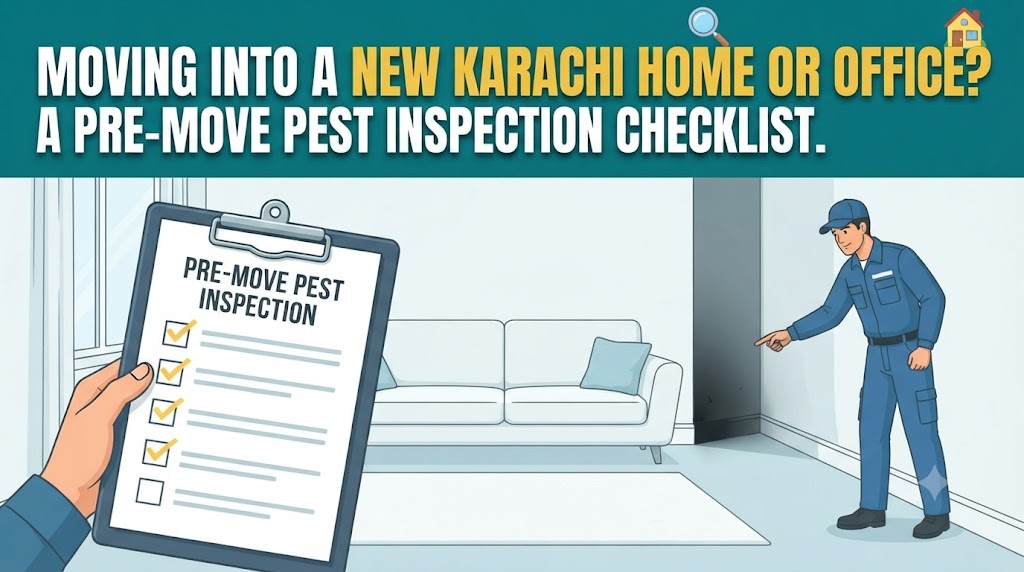
    Moving Into a New Karachi Home or Office? A Pre-Move Pest Inspection Checklist

    Move-in day rarely leaves room for anything beyond boxes, furniture, and a long list of utility calls, which is exactly why pest problems so often trace back to it. A property that looked clean during the viewing can still have termite activity in the woodwork, a tank that hasn’t been touched in years, or a previous tenant’s bed bug problem waiting in the furniture they left behind. A short inspection before you move in is one of the cheapest things you can do compared to dealing with any of that after the fact, and it’s a step our pest control company in Karachi gets asked to handle regularly, for both homes and offices.

    Before You Sign — What to Check During the Viewing

    You don’t need to be an expert to catch the early warning signs. Thin mud tubes running up a wall or foundation, soft or hollow-sounding wood around door frames and skirting, and water staining near the ceiling or windows are all worth a second look — they’re the kind of thing that points toward a termite control issue that’s easier to deal with before you’ve moved a single box in than after.

    • Press gently on visible wooden skirting, frames, and window sills — soft or crumbly wood is a red flag
    • Look along the base of walls and foundations for narrow mud tunnels
    • Ask directly when the property last had any pest control or termite treatment done
    • Check ceilings and corners for old water stains, which often mean the moisture pests like too

    Water Tank First — Genuinely Non-Negotiable

    This is the one step people skip most often, and it shouldn’t be. Ask specifically when the overhead and underground tanks were last cleaned — if nobody can give you a clear answer, assume it hasn’t happened recently and get a water tank cleaning done before you start using the taps regularly. Overhead tanks left exposed to Karachi’s heat for long stretches build up sediment and algae fast, and it’s a much smaller job to sort out before you’re relying on that water daily than after.

    Bed Bugs — The Furniture Risk

    If you’re bringing in second-hand furniture, mattresses left behind by a previous tenant, or items that came out of storage, check the seams, piping, and corners carefully before they go anywhere near a bedroom. Bed bugs travel in exactly this kind of furniture and in moving boxes, and they’re far easier to deal with before they’ve spread through a home than after a few weeks of settling in.

    Rodents & Entry Points

    Empty units are not immune to rodents, and in some ways they’re more exposed, since there’s no daily human activity to keep them away. Check gaps under exterior doors, around pipe entries under kitchen sinks, and any vents or ducts that lead outside. High-rise flats in newer developments like Gulistan-e-Jauhar or Scheme 33 aren’t automatically safe either, since shared parking, basements, and garbage areas can still bring rodents up through service ducts. If you spot droppings or gnaw marks, get a rats and rodent control check done before moving your kitchen supplies in.

    Cockroaches & Ants — Signs in Empty Units

    An empty kitchen can still show clear signs of activity if you know where to look — droppings behind cabinets, a faint musty smell near the fridge or stove recess, or ant trails near old spill marks on the floor. Both cockroaches and ants can persist in a unit even with no food source obviously present, feeding on whatever residue was left behind by the last occupants.

    For Offices — A Slightly Different Checklist

    Commercial handovers come with their own blind spots. Check the state of the previous tenant’s pantry or break room the same way you’d check a home kitchen, and don’t overlook server rooms or electrical risers — rodents chewing through cabling is a common and expensive problem in office spaces that sat vacant for a while. Many commercial leases in Karachi also expect a documented fumigation certificate as part of the handover, which is worth confirming with your landlord before move-in rather than after.

    We handle this kind of pre-handover inspection regularly for our commercial clients, and it’s worth understanding what a genuine pest control license and industry membership actually means before accepting a certificate from a previous vendor at face value.

    Your Move-In Pest Inspection Checklist

    If you want a single list to work through room by room, here’s the condensed version:

    • Check wooden frames, skirting, and window sills for softness or mud tubes
    • Ask for the last water tank cleaning date, or book one before move-in
    • Inspect any second-hand furniture or storage boxes for bed bug signs before bringing them inside
    • Check under-sink pipe gaps, door thresholds, and vents for rodent entry points
    • Look behind and under the fridge, stove, and cabinets for cockroach or ant activity
    • For offices, check the pantry, break room, and any server or electrical rooms
    • Ask the landlord or previous tenant directly about the last pest control and fumigation dates

    Timing It Right With Your Move

    If an inspection turns up something that needs treating, it’s worth scheduling that 3 to 5 days before you move furniture in, giving the property time to air out and any treatment to settle before your belongings and family are in the space full-time. Book a free inspection early enough in your moving timeline that there’s room to treat and wait, rather than trying to fit it in the same week as the move itself.

    Getting It in Writing — Landlords, Tenants, and Documentation

    Whatever the inspection turns up, it’s worth putting the outcome in writing before you move in, not just relying on a verbal assurance from the landlord or previous tenant. A short note in the lease or handover documents — confirming the last pest control date, the last water tank cleaning, and any treatment done as part of the move-in — protects both sides if something turns up later and avoids the usual back-and-forth over who was responsible for what.

    This matters even more for commercial handovers, where a fumigation certificate is sometimes treated as a formality rather than something anyone actually checks. Ask who issued it and whether the company is a genuine, verifiable member of a recognised pest control license body rather than accepting a printed certificate at face value — an unverifiable certificate offers no real protection if a problem shows up a few months into the lease.

    Frequently Asked Questions

    Should I get a pest inspection before signing a lease, or after I’ve moved in?

    Before, if at all possible. A quick check during the viewing can catch termite damage, water tank neglect, or existing infestations while you still have room to negotiate repairs or walk away, rather than discovering them once you’re already committed.

    How long should I wait to move furniture in after fumigation?

    A few days is generally enough for most treatments to settle and for the space to air out properly, though the exact timing depends on the specific treatment used. Your technician will be able to confirm the right window for whatever was applied in your case.

    What if the previous tenant already had pest control done recently?

    Ask for the date and, if possible, documentation of what was treated. Even a recent treatment may not have covered a new source, like furniture you’re bringing in, or an ongoing issue like an unclean water tank, so it’s still worth a quick check of your own.

    Is water tank cleaning really necessary before moving in, even if the water looks fine?

    Yes — sediment and bacterial buildup aren’t always visible, and clarity alone isn’t a reliable sign of a clean tank. If nobody can confirm a recent cleaning, it’s a low-cost step worth doing before you start relying on that water daily.

    Do landlords or tenants usually cover pre-move pest control costs in Karachi?

    It varies by agreement, and there’s no universal standard. It’s worth raising during lease negotiations rather than assuming either side will automatically cover it — many landlords are willing to split or cover it as part of handover, especially for commercial leases.

    What’s the difference between an inspection and a full fumigation?

    An inspection is a visual and sometimes instrument-assisted check to identify active pests or risk areas without applying any treatment. Fumigation or spraying is the actual treatment step, which is only needed if the inspection finds something worth treating.

    Start the Lease Pest-Free, Not Just Clean

    A property that looks spotless on move-in day can still be hiding problems that only show up a few months later, which is exactly the gap this checklist is meant to close. If you’d rather have someone experienced walk through a new home or office with you before the boxes arrive, get in touch and we’ll schedule a free inspection around your move-in date.

  • How Often Should You Get Fumigation Done in Karachi? A Maintenance Schedule

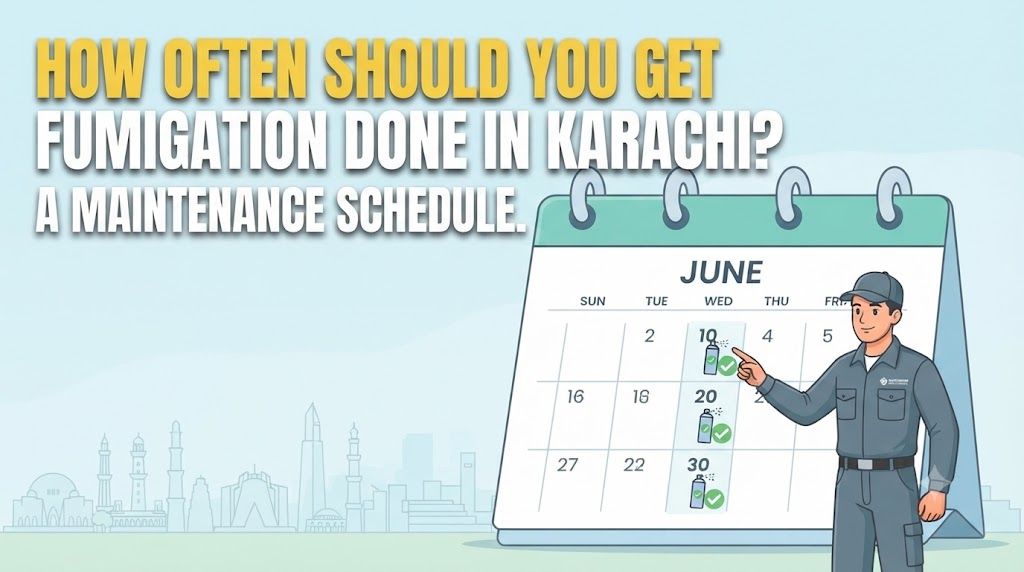
    How Often Should You Get Fumigation Done in Karachi? A Maintenance Schedule

     “How often do we actually need this?” is the question we get asked more than almost any other, usually right after the first treatment is done and the house finally feels pest-free again. The honest answer is that there is no single number that fits every home in this city.

    A ground-floor bungalow in Nazimabad with an old drainage line needs a very different schedule than a fifth-floor apartment in a newer DHA tower. What we can give you is a realistic, experience-based maintenance schedule that you can adjust once you know your own property’s risk factors.

    Below is how we actually plan maintenance visits for our own clients across Karachi, broken down pest by pest, plus a simple calendar you can copy for your own home or building.

    General Pest Control (Cockroaches, Ants, Fleas & Ticks) — How Often

    General household pests respond fastest to climate and food availability, which is exactly why Karachi’s heat and humidity make this a recurring job rather than a one-time fix. For most homes, a routine cockroach control and ants control visit every 2 to 3 months is a sensible baseline, especially for kitchens, ground-floor units, and homes near open drains or under-construction plots.

    If your home is on a higher floor, has fewer food-prep areas, or has already had a strong initial treatment, you can often stretch this to every 4 to 6 months without seeing pests return. Homes with pets, small children, or a history of infestations are usually better off sticking to the shorter interval, at least for a year or two.

    For seasonal nuisances like fleas and ticks, the schedule is driven more by pets and by the arrival of summer rather than a fixed calendar — a spot treatment when you first notice bites or when a pet comes back from boarding is usually enough, backed up by a routine visit if the problem keeps returning.

    Termite Control — A Slower, Longer-Term Cycle

    Termites work on an entirely different timeline than roaches or ants, which is why termite control is planned in years, not months. An annual inspection is worth doing on almost any property, particularly older construction in areas like Nazimabad or other neighbourhoods built decades ago, where wooden door frames, skirting, and roof timber are more common.

    A full soil or barrier treatment, once properly applied, typically holds up for somewhere in the range of 3 to 5 years before it needs to be reapplied, though this varies with soil type, how much digging or construction happens around the foundation afterward, and how exposed the property is to moisture. If your annual inspection turns up fresh mud tubes or soft, hollow-sounding wood, that is the signal to treat again regardless of how long it has been — don’t wait out the calendar once there is active damage.

    Water Tank Cleaning — More Frequent Than Most People Assume

    This is the one that homeowners consistently underestimate. Water tank cleaning isn’t really a pest control task in the traditional sense, but it belongs on the same maintenance calendar because a dirty tank creates exactly the damp, contaminated conditions that attract cockroaches and mosquitoes to bathrooms and kitchens.

    Given Karachi’s WASA supply pattern — irregular pressure, occasional turbidity, and long gaps between fills for many households — sediment and algae build up faster than people expect, especially in overhead tanks that sit exposed to direct heat. A cleaning every 6 months is a reasonable default for most homes, and buildings that rely on tankers or shared underground tanks should lean toward the shorter end of that range rather than the longer one.

    Bed Bugs & Rodents — Treat As Needed, But Know Your Triggers

    Unlike termites or general pests, bed bugs don’t really follow a maintenance calendar — they follow specific events. Second-hand furniture, guests returning from travel, or moving into a previously rented flat are the usual triggers, so the right time to treat is right after one of those events, not on a fixed schedule.

    Rodents are a bit more seasonal. Demand for rats and rodent control tends to rise around construction activity next door, monsoon flooding of drains, and in areas near open plots or industrial zones such as Korangi. If your area fits that description, a check every 3 to 4 months during peak season is worth the small extra cost compared to dealing with an established rodent problem later.

    A Sample Maintenance Calendar for Karachi Homes

    If you’d rather not calculate all of this pest by pest, here is a simplified version we give clients who want a single calendar to follow:

    • Every 2–3 months: general spray for cockroaches and ants, more often for ground-floor kitchens
    • Every 6 months: water tank cleaning, timed just before and just after monsoon if possible
    • Once a year: full termite inspection, treat immediately if activity is found
    • Every 3–5 years: termite barrier reapplication, sooner if construction or digging happens nearby
    • As needed: bed bug treatment after new furniture, guests, or moving homes
    • Seasonally (monsoon and construction periods): extra rodent checks in higher-risk areas

    Building Committees & Commercial Properties Need a Different Rhythm

    Apartment blocks and society committees in areas such as Clifton or Gulshan-e-Iqbal usually get better value bundling common areas — basements, garbage points, parking, and shared water tanks — into one recurring contract rather than letting individual residents book separately. Restaurants, schools, and offices should plan around whichever inspection cycle their regulator uses, since a fumigation certificate is only useful if it’s still current when the inspector shows up.

    Whoever you hire for a recurring contract, it’s worth asking about their industry standing directly — you can read more about what a genuine pest control license and industry membership actually means in Pakistan, since the terminology gets thrown around loosely.

    How Your Property’s Age and Location Shift This Schedule

    The calendar above is a starting point, not a fixed rule, and two of the biggest variables are how old the building is and what sits around it. Older houses with masonry that has settled over decades tend to develop small gaps around pipework and window frames that newer construction simply doesn’t have yet, which is exactly the kind of access point that shortens the interval between general pest visits.

    Ground floor units next to open plots, under-construction neighbours, or exposed drains should generally plan on the shorter end of every range mentioned above — every pest control company sees the same pattern, where a single vacant or under-construction lot nearby quietly doubles the local rodent and cockroach pressure for everyone around it. If your building backs onto one, it’s worth treating that as a standing reason to keep the shorter cockroach control and rodent-check interval rather than assuming your own good housekeeping is enough on its own.

    On the other end, a well-sealed, higher-floor apartment with no shared basement or garbage chute exposure can often go longer between visits than the baseline suggests, provided nothing changes in the surrounding building. The honest way to find your own real interval is to start at the baseline, watch what happens between visits for a year, and adjust from there rather than guessing upfront.

    Frequently Asked Questions

    How often should a typical house in Karachi get pest control?

    For general pests like cockroaches and ants, every 2 to 3 months is a safe baseline for ground-floor or kitchen-heavy homes, stretching to 4 to 6 months for higher floors or lower-risk units. Termites and water tanks run on longer, separate cycles as described above.

    Does monsoon season change the maintenance schedule?

    Yes. Monsoon months bring higher humidity, more standing water, and more rodent movement as drains and open plots flood, so it’s worth timing a general pest visit and a water tank check just before the rains start, and following up shortly after if your area saw flooding or waterlogging.

    How often should overhead and underground water tanks be cleaned?

    Every 6 months is a reasonable default for most Karachi households. Buildings on tanker supply, shared underground tanks, or with visibly discoloured water should lean toward the shorter end of that range.

    Do brand-new buildings still need termite treatment?

    Yes, especially if there was no pre-construction soil treatment. New buildings still benefit from an inspection within the first year and a barrier treatment if none was applied during construction, since termite colonies can already be present in the surrounding soil.

    How much does a maintenance plan cost?

    Costs vary by property size, the pests involved, and how many services are bundled together, so we’d rather give you an honest, specific number than a rough guess here — you can see how we structure pricing on our charges page or request a free inspection for an exact quote.

    Can I set up a recurring annual contract instead of booking each visit separately?

    Yes, and for most households and all commercial properties this is usually the more convenient and cost-effective option, since it removes the need to remember dates and keeps your termite, general pest, and water tank schedules aligned.

    Keep the Schedule, Skip the Guesswork

    The honest truth is that most pest problems we’re called out for in Karachi trace back to a maintenance gap rather than bad luck — a termite inspection that got pushed back a year, or a water tank that hadn’t been cleaned since the last monsoon. If you’d rather have someone map out the right schedule for your specific property than guess at it yourself, get in touch and we’ll walk through it with you during a free inspection.

  • Storing Food and Waste Correctly: Preventing Pest Attraction in Karachi Kitchens

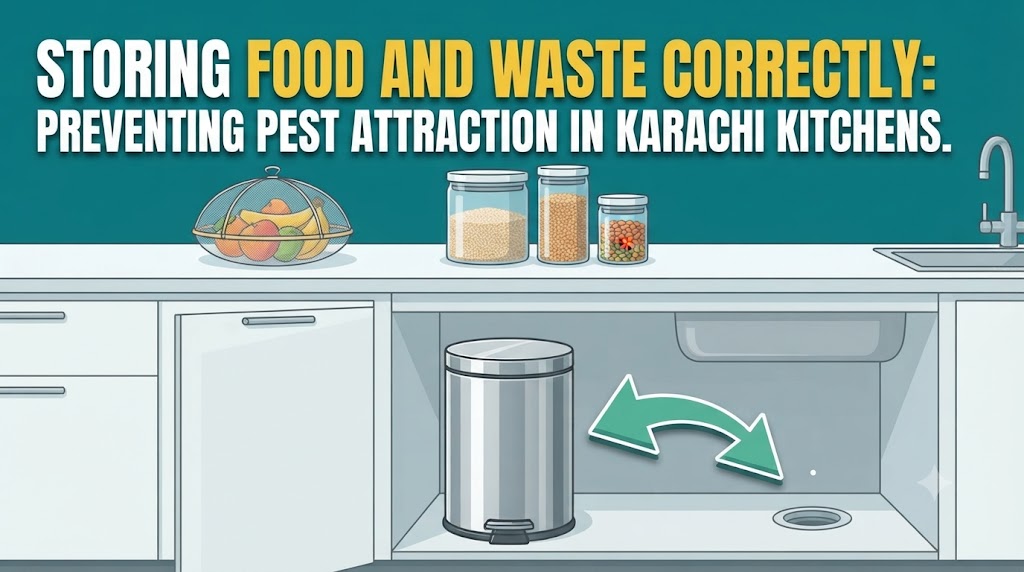
    Storing Food and Waste Correctly: Preventing Pest Attraction in Karachi Kitchens

    Most of the cockroach and ant calls we get don’t start with a dramatic infestation — they start with a half-open sack of flour, a bin that didn’t get taken out for two days, or a spill behind the fridge that nobody noticed. Kitchens are the single biggest driver of repeat pest control service in Karachi bookings, and the good news is that a lot of it is genuinely preventable with a few storage and waste habits.

    This isn’t a substitute for professional treatment once pests are already established, but it will meaningfully stretch the time between visits and make whatever treatment you do get last longer.

    Why Karachi Kitchens Are Especially Vulnerable

    Heat and humidity are the two biggest factors working against you. Warm, moist air speeds up food spoilage, keeps pests active year-round instead of slowing down in winter the way they might in cooler climates, and makes any uncollected waste smell and attract insects faster.

    On top of that, a lot of Karachi’s housing stock has ageing drainage, gaps around pipe entry points under sinks, and inconsistent garbage collection timing depending on the area and building type. None of that is something you can fix from inside your kitchen, but knowing it’s working against you is exactly why storage and waste discipline matter more here than in a lot of other cities.

    Dry Storage Rules That Actually Work

    Cardboard and paper packaging is one of the most overlooked attractants — it isn’t just the food inside that draws roaches and ants, the glue and starch in the packaging itself can be a food source. Once you get groceries home, decanting rice, flour, pulses, sugar, and spices into airtight glass, metal, or heavy plastic containers removes that risk almost entirely.

    • Keep containers off the floor and a few inches away from walls, not tucked into corners
    • Practise first-in-first-out so nothing sits forgotten at the back of a cabinet for months
    • Wipe up any spilled flour, sugar, or grain immediately rather than sweeping it later
    • Check dry goods for small holes or webbing before you buy them, especially loose or bulk items

    Fridge & Perishables

    Refrigeration slows pests down but doesn’t stop them, especially cockroaches, which are drawn to the warmth of the compressor and any spilled liquid underneath or behind the unit. Clean up drips as soon as they happen, don’t let expired items linger, and avoid packing shelves so tightly that air can’t circulate — beyond the food safety reasons, poor airflow encourages condensation and mould, which brings its own set of pests.

    Waste Management — The Part Everyone Skips

    This is genuinely the single biggest lever most households have. Rats and cockroaches are opportunists, and an overflowing or unlined bin is the easiest meal in the house. A lidded, regularly lined bin that gets emptied daily — not every other day — makes a bigger difference than almost any spray. In neighbourhoods like Saddar or Bahadurabad, where collection timing can vary by street, it’s worth building your own daily routine rather than waiting on the pickup schedule.

    • Always tie waste bags securely before they leave the kitchen, not just the outside bin
    • Don’t leave bagged waste sitting by the front door or gate overnight
    • Keep an eye out for gnaw marks or droppings near bins — early signs worth a rats and rodent control check before numbers grow
    • Rinse containers that held meat, dairy, or sugary liquids before binning them if collection is delayed
    • Ground-floor and garden-facing kitchens should be extra strict, since outdoor pests have direct access

    Cockroach & Ant Hotspots in the Kitchen You Might Be Missing

    Even a spotless countertop doesn’t mean the kitchen is clear. The gap under the sink where pipes enter the wall, the space behind the fridge and stove, and cabinet hinges are the classic hiding spots for cockroaches, and they’re rarely cleaned during a normal wipe-down. Pulling appliances out for a proper clean every few weeks, and sealing obvious gaps around pipes with basic filler, closes off a lot of the access points pests rely on.

    The Water Tank & Drainage Connection

    Pest attraction in the kitchen isn’t only about food — it’s also about moisture, and a lot of that moisture traces back to plumbing rather than spills. A leaking pipe near the kitchen wall, or a contaminated overhead tank feeding the taps, creates exactly the damp conditions that draw cockroaches and even small ants. If your tap water looks discoloured or your tank hasn’t been serviced in a while, it’s worth pairing kitchen hygiene with a proper water tank cleaning rather than treating them as separate problems.

    For Restaurants & Commercial Kitchens

    Commercial kitchens have all the same risks as home kitchens, just at a much larger scale, and with a regulatory layer on top — the Sindh Food Authority expects proper food storage, waste segregation, and documented pest control as part of routine inspections. If you run a restaurant, hotel, or catering business, waste and storage discipline isn’t just about avoiding an infestation, it’s about not failing an inspection over something preventable.

    We work with a number of commercial clients across the city on exactly this kind of scheduled kitchen maintenance, and it’s worth understanding what a genuine pest control license and industry membership actually covers before you rely on a certificate for compliance purposes.

    Bulk Buying, Ramadan, and Eid — When Storage Habits Matter Most

    Karachi households tend to stock up harder around certain times of year, whether that’s bulk grocery runs before Ramadan, a freezer full of extra meat around Eid, or general stockpiling when prices are expected to rise. All of that is completely reasonable, but it does mean your storage system gets tested exactly when it has the least room for error.

    If you’re buying in bulk, decant into airtight containers the same day rather than leaving sacks or boxes sitting in a pantry corner for a few days “until there’s time.” That short window is often enough for pests already nearby to find an opening, and it’s a common reason we see a spike in ants and pantry moth activity right after these bulk-buying periods rather than during normal months.

    The same logic applies to waste during these periods — extra packaging, meat trimmings, and food scraps around Eid mean more waste volume than usual, so it’s worth emptying bins more frequently for a week or two rather than sticking to the normal routine and letting it back up.

    Frequently Asked Questions

    What foods attract pests the most in a Karachi kitchen?

    Sugary and starchy items draw ants fastest, while grease, crumbs, and any standing moisture are what cockroaches key in on. Anything left in its original cardboard or paper packaging is at higher risk than food moved into sealed containers.

    Can proper storage alone stop an infestation, or is professional treatment still needed?

    Storage and waste habits reduce how attractive your kitchen is to pests and make treatments last longer, but they won’t remove an infestation that’s already established. Once you’re seeing pests regularly rather than the occasional stray, it’s time for a proper treatment rather than more prevention.

    How often should kitchen waste bins be emptied given Karachi’s climate?

    Daily is the safest habit, especially in the warmer months, since heat and humidity speed up decomposition and odour far faster than in cooler climates. Bags should also be tied off before leaving the kitchen, not just placed loosely in the outdoor bin.

    Do restaurants in Karachi need pest control certificates for inspections?

    Sindh Food Authority inspections generally expect evidence of routine pest management alongside proper food storage and waste handling, so most commercial kitchens keep a documented pest control schedule rather than treating it as optional.

    What storage containers actually keep pests out?

    Airtight glass, metal, or thick food-grade plastic containers with a good seal are the most effective. Original cardboard or thin plastic packaging is the least effective, since pests can chew or squeeze through it fairly easily.

    Are cockroaches and ants attracted to the same things?

    There’s overlap — both are drawn to sugar, crumbs, and moisture — but cockroaches are more focused on grease and warmth, while ants are especially persistent about sweet residues and will travel further along a scent trail to reach them.

    Prevention Buys You Time, Not a Guarantee

    Good storage and waste habits will genuinely cut down how often you need to call for help, but they work best alongside a proper treatment schedule rather than instead of one. If your kitchen is already showing regular activity despite doing everything right, get in touch and we’ll take it from there.

  • How to Pest-Proof Your Karachi Home Before Monsoon Season

    How to Pest-Proof Your Karachi Home Before Monsoon Season

    The first heavy monsoon downpour in Karachi does more than flood the odd underpass. It pushes moisture into soil, roof cavities, and old brickwork all over the city, and that moisture is exactly what pests have been waiting for all year. If you’ve ever noticed termite swarms right after a storm, or a sudden run of cockroaches in the kitchen once the humidity climbs, it isn’t bad luck. It’s biology, and it’s predictable enough that you can get ahead of it.

    This guide walks through what actually changes in and around a Karachi home once monsoon season starts, and what to check, seal, and treat before the rain does the damage for you. Think of it as the pre-monsoon version of a car service — a couple of hours now, done properly, saves you a much bigger headache in August. If you’d rather have someone else run the checklist, a proper pest control service in Karachi can do a full pre-monsoon inspection in under an hour.

    Why Monsoon Changes the Pest Picture

    Karachi sits on a coastal plain with a lot of older housing stock, and most of that housing has small cracks, gaps, and drainage issues that simply don’t matter in the dry months. Once the rains start, three things happen at once: soil around foundations stays wet for days, indoor humidity climbs even with the AC running, and outdoor pests look for the nearest dry, warm spot — which is usually your house.

    Subterranean termites are the clearest example. They rely on soil moisture to move between their underground colony and the wood they’re feeding on, and damp post-monsoon soil makes that movement easier and faster. Cockroaches, ants, and rodents follow a similar logic: heavy rain drives them out of drains, gardens, and gaps between boundary walls and straight toward your kitchen, water tank room, and store.

    Start With Water — It’s the Root of Almost Every Monsoon Pest Problem

    Check Your Overhead and Underground Water Tanks

    An overflowing or poorly sealed water tank is one of the most underrated pest triggers in Karachi homes. A tank lid that doesn’t close properly lets in mosquitoes looking for standing water to breed in, while sediment build-up at the bottom of underground tanks creates the kind of damp, organic buildup that attracts roaches and even rodents looking for a way in through the plumbing chase. Before monsoon hits, get your tanks properly cleaned — a dedicated water tank cleaning service will also flag any cracks or gaps in the lid that need sealing, which matters even more once the rains start topping up the tank faster than usual.

    Fix Drainage Before It Becomes a Breeding Ground

    Walk the perimeter of your house and look at where water actually goes when it rains hard. Blocked gutters, a choked drain near the boundary wall, or a low patch in the garden that collects standing water are all places where mosquitoes will breed within days and where termites find the moist soil they need. Clearing debris from drains and re-grading obvious low spots is a weekend job, but it removes a large chunk of your monsoon pest risk before it even starts.

    Termites: The Damage You Won’t See Until It’s Expensive

    Termite activity in Karachi doesn’t stop in monsoon, but the added soil moisture makes it easier for subterranean colonies to expand toward your home’s foundation, door frames, and any wood in contact with the ground. The early signs are easy to miss because termites work from the inside out — look for thin mud tubes running up outside walls or foundation piers, wood that sounds hollow when tapped, and discarded wings near windowsills or light fixtures after a rain (a classic sign of a swarm).

    If your house is more than a few years old, or you’ve had termite issues before, a pre-monsoon inspection from a termite control service is worth booking now rather than after you’ve found damage. Treatment applied before the rains has a much easier time creating a dry, effective barrier than treatment applied to already-saturated soil.

    Cockroaches, Ants, and Rodents Move Indoors When It Floods

    Cockroaches

    Karachi’s cockroaches don’t need much encouragement in normal weather, and monsoon humidity is close to ideal for them. Grease build-up around stoves, damp cardboard in storage areas, and any gap under sinks become far more attractive once the air is humid enough to keep roach eggs from drying out. A pre-monsoon deep clean of the kitchen and under-sink areas, paired with professional treatment where activity is already visible, is far more effective than reaching for a spray can after the fact — see our dedicated guide on cockroach control for what a proper treatment actually involves.

    Ants and Rodents

    Heavy rain floods ant colonies and rat burrows in gardens, empty plots, and drains, and displaced colonies look for the nearest dry shelter — which is often a ground-floor kitchen or store room. Sealing gaps under doors and around pipe entries (more on that below) blocks most of this, but if you’re already seeing ant trails or rodent droppings before the rains even start, it’s worth getting ahead of it with ants control or rats control treatment now, rather than dealing with an established colony mid-monsoon.

    A Room-by-Room Pre-Monsoon Checklist

    Go through your home with this list before the first heavy rain of the season:

    • Roof and terrace: clear drains, check for cracked waterproofing, and remove any standing water in pots or unused containers.
    • Water tanks: get lids checked for gaps, and schedule a cleaning if it’s been more than six months.
    • Boundary walls and foundation: look for mud tubes, damp patches, or soil piled against the wall that keeps it permanently wet.
    • Doors and windows: check weatherstripping and door sweeps — gaps here let in everything from ants to the occasional frog.
    • Kitchen: clear grease behind the stove, fix any dripping taps, and store dry goods in sealed containers rather than open bags.
    • Store rooms and garages: lift boxes off the floor, and check cardboard for early signs of termite or cockroach activity.
    • Garden and open plots nearby: trim overgrown vegetation and clear debris piles where water can collect.

    When a Checklist Isn’t Enough

    DIY prevention closes most of the easy entry points, but it won’t fix an existing termite colony under your foundation or a cockroach population that’s already established behind your kitchen units. If you’re in a flood-prone pocket of the city — parts of DHA, Clifton, or other low-lying areas see this every year — it’s worth getting a professional inspection before the rains rather than during them, since treatment is genuinely easier to apply to dry soil and dry walls.

    FAQs: Monsoon Pest Prevention in Karachi

    Does monsoon rain really make termites worse, or is that a myth?

    It’s real. Termites need consistent soil moisture to move and feed, and monsoon rain provides exactly that. Colony activity doesn’t start in monsoon, but it does tend to become more visible then, as swarms and mud tubes show up in the weeks after heavy rain.

    How often should I get my water tank cleaned before monsoon?

    As a general rule, once every six months is reasonable for most homes, with a check right before monsoon season if it’s been longer than that. Tanks that show visible sediment or a musty smell should be cleaned sooner regardless of the calendar.

    Can I just use a DIY spray instead of getting professional treatment before monsoon?

    Store-bought sprays can help with a handful of visible cockroaches or ants, but they don’t reach termite colonies underground or roach nests deep in wall cavities, and can sometimes scatter a colony further into your walls instead of eliminating it.

    My house is in a low-lying area that floods slightly every year — what should I prioritize?

    Drainage and foundation checks first, since standing water against your foundation is the single biggest driver of both termite activity and mosquito breeding. A professional inspection before the season starts is the most efficient way to catch problems early.

    Is it worth treating for pests if I haven’t seen any yet?

    Yes, particularly for termites, since the damage happens before you’d normally notice anything is wrong. Preventive treatment before monsoon is generally cheaper and less disruptive than dealing with an active infestation afterward.

    Get Ahead of Monsoon Season

    Most of what makes Karachi homes vulnerable during monsoon comes down to moisture that was never dealt with, gaps that were never sealed, or a water tank that hasn’t been cleaned in a while. None of it takes long to fix if you start before the rain does. If you’d like a proper pre-monsoon inspection covering termites, water tanks, and general entry points, get in touch and we’ll walk you through what your specific property needs before the season sets in.

  • Kitchen Pest Prevention: Simple Habits That Stop Infestations in Karachi Homes

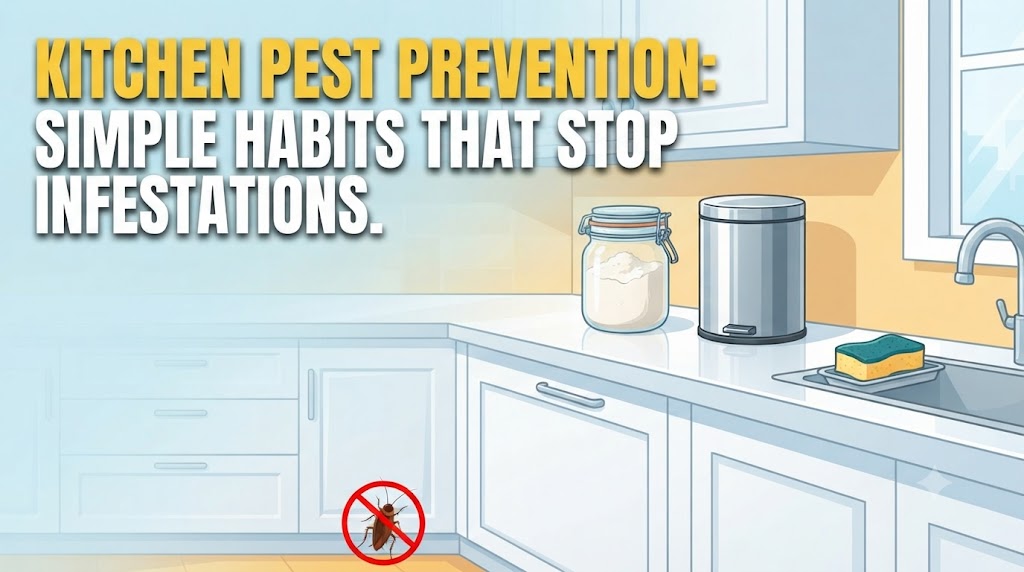
    Kitchen Pest Prevention: Simple Habits That Stop Infestations in Karachi Homes

    Ask anyone who’s dealt with a cockroach problem in Karachi and they’ll tell you it almost always started in the kitchen. It makes sense — food, warmth, and a steady bit of moisture around the sink and stove are exactly what cockroaches, ants, and even the occasional rat are looking for. The good news is that most kitchen infestations aren’t the result of some dramatic failure. They build up slowly, from small daily habits that are easy to fix once you know what to look for.

    This isn’t a one-time deep clean. It’s a set of habits that, kept up consistently, make your kitchen a genuinely poor place for pests to set up in the first place. If an infestation is already established, no amount of habit change will fully clear it — that’s when a proper pest control service in Karachi needs to step in — but for prevention, the daily basics matter more than people expect.

    Why Kitchens Are Ground Zero for Pests

    A kitchen offers three things every pest wants: food residue, moisture, and warm, dark hiding spots. Grease behind a stove, a damp sponge left in the sink overnight, or a gap behind loose skirting near the fridge motor all check one of those boxes. Cockroaches in particular need very little — a smear of grease and a few drops of water are enough to sustain a small population indefinitely, which is why “I clean regularly” doesn’t always translate to “pest-free,” if the cleaning misses the spots pests actually use.

    The Habits That Actually Matter

    Deal With Food Waste the Same Day

    Leaving the kitchen bin uncovered overnight, or letting food scraps sit in the sink drain basket, gives cockroaches and ants an easy overnight meal. Use a bin with a tight lid, take it out daily rather than every few days, and rinse the drain basket before bed rather than in the morning.

    Store Dry Goods in Sealed Containers, Not Bags

    Flour, rice, lentils, and spices left in their original paper or plastic packaging are an open invitation, especially for ants and, in older buildings, rodents. Transferring dry goods to airtight containers is one of the highest-impact changes you can make, because it removes an entire category of food source rather than just tidying up.

    Clean Behind and Under Appliances Monthly

    The stove, fridge, and microwave all create warm, hard-to-reach spaces where grease and crumbs accumulate for months without anyone noticing. Pulling appliances out for a proper clean once a month — not just wiping the visible front panel — removes the exact conditions cockroaches rely on to establish themselves.

    Fix Drips and Standing Water Immediately

    A dripping tap, a leaking pipe under the sink, or condensation pooling under the fridge gives pests a water source even when food is scarce. Cockroaches, in particular, can survive far longer without food than without water, so a persistent drip is often a bigger draw than crumbs on the floor.

    Don’t Leave Pet Food Out Overnight

    If you keep a pet, food left out overnight is a magnet for ants and roaches alike. Feed on a schedule, pick up the bowl once your pet is done, and store pet food in a sealed container the same way you would rice or flour.

    Cockroaches: The Kitchen’s Most Persistent Visitor

    Cockroaches are resilient, reproduce quickly, and — importantly — tend to hide during the day, so seeing one or two roaches at night usually means a larger population is already established out of sight. If you’re seeing consistent activity despite good habits, that’s a sign the issue has moved past what daily cleaning can fix, and a proper cockroach control treatment targeting the actual harborage points behind cabinets and under appliances is the more reliable route.

    Ants: Small Scouts, Bigger Colonies

    A single ant trail across the kitchen counter is rarely a single ant’s problem — it’s a scout reporting back to a colony that could be sizeable and located anywhere from a garden bed to a wall cavity. Wiping the visible trail with soapy water disrupts the scent trail temporarily, but the colony itself is untouched. Persistent ant activity, especially returning to the same spot day after day, is worth addressing with a dedicated ants control treatment rather than repeated spot cleaning.

    Rodents: A Different Kind of Kitchen Problem

    Rats and mice are drawn to kitchens for the same reasons insects are, but they need far less encouragement — a single unsealed gap under a cabinet or around a pipe is enough. Droppings near the stove or under the sink, gnaw marks on packaging, or a faint scratching sound at night are the usual first signs. Because rodents can chew through packaging that would stop insects, and carry a real hygiene risk in food storage areas, this is one pest category where DIY traps are often a stopgap rather than a fix — a proper rats control service will also identify and seal the entry point, which matters more than the trap itself.

    A Simple Weekly Kitchen Routine

    • Daily: empty the bin, rinse the sink and drain basket, wipe down stovetop grease.
    • Weekly: check under the sink for damp patches, wipe down cabinet interiors, sweep behind the fridge if space allows.
    • Monthly: pull out the stove and fridge for a full clean behind and underneath, inspect dry goods for signs of pests, check pipe entry points for gaps.
    • Seasonally: review food storage containers for wear, and get a professional inspection if you’ve noticed any recurring activity.

    FAQs: Kitchen Pest Prevention in Karachi

    Why do I keep seeing cockroaches even though I clean every day?

    Daily surface cleaning often misses the harborage spots roaches actually use — behind appliances, inside cabinet hinges, or around pipe entries. Visible activity despite regular cleaning usually means the population is established somewhere out of sight and needs targeted treatment rather than more cleaning.

    Does keeping food in the fridge instead of the pantry help?

    It helps for some items, but dry goods like rice, flour, and lentils are typically kept at room temperature anyway. The fix there is airtight containers rather than refrigeration, since it’s the packaging — not the temperature — that matters most to ants and pantry pests.

    Are cockroaches in the kitchen a health risk, or just unpleasant?

    Cockroaches are known to spread bacteria as they move between drains, waste, and food surfaces, and their presence is generally treated as a hygiene concern rather than just a nuisance, which is why kitchens and food-handling areas get particular attention in pest control.

    How do I know if it’s ants or termites near my kitchen?

    Ants are typically seen moving in visible trails across surfaces, while termites are rarely seen in the open — look instead for discarded wings, mud tubes, or hollow-sounding wood near kitchen cabinetry, especially if it’s close to an exterior wall.

    Is it worth getting a kitchen pest inspection if I haven’t seen anything yet?

    If your kitchen backs onto an older building, a shared wall with a restaurant or shop, or you’ve had pest problems before, a preventive check is a reasonable step — catching a small population early is far less disruptive than treating an established one.

    Keep Your Kitchen Ahead of the Problem

    Good daily habits close off most of what draws pests to a kitchen in the first place, but they won’t clear an infestation that’s already taken hold behind your cabinets or under the stove. If you’re seeing recurring activity despite doing everything right, get in touch and we’ll assess what’s actually going on before recommending treatment.

  • Natural and Home Remedies for Common Karachi Pests: What Actually Works

    Natural and Home Remedies for Common Karachi Pests: What Actually Works

    Search for pest control advice online and you’ll find a long list of home remedies — vinegar, neem oil, boric acid, garlic paste, diatomaceous earth. Some of it holds up, some of it is folk wisdom that’s stuck around because it does help a little, and some of it just doesn’t do much beyond making the house smell like garlic for a day. If you’d rather try something before calling in professional treatment, it’s worth knowing which of these actually have some basis to them, and — just as importantly — where their limits are.

    This isn’t an argument against home remedies. Several of them genuinely reduce pest activity in low-level situations, and they’re worth having in the cupboard. But it’s also honest to say upfront: none of them reliably clear an established infestation, and pretending otherwise just delays proper treatment while the problem gets bigger. Where a remedy’s limits are reached, we’ve pointed to the professional pest control service in Karachi options that pick up from there.

    Boric Acid: Genuinely Effective, Genuinely Limited

    Boric acid is one of the few home remedies with real insecticidal action rather than just a repellent smell. Mixed into a paste with sugar or a similar bait, it’s effective against cockroaches and ants because the insects carry it back to the colony, where it spreads through contact and grooming. It works slowly rather than instantly, which is actually a feature — a fast kill wouldn’t reach the rest of the colony.

    The catch is scale. Boric acid handles small, localized populations reasonably well, but it isn’t going to clear an established cockroach infestation spread through wall cavities and behind multiple appliances, and it has no meaningful effect on rodents or termites. It also needs careful placement away from children and pets, since ingestion can cause irritation.

    Diatomaceous Earth: Slow, Mechanical, and Weather-Sensitive

    Diatomaceous earth (DE) works differently from boric acid — it’s a fine powder made from fossilized algae that physically damages an insect’s exoskeleton, causing it to dry out. It’s non-toxic to humans and pets when used as directed, which makes it a reasonable option for spot treatment in pantries or under sinks.

    Its main limitation in Karachi specifically is humidity: DE loses effectiveness when it gets damp, which is a real issue for a city with monsoon season and high year-round humidity. It also needs reapplying regularly, and like boric acid, it’s a spot treatment rather than a solution for an established colony.

    Neem Oil: A Reasonable Deterrent, Not an Eliminator

    Neem oil has a long history of use in South Asia as a natural pest deterrent, and there’s some real basis to it — it disrupts insect feeding and molting, which makes it more useful for slowing an infestation than eliminating one outright. Diluted neem oil sprayed around entry points or plant bases can reduce ant and general insect activity.

    Where it falls short is against anything already established indoors. Neem oil won’t reach a termite colony underground, and it does very little for cockroaches once they’re nesting behind cabinets rather than just passing through a treated area.

    Vinegar, Soap Sprays, and Essential Oils: Useful for Cleanup, Weak for Prevention

    Vinegar is genuinely good at disrupting ant scent trails, which is why wiping down a counter with a vinegar solution stops ants from following the same path for a while. Soapy water sprayed directly on visible cockroaches or ants can kill them on contact by breaking down their protective coating. Essential oils like peppermint or eucalyptus have a repellent effect for some insects due to their strong scent.

    What all three have in common is that they’re short-lived and don’t address the source. Wiping an ant trail doesn’t touch the colony it came from, and a soap spray only kills what it directly contacts — neither does anything for the pests you don’t see.

    What Home Remedies Don’t Touch at All

    It’s worth being direct about three pest categories where home remedies genuinely aren’t a solution, not just a weaker one:

    • Termites: No home remedy reaches a subterranean termite colony feeding underground or inside wall voids. By the time you can see termite damage, home treatments applied to the visible surface do essentially nothing for the colony that caused it — this needs a proper termite control treatment.
    • Rodents: Peppermint oil and similar scents may make a spot less appealing temporarily, but rats and mice are highly adaptable and a determined rodent will work around a repellent smell. Sealing entry points and, where needed, professional rats control is the effective route.
    • Bed bugs: Bed bugs are notoriously resistant to casual treatment — they hide deep in mattress seams and furniture joints, and heat or targeted chemical treatment is what actually reaches them. Home sprays typically just scatter them further into the room, making a professional bed bugs fumigation treatment more necessary, not less.

    Where Natural Remedies Genuinely Make Sense

    To be fair to the other side of this: for a handful of ants on a kitchen counter, an early cockroach sighting with no other signs of activity, or general deterrence in a garden, natural remedies are a reasonable first response. They’re low-cost, low-risk, and often enough on their own if the population is small and you catch it early. The mistake is treating them as a substitute for professional treatment once there’s clear, repeated activity — at that point they mostly just buy the pest more time to establish itself further.

    A Simple Way to Decide

    If you’ve seen one or two individual pests, in one location, with no other signs (no droppings, no mud tubes, no recurring trail), a natural remedy is a reasonable first step. If you’re seeing repeated activity across multiple areas, physical signs like droppings or mud tubes, or the same problem coming back despite home treatment, that’s the point to bring in professional help rather than escalate the home remedy.

    FAQs: Natural Pest Remedies in Karachi

    Is boric acid safe to use around children and pets?

    Boric acid is low-toxicity for humans but can cause irritation if ingested in quantity, so it should be placed in bait stations or areas genuinely out of reach rather than left as loose powder in an open kitchen.

    Does neem oil actually repel mosquitoes, or is that a myth?

    Neem oil has some documented repellent effect against mosquitoes and other insects, though it’s generally shorter-lasting than commercial repellents and works best as a supplementary measure rather than the sole line of defense during peak monsoon mosquito activity.

    Why doesn’t diatomaceous earth work as well in Karachi as it might elsewhere?

    DE relies on staying dry to work — it becomes ineffective once damp. Karachi’s humidity, especially during monsoon, shortens how long a single application stays effective, so it needs more frequent reapplication than in a drier climate.

    Can I combine home remedies with professional treatment, or should I stop using them once I call a professional?

    It’s generally fine to combine them for prevention in untreated areas, but avoid spraying strong-smelling home remedies in the specific areas a professional technician plans to treat, since some scents can interfere with bait effectiveness — it’s worth asking your technician directly.

    What’s the biggest mistake people make with home pest remedies?

    Treating a visible remedy’s effect — fewer bugs seen — as proof the underlying colony is gone. Most home remedies reduce visible activity without touching the source, which is why the problem often reappears within weeks.

    Know When to Move Past Home Remedies

    Home remedies have a real, if limited, place in pest prevention — they’re worth using for small, early-stage issues. But once a problem is established, repeated, or involves termites, bed bugs, or rodents, further home treatment mostly just delays the fix. If that’s where you are, get in touch and we’ll assess what’s actually going on before recommending treatment.

  • Post-Renovation Pest Prevention: Protecting New Karachi Homes and Offices

    Post-Renovation Pest Prevention: Protecting New Karachi Homes and Offices

    There’s a common assumption that new construction or a freshly renovated space is naturally pest-free, at least for a while. In practice, renovation and new-build sites can actually introduce pest risk rather than remove it — fresh timber, disturbed soil around the foundation, and gaps left behind by contractors who’ve moved on to the next job are all things that can invite pests in during the first year, not keep them out.

    This matters for two different groups: homeowners handing over a newly built house, and businesses — restaurants, offices, retail units — moving into a freshly renovated commercial space. Both face a similar window of vulnerability right after handover, and both benefit from treating pest prevention as part of the project close-out rather than something to think about later once there’s already a problem.

    Why New Construction Isn’t Automatically Pest-Free

    New construction disturbs the soil around a building’s foundation, which can actually make it easier for subterranean termites to reach untreated wood if pre-construction soil treatment wasn’t done properly, or wasn’t done at all. Fresh timber used in doors, frames, and furniture is also more attractive to termites than older, treated wood, simply because it hasn’t been exposed to any barrier treatment yet.

    Beyond termites, renovation sites generate exactly the conditions pests look for: leftover construction debris, gaps around new plumbing and electrical work that haven’t been finished off, and — in commercial fit-outs especially — food waste from workers on site that draws cockroaches and rodents before the business has even opened.

    Termite Risk Is the Biggest Post-Renovation Concern

    If pre-construction soil treatment wasn’t carried out before the foundation was laid, a post-construction termite treatment becomes the priority once the structure is up, since it’s the only way to establish a chemical barrier retroactively. This is done by drilling and injecting termiticide around the foundation and any at-risk points where wood meets soil or masonry, and it’s considerably easier to do properly before floors are covered, cabinetry is installed, and finishes go in.

    If you’re not sure whether soil treatment was done during construction, ask the contractor for documentation — reputable builders will have records of it, since it’s a standard part of proper construction practice in Karachi given how common termite damage is in untreated buildings. Where there’s no record, a termite control inspection before you move in is a sensible step, and considerably cheaper than replacing termite-damaged door frames or flooring a year or two later.

    New Furniture and Fixtures Bring Their Own Risk

    Furniture delivered fresh for a new home or office isn’t automatically pest-free either. Wooden furniture stored in a warehouse before delivery can pick up termites or wood-boring insects, and upholstered furniture — sofas, mattresses, office chairs — is a known route for bed bugs to enter a property that never had them before, particularly if the furniture came through secondhand channels or sat in shared storage. Inspecting new furniture for small holes, frass (a fine, sawdust-like residue), or seams that look disturbed before it’s placed in the home is a quick check worth doing on delivery day.

    Kitchens and Food Areas Need Attention Before Opening, Not After

    For restaurants, cafes, and any commercial kitchen fit-out, the period between construction finishing and the business opening is exactly when pest prevention should happen — not after the first customer complaint. Grease traps, new plumbing runs, and storage areas should all be checked for sealed entry points before shelving and equipment make those same areas hard to access. This is also the point where compliance matters: restaurants and food businesses in Karachi are expected to meet hygiene standards that food safety inspections will check, and having a documented pre-opening pest control treatment in place is a reasonable thing to have ready if asked.

    A Post-Renovation Pest Prevention Checklist

    • Confirm termite soil treatment records from the contractor, or arrange an inspection if none exist.
    • Inspect new wooden furniture and fixtures for holes, frass, or damaged seams before placing them in the home or office.
    • Check that all new plumbing and electrical penetrations through walls are properly sealed, not just functional.
    • Clear construction debris fully, including offcuts and packaging left in storage areas, before move-in.
    • Have kitchens and food storage areas inspected before a commercial space opens, not after activity is noticed.
    • Schedule water tank cleaning if new tanks were installed or existing ones were exposed to construction dust — a water tank cleaning service is a sensible final step before the property is occupied.

    Commercial Fit-Outs: A Slightly Different Set of Risks

    Offices, restaurants, and retail spaces going through renovation face the same structural risks as homes, plus a few specific to commercial use — high foot traffic bringing in pests from surrounding units, shared walls with neighboring businesses that may already have an issue, and, for food businesses particularly, a much lower tolerance for any visible pest activity once open. Getting a pest control plan in place before opening day, rather than reacting to the first sighting, is generally the difference between a minor prevention step and an emergency closure risk.

    FAQs: Pest Prevention After Renovation or New Construction

    Do I really need a termite inspection if the house is brand new?

    Yes, particularly if you can’t confirm pre-construction soil treatment was carried out. New construction disturbs soil and introduces fresh, untreated timber, both of which can increase termite risk rather than reduce it.

    Can new furniture bring pests into a home that never had any?

    It can, especially wooden furniture stored in shared warehouses or upholstered pieces that passed through secondhand channels. A quick visual inspection on delivery for holes, frass, or disturbed seams is a reasonable precaution.

    How soon after renovation should I get a pest inspection?

    Ideally before you move furniture and belongings in, while entry points and foundation areas are still easy to access. Waiting until after the space is fully set up makes both inspection and any needed treatment more disruptive.

    Is post-construction termite treatment as effective as pre-construction treatment?

    It can be effective, but it’s inherently more limited than treatment applied before the foundation is laid, since it involves drilling and injecting termiticide around an already-built structure rather than creating a continuous barrier underneath it from the start.

    What should a restaurant or commercial kitchen prioritize before opening?

    Grease trap and drain sealing, storage area entry points, and a documented pre-opening pest control treatment, since these are the areas health inspections typically focus on and the areas most likely to develop problems once the kitchen is in daily use.

    Build Pest Prevention Into Your Move-In Plan

    New construction and fresh renovations create their own pest risks, from disturbed soil to untreated timber to furniture that’s traveled through shared storage before reaching you. Treating pest prevention as part of the handover — not an afterthought once something’s spotted — is far less disruptive than dealing with an established problem in a space you’ve only just finished building. If you’re planning a move-in or opening date, get in touch and we’ll help you schedule inspection and treatment around your timeline.

  • Sealing Entry Points: A DIY Guide to Pest-Proofing Doors and Windows in Karachi

    Sealing Entry Points: A DIY Guide to Pest-Proofing Doors and Windows in Karachi

    Most pests don’t need a dramatic opening to get into a home — a gap the width of a pencil under a door is enough for cockroaches, and rodents can squeeze through openings smaller than most people assume. In a lot of Karachi’s older buildings, doors have shrunk slightly with age, window frames have gaps that were never properly sealed, and gutter or pipe penetrations through walls were left as-is once the plumber left. None of this is unusual, and almost none of it requires a contractor to fix.

    This is a practical, weekend-sized guide to finding and sealing the entry points that let pests into a Karachi home — the kind of prevention that works alongside, not instead of, professional treatment when there’s already an active problem. If you’re dealing with an existing infestation rather than prevention, sealing entry points alone won’t solve it; at that point it’s worth pairing this with a proper pest control service in Karachi to deal with what’s already inside.

    Why Sealing Matters More Than People Think

    Chemical treatments and baits deal with pests that are already in or near your home, but they don’t stop new ones from walking, crawling, or flying in tomorrow. Sealing entry points is the structural half of pest prevention — it’s slower to notice the benefit of, but it’s also the part that keeps working without any ongoing effort once it’s done properly.

    Doing a Proper Entry Point Walkthrough

    The most effective way to find gaps is to walk the outside of your house at dusk with a torch, looking for light leaking through from indoors, or conversely walk indoors during the day looking for daylight coming through gaps around doors and windows. Go slowly — most gaps are small enough to miss on a quick glance.

    Doors

    Check the gap under every exterior door, including the back door, service entrance, and any door leading to a terrace or garage. A door sweep — a simple strip fitted to the bottom of the door — closes this gap cheaply and is the single highest-impact fix in most homes, since it blocks the most common entry route for cockroaches, ants, and even small rodents. Check the door frame itself too; gaps between the frame and the wall, especially on older wooden frames that have shifted slightly, need caulk or expanding foam depending on the size of the gap.

    Windows

    Look at the weatherstripping around window frames — if it’s cracked, peeling, or missing in sections, that’s an open route for insects. Replacing worn weatherstripping is inexpensive and takes an afternoon for a whole house. For windows with gaps in the frame itself rather than just worn stripping, silicone caulk designed for exterior use holds up better against Karachi’s heat and humidity than standard interior caulk.

    Pipe and Cable Penetrations

    Every pipe, cable, or duct that passes through an exterior wall leaves a gap around it, and these are frequently left unsealed after installation. Expanding foam or a proper escutcheon plate closes these gaps, and it’s worth checking around AC unit installations specifically, since these are drilled fresh and often left with a visible gap around the pipe.

    Vents and Exhausts

    Kitchen and bathroom exhaust vents, as well as any dryer vent, need a proper mesh or louvre cover — an open vent is effectively an unsealed hole straight into the house. Check that existing covers haven’t rusted through or come loose, which is common after a few years of exposure to Karachi’s coastal air.

    Foundation and Boundary Wall Gaps

    Cracks where the foundation meets the ground, or gaps where a boundary wall meets the main structure, are a common termite entry route since they connect directly to soil. These are usually best handled as part of a professional termite control inspection rather than DIY sealing, since a termiticide barrier does more here than caulk alone.

    A Practical Sealing Checklist

    • Door sweeps: fit on every exterior door, including service and terrace doors.
    • Door frames: caulk gaps between frame and wall.
    • Window weatherstripping: replace anything cracked, peeling, or missing.
    • Window frame gaps: seal with exterior-grade silicone caulk.
    • Pipe and cable penetrations: foam or plate any visible gap around AC lines, water pipes, and electrical conduits.
    • Vents: confirm mesh covers are intact on kitchen, bathroom, and dryer exhausts.
    • Foundation cracks: flag for professional inspection rather than DIY sealing, particularly if there’s any sign of termite activity nearby.

    Materials Worth Keeping on Hand

    A basic sealing kit for most homes includes a tube of exterior-grade silicone caulk, expanding foam for larger gaps, self-adhesive door sweeps, and replacement window weatherstripping. None of these require specialist tools — a caulking gun and a utility knife cover almost every job on the checklist above.

    What Sealing Won’t Fix

    Sealing stops new pests from entering, but it does nothing for a population that’s already established behind your walls or under your foundation. If you’ve sealed every obvious gap and are still seeing activity — particularly cockroaches, ants, or signs of rodents — that’s a sign the issue is already indoors rather than coming in from outside, and treatment rather than more sealing is the next step. The same applies to termites: sealing a crack near the foundation doesn’t remove an existing colony feeding underground.

    FAQs: Sealing Entry Points in Karachi Homes

    How do I know if a gap is actually letting pests in, versus just a cosmetic issue?

    As a rough guide, if you can see daylight through it from indoors, or slide a piece of paper through it easily, it’s wide enough for most common household pests. Gaps this size are worth sealing regardless of whether you’ve had a pest problem yet.

    Will door sweeps actually stop rats, or only insects?

    A good door sweep closes the gap enough to block most insects and will deter rodents too, but rats and mice can squeeze through surprisingly small gaps, so a sweep should be paired with checking for larger openings elsewhere, particularly around pipe penetrations and vents.

    Is caulking enough to stop termites, or do I need something else?

    Caulk helps with small surface cracks but isn’t a termite barrier — termites travel through soil and can build mud tubes over caulked gaps if there’s an active colony nearby. Foundation-level termite risk is better handled with a professional soil treatment than DIY sealing alone.

    How often should I redo the sealing around my house?

    Check weatherstripping and door sweeps annually, since Karachi’s heat causes rubber and foam seals to degrade faster than in cooler climates. Silicone caulk on window frames typically lasts a few years before it needs reapplying, depending on sun exposure.

    I’ve sealed everything I can find but I’m still seeing cockroaches — what now?

    That usually means the population is already established indoors rather than entering fresh, and sealing alone won’t clear it. At that point, a targeted cockroach control treatment aimed at existing harborage points is the more effective next step.

    Seal First, Then Treat If Needed

    A thorough sealing pass around doors, windows, and utility penetrations removes most of the easy entry points pests rely on, and it’s genuinely a weekend project for most homes. If you’ve done the sealing and are still dealing with an active pest problem, or you’d rather have a professional flag the gaps you might have missed, get in touch and we’ll take it from there.