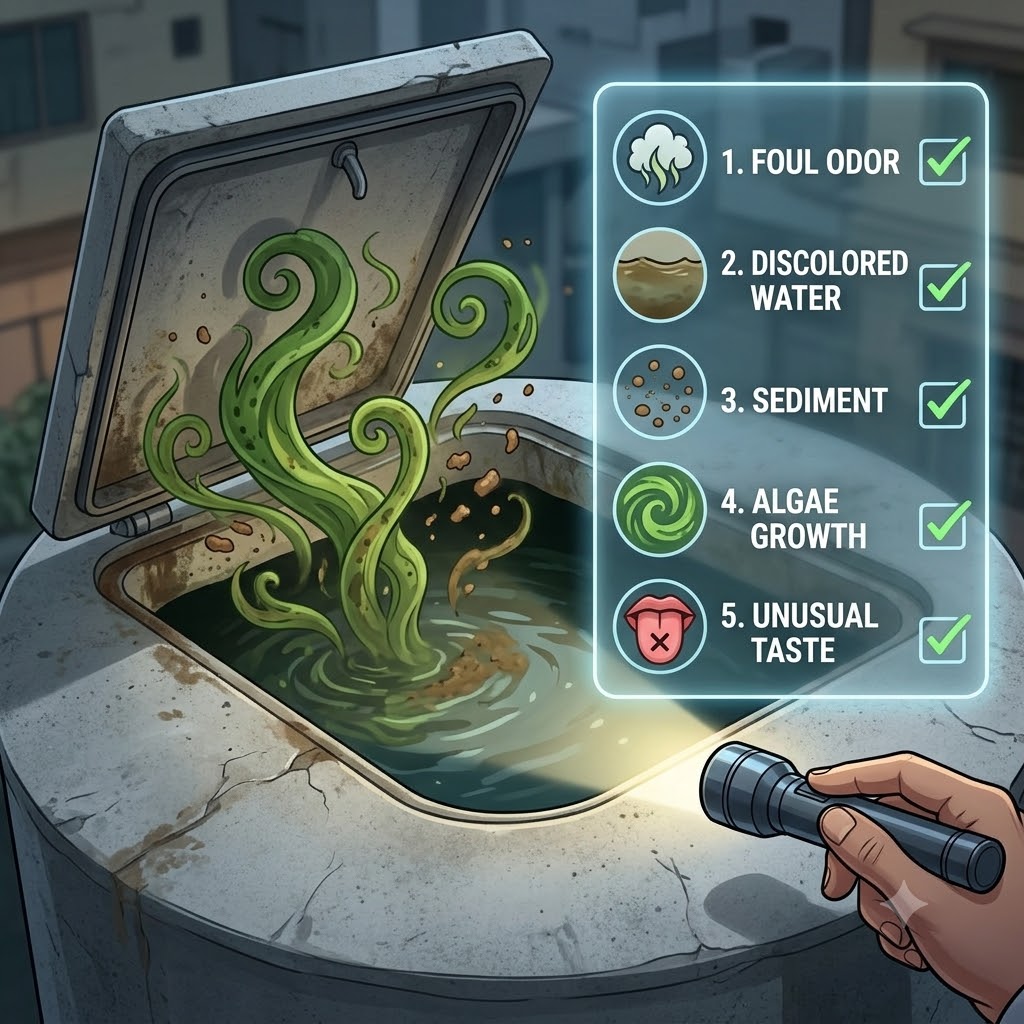
Your water tank needs cleaning if the tap water looks yellow or cloudy, smells musty or like sulphur, tastes metallic or flat, or if you can see algae or slime on the tank walls and lid. If you’ve noticed two or more of these, or it has been about six months since the last clean, don’t wait for the next scheduled service.
Most people in Karachi only think about their tank when something goes wrong, and by then it has usually been overdue for months. A dirty tank almost always gives warning signs first, and checking for them yourself matters if you rely on water tank cleaning only once or twice a year. This checklist runs from the obvious signs to the easy-to-miss ones, for both overhead and underground tanks.
1. Look at the Water Itself
Colour and clarity
Clean tank water should be clear with no tint. Water that looks pale yellow, brownish or slightly cloudy usually points to rust from an ageing tank or fittings, sediment stirred up from the tank floor, or organic matter breaking down inside.
Visible particles
Hold a glass of tap water up to the light. Specks of grit, tiny flakes or a fine film on the surface mean sediment has built up at the bottom of the tank and is being drawn into your supply line. This is common in older Karachi homes where the tank hasn’t been drained and scrubbed in a year or more.
2. Smell Before You Use It
A well-maintained tank gives water with little or no smell. Treat any of these as a clear signal:
- A musty, “stagnant pond” smell — usually algae or bacterial growth on the tank walls
- A rotten-egg or sulphur smell — often linked to bacterial activity in stagnant, low-oxygen water
- A chemical or plasticky smell — can come from the tank material itself, especially an old tank baking in direct sun, or from chemicals added to the water, so have it checked
If you also have pests around the tank area, deal with both together. Cockroaches and rodents are drawn to damp, undisturbed spaces like tank rooms and rooftop tank stands, and our cockroach control and rats and rodent control teams are often called to the same buildings that need tank cleaning.
3. Taste Changes
If drinking water suddenly tastes metallic, flat or faintly bitter, and nothing else has changed (no new filter, no change in city water supply timing), the tank is the most likely cause. Taste is often the first thing residents notice, well before smell or colour.
4. Physical Signs on the Tank Itself
- Algae staining on the inside walls near the waterline, especially in overhead tanks exposed to sunlight
- Slimy residue on the underside of the lid, a strong indicator of biofilm build-up
- Cracks or gaps in the lid seal, which let in dust, insects and rainwater
- Rust streaks on the outside of metal tanks or fittings
- Reduced water pressure or flow, which can mean sediment is partly blocking the outlet pipe
5. Health Symptoms in the Household
This is the sign nobody wants, but it matters most. Contaminated stored water can cause stomach illness, so if more than one person at home has had unexplained stomach upset, diarrhoea or skin irritation after bathing, get the tank checked as one possible cause. Many things can cause these symptoms, so see a doctor if they persist. Our post on the health risks of dirty water tanks in Karachi covers what contamination can lead to.
6. It’s Simply Been Too Long
Sediment, biofilm and microbial growth build up gradually and invisibly, long before they produce a smell or a symptom, so time alone is a reason to clean. Given Karachi’s heat for most of the year and its humid monsoon stretch, we recommend cleaning overhead tanks roughly every six months. Underground tanks and heavily used building tanks may need it sooner. The reasoning is in our guide on how often to clean your water tank in Karachi.
Underground vs Overhead: Different Tanks, Different Warning Signs
The first signs differ by tank type. For the cleaning differences in practice, see underground vs overhead water tank cleaning in Karachi.
| Tank type | Signs that tend to show first | Why |
|---|---|---|
| Overhead | Algae staining, musty smell, dust or debris in the water | Sun exposure speeds up algae growth, and worn lid seals let in dust |
| Underground | Sediment in the water, cracked seals, reduced flow | Silent sediment build-up, plus possible seepage in low-lying areas and during monsoon |
A Simple Monthly Check You Can Do Yourself
A short monthly habit catches most of the signs above while they’re still small:
- Open the lid and look inside, using a torch if it’s dark, for staining, slime or anything floating
- Fill a clear glass from the tap and check colour and clarity; let it sit for a minute to see if anything settles
- Smell the water before using it for cooking or drinking that day
- Check that the lid sits flush with no cracks or gaps
- Note the date of the last professional clean where you’ll actually see it, such as a sticky note near the tank access point
This doesn’t replace a professional clean, but it’s the difference between catching a problem in week two and not noticing until month five.
DIY Cleaning vs a Professional: What to Do When You Spot These Signs
A quick scrub near the lid or rinsing out visible debris can help between scheduled cleans, but it rarely reaches biofilm established on the tank walls. Avoid guessing chlorine doses, and never enter an underground tank without proper equipment because of confined-space risks. If you see two or more signs from this checklist, book a professional inspection instead of carrying on with DIY measures. It tells you the sediment depth, algae coverage and structural condition before you commit to a full clean.
The price depends on tank size and condition. See water tank cleaning cost by tank size and our charges page for how it works.
Frequently Asked Questions
How do I know if my water tank has algae without opening it?
A musty smell from the tap, a greenish tint to the water, or green staining near the waterline (if you can see inside through an inspection point) are the clearest signs without a full inspection.
Is it safe to keep using water from a tank that smells bad?
Avoid drinking or cooking with it until the tank has been checked. A mild odour in bathing water is generally lower risk, but a persistent smell usually means bacterial or algae growth that’s worth addressing quickly.
Can a water filter fix a dirty tank problem?
A tap filter can reduce some sediment and improve taste, but it doesn’t remove the source, which is biofilm and contamination inside the tank. Cleaning the tank is the only real fix.
How often should apartment building tanks be checked compared with houses?
Shared tanks see heavier daily use, so inspect them at least as often as household tanks. Every six months is a reasonable baseline, adjusted for the number of units drawing from the tank. See water tank cleaning for apartment buildings for building committees.
Does monsoon season make tanks dirtier faster?
Yes. Heavy rain raises the chance of seepage into underground tanks and can carry dust and debris into overhead tanks through worn seals, so many households notice more sediment and smell right after monsoon. Our guide to monsoon water contamination in Karachi covers what to check.
Can a dirty or open water tank breed mosquitoes?
Mosquitoes can breed in stored water, so a tank with a missing lid or gaps in the seal is a risk. Keep the lid sealed and fix any gaps; for the wider picture, read about mosquito and dengue risk in Karachi.
Get Your Tank Checked Before It Becomes a Health Problem
If you’ve spotted even one or two of these signs — a funny smell, cloudy water, visible staining, or a household member unwell for no clear reason — get a proper inspection rather than waiting. Get in touch with our team and we’ll take a look before it turns into a bigger issue.

Rehan Khan is the founder of Accurate Fumigation and an entomologist. He holds an M.Sc. in Entomology and a B.Sc. in Environmental Science, and has worked in pest control in Karachi for three decades. He founded the company in 2005 and writes about the pest and water problems the city deals with each season. Accurate Fumigation is ISO 9001:2015 certified and a member of the National Pest Management Association.
Questions about a service, or need a certificate for an inspection? Call the office on 0330-2533480. Read Rehan’s full profile.