Author: Rehan Khan

  • Post-Renovation Pest Prevention: Protecting New Karachi Homes and Offices

    Post-Renovation Pest Prevention: Protecting New Karachi Homes and Offices

    There’s a common assumption that new construction or a freshly renovated space is naturally pest-free, at least for a while. In practice, renovation and new-build sites can actually introduce pest risk rather than remove it — fresh timber, disturbed soil around the foundation, and gaps left behind by contractors who’ve moved on to the next job are all things that can invite pests in during the first year, not keep them out.

    This matters for two different groups: homeowners handing over a newly built house, and businesses — restaurants, offices, retail units — moving into a freshly renovated commercial space. Both face a similar window of vulnerability right after handover, and both benefit from treating pest prevention as part of the project close-out rather than something to think about later once there’s already a problem.

    Why New Construction Isn’t Automatically Pest-Free

    New construction disturbs the soil around a building’s foundation, which can actually make it easier for subterranean termites to reach untreated wood if pre-construction soil treatment wasn’t done properly, or wasn’t done at all. Fresh timber used in doors, frames, and furniture is also more attractive to termites than older, treated wood, simply because it hasn’t been exposed to any barrier treatment yet.

    Beyond termites, renovation sites generate exactly the conditions pests look for: leftover construction debris, gaps around new plumbing and electrical work that haven’t been finished off, and — in commercial fit-outs especially — food waste from workers on site that draws cockroaches and rodents before the business has even opened.

    Termite Risk Is the Biggest Post-Renovation Concern

    If pre-construction soil treatment wasn’t carried out before the foundation was laid, a post-construction termite treatment becomes the priority once the structure is up, since it’s the only way to establish a chemical barrier retroactively. This is done by drilling and injecting termiticide around the foundation and any at-risk points where wood meets soil or masonry, and it’s considerably easier to do properly before floors are covered, cabinetry is installed, and finishes go in.

    If you’re not sure whether soil treatment was done during construction, ask the contractor for documentation — reputable builders will have records of it, since it’s a standard part of proper construction practice in Karachi given how common termite damage is in untreated buildings. Where there’s no record, a termite control inspection before you move in is a sensible step, and considerably cheaper than replacing termite-damaged door frames or flooring a year or two later.

    New Furniture and Fixtures Bring Their Own Risk

    Furniture delivered fresh for a new home or office isn’t automatically pest-free either. Wooden furniture stored in a warehouse before delivery can pick up termites or wood-boring insects, and upholstered furniture — sofas, mattresses, office chairs — is a known route for bed bugs to enter a property that never had them before, particularly if the furniture came through secondhand channels or sat in shared storage. Inspecting new furniture for small holes, frass (a fine, sawdust-like residue), or seams that look disturbed before it’s placed in the home is a quick check worth doing on delivery day.

    Kitchens and Food Areas Need Attention Before Opening, Not After

    For restaurants, cafes, and any commercial kitchen fit-out, the period between construction finishing and the business opening is exactly when pest prevention should happen — not after the first customer complaint. Grease traps, new plumbing runs, and storage areas should all be checked for sealed entry points before shelving and equipment make those same areas hard to access. This is also the point where compliance matters: restaurants and food businesses in Karachi are expected to meet hygiene standards that food safety inspections will check, and having a documented pre-opening pest control treatment in place is a reasonable thing to have ready if asked.

    A Post-Renovation Pest Prevention Checklist

    • Confirm termite soil treatment records from the contractor, or arrange an inspection if none exist.
    • Inspect new wooden furniture and fixtures for holes, frass, or damaged seams before placing them in the home or office.
    • Check that all new plumbing and electrical penetrations through walls are properly sealed, not just functional.
    • Clear construction debris fully, including offcuts and packaging left in storage areas, before move-in.
    • Have kitchens and food storage areas inspected before a commercial space opens, not after activity is noticed.
    • Schedule water tank cleaning if new tanks were installed or existing ones were exposed to construction dust — a water tank cleaning service is a sensible final step before the property is occupied.

    Commercial Fit-Outs: A Slightly Different Set of Risks

    Offices, restaurants, and retail spaces going through renovation face the same structural risks as homes, plus a few specific to commercial use — high foot traffic bringing in pests from surrounding units, shared walls with neighboring businesses that may already have an issue, and, for food businesses particularly, a much lower tolerance for any visible pest activity once open. Getting a pest control plan in place before opening day, rather than reacting to the first sighting, is generally the difference between a minor prevention step and an emergency closure risk.

    FAQs: Pest Prevention After Renovation or New Construction

    Do I really need a termite inspection if the house is brand new?

    Yes, particularly if you can’t confirm pre-construction soil treatment was carried out. New construction disturbs soil and introduces fresh, untreated timber, both of which can increase termite risk rather than reduce it.

    Can new furniture bring pests into a home that never had any?

    It can, especially wooden furniture stored in shared warehouses or upholstered pieces that passed through secondhand channels. A quick visual inspection on delivery for holes, frass, or disturbed seams is a reasonable precaution.

    How soon after renovation should I get a pest inspection?

    Ideally before you move furniture and belongings in, while entry points and foundation areas are still easy to access. Waiting until after the space is fully set up makes both inspection and any needed treatment more disruptive.

    Is post-construction termite treatment as effective as pre-construction treatment?

    It can be effective, but it’s inherently more limited than treatment applied before the foundation is laid, since it involves drilling and injecting termiticide around an already-built structure rather than creating a continuous barrier underneath it from the start.

    What should a restaurant or commercial kitchen prioritize before opening?

    Grease trap and drain sealing, storage area entry points, and a documented pre-opening pest control treatment, since these are the areas health inspections typically focus on and the areas most likely to develop problems once the kitchen is in daily use.

    Build Pest Prevention Into Your Move-In Plan

    New construction and fresh renovations create their own pest risks, from disturbed soil to untreated timber to furniture that’s traveled through shared storage before reaching you. Treating pest prevention as part of the handover — not an afterthought once something’s spotted — is far less disruptive than dealing with an established problem in a space you’ve only just finished building. If you’re planning a move-in or opening date, get in touch and we’ll help you schedule inspection and treatment around your timeline.

  • Sealing Entry Points: A DIY Guide to Pest-Proofing Doors and Windows in Karachi

    Sealing Entry Points: A DIY Guide to Pest-Proofing Doors and Windows in Karachi

    Most pests don’t need a dramatic opening to get into a home — a gap the width of a pencil under a door is enough for cockroaches, and rodents can squeeze through openings smaller than most people assume. In a lot of Karachi’s older buildings, doors have shrunk slightly with age, window frames have gaps that were never properly sealed, and gutter or pipe penetrations through walls were left as-is once the plumber left. None of this is unusual, and almost none of it requires a contractor to fix.

    This is a practical, weekend-sized guide to finding and sealing the entry points that let pests into a Karachi home — the kind of prevention that works alongside, not instead of, professional treatment when there’s already an active problem. If you’re dealing with an existing infestation rather than prevention, sealing entry points alone won’t solve it; at that point it’s worth pairing this with a proper pest control service in Karachi to deal with what’s already inside.

    Why Sealing Matters More Than People Think

    Chemical treatments and baits deal with pests that are already in or near your home, but they don’t stop new ones from walking, crawling, or flying in tomorrow. Sealing entry points is the structural half of pest prevention — it’s slower to notice the benefit of, but it’s also the part that keeps working without any ongoing effort once it’s done properly.

    Doing a Proper Entry Point Walkthrough

    The most effective way to find gaps is to walk the outside of your house at dusk with a torch, looking for light leaking through from indoors, or conversely walk indoors during the day looking for daylight coming through gaps around doors and windows. Go slowly — most gaps are small enough to miss on a quick glance.

    Doors

    Check the gap under every exterior door, including the back door, service entrance, and any door leading to a terrace or garage. A door sweep — a simple strip fitted to the bottom of the door — closes this gap cheaply and is the single highest-impact fix in most homes, since it blocks the most common entry route for cockroaches, ants, and even small rodents. Check the door frame itself too; gaps between the frame and the wall, especially on older wooden frames that have shifted slightly, need caulk or expanding foam depending on the size of the gap.

    Windows

    Look at the weatherstripping around window frames — if it’s cracked, peeling, or missing in sections, that’s an open route for insects. Replacing worn weatherstripping is inexpensive and takes an afternoon for a whole house. For windows with gaps in the frame itself rather than just worn stripping, silicone caulk designed for exterior use holds up better against Karachi’s heat and humidity than standard interior caulk.

    Pipe and Cable Penetrations

    Every pipe, cable, or duct that passes through an exterior wall leaves a gap around it, and these are frequently left unsealed after installation. Expanding foam or a proper escutcheon plate closes these gaps, and it’s worth checking around AC unit installations specifically, since these are drilled fresh and often left with a visible gap around the pipe.

    Vents and Exhausts

    Kitchen and bathroom exhaust vents, as well as any dryer vent, need a proper mesh or louvre cover — an open vent is effectively an unsealed hole straight into the house. Check that existing covers haven’t rusted through or come loose, which is common after a few years of exposure to Karachi’s coastal air.

    Foundation and Boundary Wall Gaps

    Cracks where the foundation meets the ground, or gaps where a boundary wall meets the main structure, are a common termite entry route since they connect directly to soil. These are usually best handled as part of a professional termite control inspection rather than DIY sealing, since a termiticide barrier does more here than caulk alone.

    A Practical Sealing Checklist

    • Door sweeps: fit on every exterior door, including service and terrace doors.
    • Door frames: caulk gaps between frame and wall.
    • Window weatherstripping: replace anything cracked, peeling, or missing.
    • Window frame gaps: seal with exterior-grade silicone caulk.
    • Pipe and cable penetrations: foam or plate any visible gap around AC lines, water pipes, and electrical conduits.
    • Vents: confirm mesh covers are intact on kitchen, bathroom, and dryer exhausts.
    • Foundation cracks: flag for professional inspection rather than DIY sealing, particularly if there’s any sign of termite activity nearby.

    Materials Worth Keeping on Hand

    A basic sealing kit for most homes includes a tube of exterior-grade silicone caulk, expanding foam for larger gaps, self-adhesive door sweeps, and replacement window weatherstripping. None of these require specialist tools — a caulking gun and a utility knife cover almost every job on the checklist above.

    What Sealing Won’t Fix

    Sealing stops new pests from entering, but it does nothing for a population that’s already established behind your walls or under your foundation. If you’ve sealed every obvious gap and are still seeing activity — particularly cockroaches, ants, or signs of rodents — that’s a sign the issue is already indoors rather than coming in from outside, and treatment rather than more sealing is the next step. The same applies to termites: sealing a crack near the foundation doesn’t remove an existing colony feeding underground.

    FAQs: Sealing Entry Points in Karachi Homes

    How do I know if a gap is actually letting pests in, versus just a cosmetic issue?

    As a rough guide, if you can see daylight through it from indoors, or slide a piece of paper through it easily, it’s wide enough for most common household pests. Gaps this size are worth sealing regardless of whether you’ve had a pest problem yet.

    Will door sweeps actually stop rats, or only insects?

    A good door sweep closes the gap enough to block most insects and will deter rodents too, but rats and mice can squeeze through surprisingly small gaps, so a sweep should be paired with checking for larger openings elsewhere, particularly around pipe penetrations and vents.

    Is caulking enough to stop termites, or do I need something else?

    Caulk helps with small surface cracks but isn’t a termite barrier — termites travel through soil and can build mud tubes over caulked gaps if there’s an active colony nearby. Foundation-level termite risk is better handled with a professional soil treatment than DIY sealing alone.

    How often should I redo the sealing around my house?

    Check weatherstripping and door sweeps annually, since Karachi’s heat causes rubber and foam seals to degrade faster than in cooler climates. Silicone caulk on window frames typically lasts a few years before it needs reapplying, depending on sun exposure.

    I’ve sealed everything I can find but I’m still seeing cockroaches — what now?

    That usually means the population is already established indoors rather than entering fresh, and sealing alone won’t clear it. At that point, a targeted cockroach control treatment aimed at existing harborage points is the more effective next step.

    Seal First, Then Treat If Needed

    A thorough sealing pass around doors, windows, and utility penetrations removes most of the easy entry points pests rely on, and it’s genuinely a weekend project for most homes. If you’ve done the sealing and are still dealing with an active pest problem, or you’d rather have a professional flag the gaps you might have missed, get in touch and we’ll take it from there.

  • Cockroach Species in Karachi: American vs German Cockroaches and Why It Matters

    Cockroach Species in Karachi: American vs German Cockroaches and Why It Matters

    “It’s just a cockroach” is one of the most expensive assumptions a Karachi homeowner or restaurant owner can make. Not all cockroaches behave the same way, breed at the same rate, or respond to the same treatment — and mixing up the two most common species here, the American and the German cockroach, is one of the main reasons DIY sprays fail to actually solve the problem.

    This guide breaks down how to tell the two apart, why the difference matters for treatment, and what each species tells you about where the infestation is really coming from. If you already know you’re dealing with roaches and want it handled, you can go straight to our cockroach control service in Karachi.

    Meet the Two Culprits

    Karachi homes and businesses deal with cockroaches year-round thanks to the city’s heat and humidity, but the two species behind the vast majority of infestations look and behave quite differently.

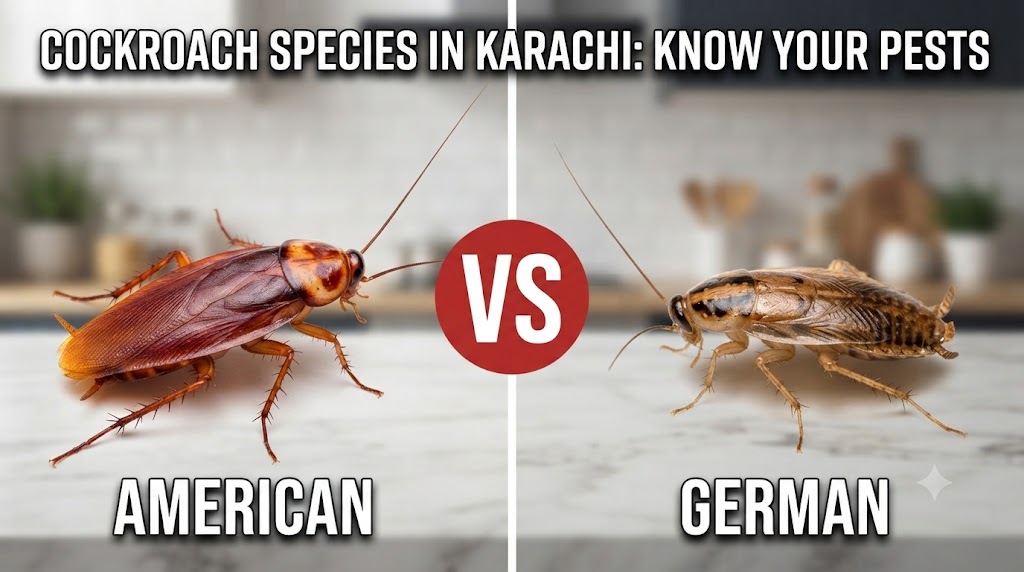
    German Cockroach (Blattella germanica)

    Small — around half an inch to five-eighths of an inch long — light tan to brown, with two dark parallel stripes running down the shield-like plate just behind the head. Wingless-looking at a glance (they do have wings but rarely fly), fast-moving, and almost always found indoors.

    American Cockroach (Periplaneta americana)

    Much larger — often one and a half to two inches long — reddish-brown, with a pale yellowish band edging the area behind the head. Often called a “water bug” locally. Capable of flying short distances, especially in warm weather, and more commonly seen entering from outside than breeding deep indoors.

    Size and Appearance Side by Side

    • Size: German roaches are noticeably smaller (about 1.5 cm) than American roaches (up to 5 cm).
    • Colour: German roaches are tan to light brown; American roaches are reddish-brown.
    • Markings: German roaches have two dark stripes behind the head; American roaches have a pale, figure-eight-like marking on the same area instead.
    • Wings: Both species have wings as adults, but American cockroaches are the stronger, more frequent fliers of the two.

    Where Each Species Prefers to Live

    This is where the distinction really starts to matter for treatment. The two species don’t just look different — they invade homes and businesses from completely different directions.

    German Cockroaches: The Indoor Breeders

    German cockroaches rarely come from outside. Once established, they live and breed entirely indoors, favouring warm, humid spots close to food and water — behind stoves, under sinks, inside cabinet hinges, behind refrigerator motors, and inside electrical appliances. They commonly hitchhike in through grocery bags, cardboard boxes, or secondhand appliances, and once inside a kitchen, they rarely leave voluntarily.

    American Cockroaches: The Outdoor Invaders

    American cockroaches typically live outdoors or in below-ground infrastructure — sewers, storm drains, manholes, basements, and damp crawl spaces — and enter homes through drains, gaps around pipework, or damaged door seals, particularly during Karachi’s monsoon season when heavy rain floods their outdoor habitat and pushes them to seek higher, drier ground indoors.

    This is exactly why American cockroach sightings often cluster around drains, ground-floor bathrooms, and basements in areas like Clifton and DHA, while German cockroach problems tend to concentrate in kitchens regardless of neighbourhood or building age.

    Why the Difference Changes How You Treat Them

    Because the two species live and breed in completely different places, a single blanket spray treatment rarely deals with both effectively.

    • German cockroach treatment has to focus on breeding sites indoors — cabinet interiors, appliance gaps, and cracks near food prep areas — since the entire population lives inside the structure.
    • American cockroach treatment has to address entry points and outdoor or below-ground harbourage — drain covers, pipe penetrations, and gaps around exterior doors — since new individuals keep wandering in from outside even after an indoor spray.
    • German infestations escalate far faster. A single female can be responsible for tens of thousands of descendants within a year under the right conditions, which is why a kitchen sighting should never be dismissed as “just one or two.”
    • American infestations are usually slower to build indoors but signal a bigger structural or drainage issue — often a sign that drain seals, gully traps, or foundation gaps need attention alongside pest treatment.

    Health and Sanitation Risks

    Both species pick up bacteria while moving through sewers, drains, and rotting organic matter, and can transfer that contamination onto kitchen surfaces, utensils, and stored food simply by walking across them. Cockroach allergens are also a well-documented trigger for asthma and allergic reactions in sensitive individuals, particularly in poorly ventilated kitchens. Neither species should be treated as a purely cosmetic nuisance, especially in food-handling environments.

    This is particularly relevant for restaurants, hotels, and school kitchens across Karachi, where regular cockroach control is often expected as part of routine hygiene compliance ahead of SFA inspections.

    Signs You’re Dealing with One, the Other, or Both

    In older, larger buildings — and in commercial kitchens with both drainage and food storage on site — it’s common to find both species present at once, which is one more reason a proper inspection matters more than guessing off a single sighting.

    • Small droppings resembling ground coffee or black pepper near kitchen cabinets usually point to German cockroaches.
    • Larger, ridged, cylindrical droppings near drains or basements usually point to American cockroaches.
    • An oily, musty odour that lingers even after cleaning is a common sign of a heavier German cockroach infestation.
    • Cockroaches seen out in the open during the day, rather than scattering when a light comes on, often signal a larger population than what you can see.

    Simple Prevention Steps While You Wait for Treatment

    Prevention won’t undo an existing infestation, but it slows things down and makes professional treatment more effective once it happens.

    For German Cockroaches (Kitchen-Focused)

    • Store dry food in sealed containers rather than open packets or paper bags.
    • Wipe down stove and counter grease regularly — it’s a major food source, not just a cleanliness issue.
    • Check secondhand appliances and cardboard delivery boxes before bringing them indoors.
    • Fix minor leaks under sinks — even small amounts of standing water sustain a population.

    For American Cockroaches (Drain-Focused)

    • Keep drain covers and gully traps in good condition, especially in ground-floor bathrooms and kitchens.
    • Seal gaps around pipe penetrations where they pass through exterior or basement walls.
    • Clear standing water and debris near the property after monsoon rain, since it draws roaches toward the building.
    • Keep bin areas covered and away from direct wall contact where possible.

    What to Do Next

    Because treatment strategy genuinely differs by species, the most efficient first step is a proper inspection rather than a generic spray from the nearest shop. As a local pest control service in Karachi, we identify which species (or combination) you’re dealing with, then target breeding sites and entry points specifically rather than just spraying visible surfaces.

    For a sense of what treatment typically costs based on property size and infestation severity, see our charges page. Restaurants, hotels, and commercial kitchens can also review our client base to see the kind of businesses we already support with routine cockroach control.

    Frequently Asked Questions

    Which cockroach species is more common in Karachi homes?

    Both are common, but German cockroaches are more frequently the cause of persistent kitchen infestations, since they breed indoors continuously. American cockroaches tend to be more visible seasonally, especially around drains during and after monsoon rains.

    Do American cockroaches actually fly indoors?

    They can, particularly in warm weather, though it’s usually a short, clumsy flight rather than sustained flying. German cockroaches, by contrast, almost never fly despite having wings.

    Why do I keep seeing cockroaches even after spraying?

    A surface spray usually only kills the roaches it directly contacts, not eggs hidden in cracks or a population sheltering behind appliances or inside drains. Ongoing sightings after a DIY spray are one of the clearest signs a targeted professional treatment is needed instead.

    Are baby cockroaches a different colour than adults?

    Yes. Nymphs of both species are typically darker and wingless compared to adults, and are often mistaken for a completely different, smaller pest — which can delay proper treatment.

    Can cockroaches make food unsafe to eat?

    Cockroaches can contaminate food and surfaces with bacteria picked up from drains and waste, which is a real hygiene concern rather than just an appearance issue — this is exactly why commercial kitchens treat cockroach control as a compliance requirement, not an optional extra.

    Is one species harder to get rid of than the other?

    German cockroach infestations are generally more stubborn because the entire breeding population is indoors and reproduces quickly, so incomplete treatment tends to bounce back faster than with American cockroaches, which rely more on repeated outdoor entry.

    Book a Proper Cockroach Inspection

    If you’re seeing cockroaches regularly — in the kitchen, near drains, or both — it’s worth getting a professional to identify the species and the source before the infestation grows. Contact Accurate Fumigation for an inspection anywhere in Karachi, from Saddar and PECHS to Gulistan-e-Jauhar and beyond.

  • Bed Bug Identification and Behavior: A Complete Pest Profile for Karachi Homes

    Bed Bug Identification and Behavior: A Complete Pest Profile for Karachi Homes

    If you’ve woken up with a row of itchy red bites you can’t explain, or spotted tiny rust-coloured specks on your bedsheet, you’re probably dealing with bed bugs — and you’re not alone. Between cross-city moving trucks, secondhand furniture bought off Facebook Marketplace, and the sheer number of guests passing through Karachi’s homes and hotels, bed bugs have become one of the most common calls we get at Accurate Fumigation.

    This guide walks through what bed bugs actually look like at every life stage, how they behave inside a Karachi home, and how to tell a genuine infestation apart from a false alarm. If you already know you have a problem, you can jump straight to our bed bug fumigation service in Karachi — but understanding the pest first will help you deal with it far more effectively.

    What Bed Bugs Actually Look Like

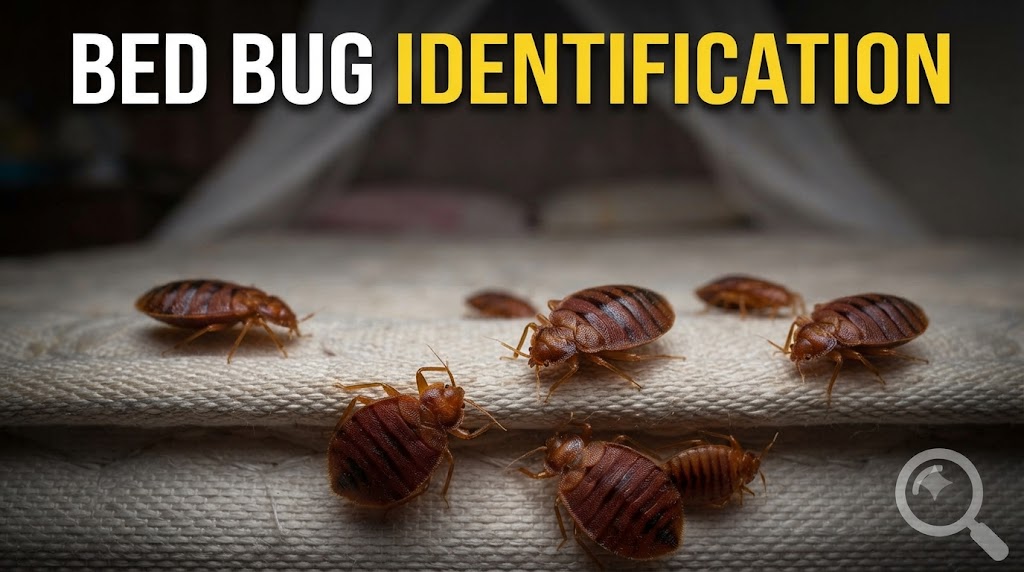
    Bed bugs (Cimex lectularius) go through several visibly different stages before they reach adulthood, which is exactly why so many people miss the early signs.

    Eggs

    Bed bug eggs are tiny — roughly the size of a pinhead — off-white, and glued into cracks, seams, and rough surfaces near where the female feeds. A single female typically lays a handful of eggs a day and can produce several hundred over her lifetime, which is exactly why an infestation that looks minor on day one can spiral within a couple of months.

    Nymphs

    Newly hatched nymphs are pale, almost translucent, and barely visible to the naked eye. As they feed and molt through five immature stages, they gradually darken and grow — from about the size of a poppy seed up to nearly adult size. Each stage requires at least one blood meal before the nymph can molt into the next.

    Adults

    A fully grown adult bed bug is reddish-brown, oval, flattened, and roughly the size of an apple seed — about a quarter of an inch long. They’re wingless but can move quickly across floors, walls, and ceilings. After feeding, their bodies swell and turn a darker, more elongated red.

    Why Karachi Homes Are Particularly Easy Targets

    Bed bugs don’t care about income level or how clean a home is — they only care about access to a blood meal and enough hiding places nearby. A few things about life in Karachi make that access easier than most people realise.

    • Dense apartment living in areas like Gulshan-e-Iqbal and North Nazimabad means bed bugs can migrate between neighbouring units through shared walls, wiring conduits, and false ceilings.
    • Constant movement of guests, domestic staff, and relatives for weddings, Eid, and family visits gives bed bugs plenty of chances to hitchhike in on luggage and bedding.
    • Older building stock — common across Saddar, Garden, and parts of Nazimabad — has more cracks, loose skirting, and gaps in furniture joints for bed bugs to hide in undisturbed.
    • Secondhand mattresses, sofas, and furniture bought through classifieds or moved between rental properties are one of the single biggest sources of new infestations.

    None of this means an infestation is inevitable — it just means quick identification and a proper professional treatment matter more here than in a detached single-family home with less shared exposure.

    How Bed Bugs Actually Behave

    Feeding Patterns

    Bed bugs are drawn to the carbon dioxide and warmth given off by a sleeping person, which is why they typically feed at night, usually in the hours just before dawn. In a heavily infested room, though, they’ll happily feed during the day too — hunger, not the clock, drives them once numbers build up. A single feeding takes just a few minutes, after which the bug retreats back to its hiding spot to digest and mate.

    Favourite Hiding Spots

    Despite the name, bed bugs don’t live only in beds. They cluster in narrow, dark gaps close to where people sleep or sit for long periods: mattress seams and piping, bed frame joints, behind headboards, inside electrical sockets, under loose wallpaper, in curtain folds, and along skirting boards. In heavier infestations, they’ll spread outward to sofas, cushions, and even picture frames on nearby walls.

    How Infestations Spread

    Bed bugs don’t fly and don’t jump — they walk, and they hitchhike. Inside a home, they spread room to room along pipes, wiring, and shared walls. Between homes, they travel in suitcases, used furniture, cardboard boxes, and even the folds of a guest’s clothing. This is exactly why one infested flat in an apartment block can quietly become three or four within a few months if it isn’t treated properly and early.

    Telltale Signs of an Infestation

    Because early-stage nymphs are so hard to spot, most people notice bed bugs through indirect evidence rather than seeing the insect itself. Watch for:

    • Bite marks in a line or small cluster, usually on skin exposed while sleeping — arms, shoulders, neck, legs.
    • Small rust or dark red spots on sheets and mattress seams — these are digested blood spots, not the bugs themselves.
    • Tiny pale, shed exoskeletons in mattress folds or furniture joints as nymphs molt.
    • A faint, sweetish, musty odour in heavily infested rooms.
    • Live bugs found while stripping and inspecting the mattress seams, especially near the head of the bed.

    One important caveat: medical professionals generally can’t diagnose bed bugs from bite marks alone, since reactions vary a lot from person to person and can look similar to other insect bites. If you suspect bed bugs, a physical inspection of the sleeping area is far more reliable than the bite pattern alone.

    Common Mix-Ups: What People Mistake for Bed Bugs

    We regularly get calls about “bed bugs” that turn out to be something else entirely. A few common mix-ups in Karachi homes:

    • Carpet beetle larvae — fuzzy, slow-moving, and usually found in wardrobes rather than beds.
    • Booklice — pale, soft-bodied insects found in damp, humid spots like bookshelves, more a sign of moisture than blood-feeding pests.
    • Cockroach nymphs — faster-moving, six legs clearly visible, and usually found near kitchens rather than bedding. If that’s what you’re seeing, our guide to identifying cockroach species in Karachi may be more relevant.
    • Fleas — these jump rather than crawl, and bites tend to concentrate around the ankles rather than in a bedtime bite pattern.

    If you’re not sure what you’re looking at, it’s worth getting an actual inspection rather than guessing — treatment approaches differ significantly between pests, and using the wrong method wastes time while the real infestation keeps growing.

    What to Do If You Find Bed Bugs

    Bed bugs are notoriously resistant to DIY sprays and home remedies — their eggs are largely unaffected by surface treatments, and a female that survives will simply restart the population within weeks. A proper treatment plan typically combines targeted chemical treatment, mattress and furniture inspection, and follow-up visits to catch anything that hatches after the first round.

    Before scheduling treatment, it helps to know roughly what to expect cost-wise — our charges page breaks down how pricing generally works for residential jobs of different sizes. And if you manage a guesthouse, hostel, or rental property, it’s worth reviewing our licensing and compliance information as well.

    As a full-service pest control company in Karachi, we treat bed bug infestations across residential apartments, family homes, and commercial guest accommodation citywide — from DHA and Clifton to Malir and Korangi.

    Frequently Asked Questions

    How can I tell if it’s bed bugs and not mosquito bites?

    Bed bug bites tend to appear in a line or tight cluster on skin exposed while sleeping, and they show up after a night in bed rather than while you’re outdoors. Mosquito bites are usually more randomly scattered and can happen any time of day. If bites keep appearing in the same pattern morning after morning, it’s worth inspecting your mattress seams directly.

    Can bed bugs live in air conditioners or false ceilings?

    Yes. In apartment buildings especially, bed bugs can travel through gaps around AC piping, false ceiling voids, and shared electrical conduits, which is one reason infestations can reappear in a neighbouring flat even after your own unit is treated.

    Do bed bugs spread disease?

    Bed bugs are not currently known to transmit disease to humans through their bites. The main health impact is itching, skin irritation, and in heavier or prolonged infestations, disrupted sleep and stress. That said, an infestation should still be treated promptly, since numbers grow quickly if left alone.

    Will I need to throw away my mattress?

    Not necessarily. In most cases, a mattress can be treated and saved rather than replaced, provided the infestation is caught before the mattress interior is heavily compromised. A professional inspection will tell you whether your mattress and furniture are salvageable.

    How long does bed bug treatment take to work?

    Because eggs continue hatching for a couple of weeks after the first treatment, most professional plans include at least one follow-up visit to catch newly hatched nymphs before they mature and start laying eggs of their own.

    Can I just move to another room until the bed bugs are gone?

    Moving rooms doesn’t solve the problem and often makes it worse — you risk carrying bugs or eggs with you in clothing or bags, effectively spreading the infestation to a second room while the first one still needs treatment.

    Get a Proper Inspection Before It Spreads

    Bed bugs rarely stay contained to one corner of a home for long. If you’ve spotted any of the signs above, the most reliable next step is a proper inspection rather than guesswork with home sprays. Contact Accurate Fumigation to schedule a bed bug inspection anywhere in Karachi, and we’ll walk you through exactly what treatment your home needs.

  • Mosquito Species in Karachi and the Diseases They Spread: Dengue, Malaria and Chikungunya

    Mosquito Species in Karachi and the Diseases They Spread: Dengue, Malaria and Chikungunya

    Karachi’s mosquito season isn’t really a season anymore — between stagnant water after monsoon rain, open water tanks, construction sites, and warm temperatures for most of the year, the city offers near-constant breeding conditions. And every few years, that translates into a genuine public health event, with government hospitals reporting hundreds of suspected dengue or chikungunya cases a day during bad outbreaks.

    Not every mosquito buzzing around your home carries the same risk. This guide covers the main mosquito species found in Pakistan, the specific diseases each one is linked to, and what actually reduces breeding around a Karachi home — including the connection between poorly maintained water tanks and mosquito breeding, which is where our water tank cleaning service in Karachi fits in.

    The Three Mosquito Genera Behind Almost Every Case

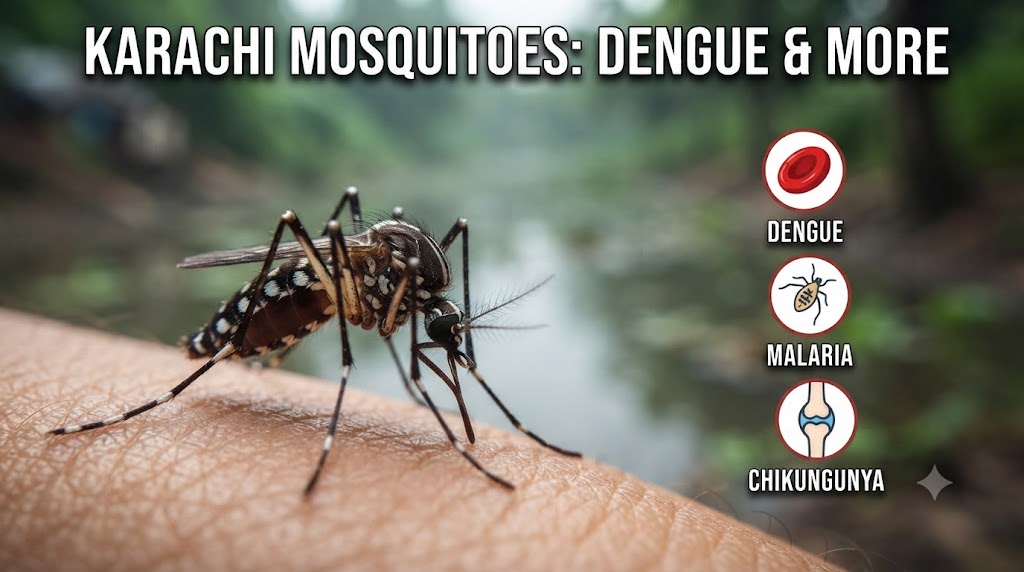
    Studies of mosquito populations across Pakistan consistently find the same three genera responsible for the overwhelming majority of disease transmission: Aedes, Anopheles, and Culex. Each one looks, behaves, and breeds differently — and each is linked to a different set of diseases.

    Aedes aegypti and Aedes albopictus — The Dengue and Chikungunya Vectors

    Aedes mosquitoes are small, dark, and have a distinctive pattern of white stripes or spots on their legs and body — often described as “tiger-striped.” Unlike most mosquitoes, they’re aggressive daytime biters, most active in the early morning and late afternoon rather than at night. They breed almost exclusively in clean, stagnant water — the kind found in uncovered tanks, flowerpot saucers, discarded tyres, coolers, and blocked gutters, rather than dirty drains.

    Aedes aegypti in particular is the primary vector behind Karachi’s recurring dengue outbreaks, and the same species is responsible for the sharp rise in chikungunya cases the city has seen in recent years. Both diseases share this vector, which is part of why outbreaks of the two often overlap seasonally.

    Anopheles — The Malaria Vector

    Anopheles mosquitoes are the only genus capable of transmitting malaria to humans. They tend to rest with their bodies tilted at a distinct upward angle rather than parallel to the surface, and they’re primarily active from dusk through the night. Anopheles stephensi, an important urban malaria vector, breeds readily in the kind of artificial water containers common in cities — overhead tanks, construction site pits, and rooftop water storage — which makes urban Karachi more exposed to malaria risk than many people assume.

    Culex — The Nuisance and Filariasis Vector

    Culex quinquefasciatus is typically the most numerous mosquito species collected in urban surveys across Pakistan. It’s a duller brown mosquito, most active at dusk and after dark, and breeds in more polluted, nutrient-rich water — stagnant drains, sewage overflow, and neglected water features. Culex mosquitoes are the primary nuisance-biting mosquito in most Karachi neighbourhoods and are also a recognised vector for lymphatic filariasis in parts of the region.

    Dengue, Malaria and Chikungunya: How They Differ

    It’s worth being clear upfront that Accurate Fumigation is a pest control company, not a medical provider, so none of this is intended as medical advice. If you or a family member has symptoms consistent with any of the below, the right next step is a doctor, not a home remedy.

    Dengue Fever

    Spread by Aedes mosquitoes, dengue is well established as endemic in Karachi, with case numbers typically rising sharply during and after monsoon season when standing water is widespread. Common symptoms include high fever, severe joint and muscle pain, headache, and rash.

    Chikungunya

    Also spread by Aedes aegypti, chikungunya causes fever alongside severe joint pain that can persist for weeks. Karachi has seen a significant rise in chikungunya cases in recent years, with hospitals reporting large daily case volumes during peak periods.

    Malaria

    Spread by Anopheles mosquitoes, malaria is caused by a parasite rather than a virus and typically presents with cyclical fever, chills, and sweating. Unlike Aedes-borne diseases, malaria transmission is more closely tied to dusk-to-dawn biting activity.

    Why Water Tanks Are a Bigger Factor Than Most People Realise

    In a city where WASA supply is inconsistent, most Karachi households and buildings rely on their own overhead or underground water tanks — and an uncovered, poorly maintained, or infrequently cleaned tank is exactly the kind of clean, still water that Aedes and Anopheles mosquitoes prefer for breeding. A cracked or loose-fitting tank lid is often enough for a female mosquito to lay eggs undisturbed for weeks.

    This is one of the more overlooked breeding sites in dengue prevention conversations, which tend to focus on flowerpots and tyres while ignoring the tank sitting on the rooftop. Regular tank cleaning removes larvae and breeding sites while also addressing the sediment and bacterial buildup that affects water quality more broadly — see our water tank cleaning service for how this is typically done.

    Why Karachi’s Monsoon and Post-Monsoon Weeks Matter Most

    Mosquito activity in Karachi doesn’t disappear in cooler months, but it does spike sharply around and after monsoon rains, when short, heavy downpours leave standing water in places that are normally dry — potholes, open plots, construction sites, and rooftop debris. Aedes eggs can also survive dry spells stuck to the inner walls of a container and hatch as soon as water returns, which is part of why dengue and chikungunya cases tend to cluster a few weeks after the first serious rains of the season rather than during the rain itself.

    This lag is worth planning around. Scheduling a fumigation and tank inspection before monsoon season peaks — rather than waiting for a case to show up in the family or building — tends to be far more effective than reactive treatment after an outbreak is already under way.

    Reducing Mosquito Breeding Around Your Home

    • Keep water tanks tightly covered and have them cleaned on a regular schedule rather than only when water looks visibly dirty.
    • Empty and scrub flowerpot saucers, coolers, and any container that can hold standing water at least once a week.
    • Clear blocked gutters and roof drains, particularly after monsoon downpours.
    • Remove or cover discarded tyres, buckets, and containers that collect rainwater in courtyards or on rooftops.
    • Use fitted window and door screens where possible, especially in ground-floor units near Malir and Korangi where open drainage is more common.

    Household measures reduce risk but rarely eliminate it entirely in a dense urban environment, especially when neighbouring properties aren’t managing breeding sites the same way. That’s where professional fumigation comes in — targeting adult mosquito populations and breeding sites at a scale that a single household can’t manage alone.

    When to Call a Professional

    If mosquito activity around your home is constant rather than occasional, or if dengue or chikungunya cases have been reported in your immediate area, it’s worth arranging professional fumigation rather than relying on coils and sprays alone. As a fumigation service in Karachi, we treat both indoor spaces and outdoor breeding zones — gardens, drains, stagnant water spots — and can coordinate tank cleaning at the same visit where it’s relevant.

    Building committees and housing societies managing shared outdoor areas across Bahadurabad, Federal B Area, and similar dense residential pockets often find scheduled, society-wide fumigation more effective than individual households acting alone.

    Frequently Asked Questions

    What time of day should I be most careful about mosquito bites?

    It depends on the disease you’re trying to avoid. Aedes mosquitoes (dengue, chikungunya) bite mainly during the day, especially early morning and late afternoon. Anopheles (malaria) and Culex mosquitoes are more active from dusk through the night.

    Can mosquitoes breed inside a covered water tank?

    A properly sealed tank with an intact lid significantly reduces the risk, but even small gaps, cracks, or loose-fitting covers can be enough for mosquitoes to get in and lay eggs. Regular cleaning also removes any larvae that do get in before they mature.

    Does fumigation kill mosquito larvae as well as adult mosquitoes?

    Effective mosquito control usually combines two approaches — treating adult mosquitoes through fogging or spraying, and treating standing water breeding sites separately, since larvae in water aren’t affected by the same methods used on flying adults.

    Is chikungunya as dangerous as dengue?

    Both are viral diseases that can cause significant illness, and neither should be self-diagnosed or self-treated. If you have symptoms like high fever and severe joint pain, especially during a known local outbreak, see a doctor rather than assuming which one it is.

    How often should residential water tanks be cleaned to reduce mosquito risk?

    This varies by tank type, usage, and how exposed it is, so it’s best assessed on inspection rather than guessed at — but as a general principle, a tank that hasn’t been checked in a long time is worth inspecting regardless of whether the water looks clean.

    Do mosquito coils and plug-in repellents actually work?

    They can reduce bites in a single room short-term, but they do nothing about the breeding sites producing new mosquitoes, which is why homes that rely on coils alone often see the problem return within days.

    Get Your Property Inspected for Breeding Sites

    Mosquito control works best when it addresses both the adult population and the breeding sites feeding it — including the water tank most households overlook. Contact Accurate Fumigation to schedule an inspection and treatment plan for your home, building, or society anywhere in Karachi.

  • Tick Identification and Health Risks in Karachi: What Pet Owners Should Know

    Tick Identification and Health Risks in Karachi: What Pet Owners Should Know

    If you’ve ever found a small, dark, engorged bump behind your dog’s ear or between its toes after a walk, you’ve probably met a tick. In Karachi, ticks are a genuine, year-round concern for pet owners — the city’s warm climate means they don’t fully die off in winter the way they might elsewhere, and once a tick population establishes itself in a garden, courtyard, or building compound, it tends to keep reproducing.

    This guide covers what ticks actually look like at different stages, the health risks they carry for pets (and, less commonly, for people), and what to do if you’re finding them regularly. For active infestations, our fleas & ticks control service in Karachi treats both the pet’s environment and the outdoor areas where ticks breed.

    What Ticks Actually Look Like

    Ticks aren’t insects — they’re arachnids, related to spiders and mites, which is part of why they don’t respond to the same treatments as fleas or mosquitoes.

    Unfed Ticks

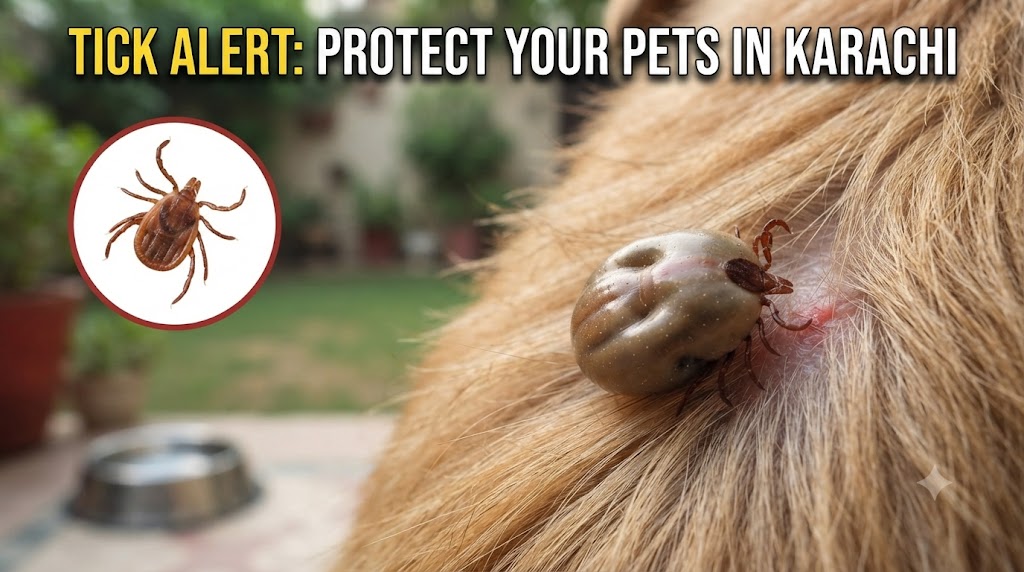
    Before feeding, a tick is small, flat, and oval — often just a few millimetres long, roughly the size of a sesame seed, in shades of brown or reddish-brown. At this stage they’re easy to miss entirely, especially on a dog with a longer or darker coat.

    Engorged Ticks

    After several days attached and feeding on blood, a tick swells dramatically — sometimes to the size of a small grape — and turns a grey, bluish, or dull olive colour. This is the stage most pet owners actually notice, usually while petting or grooming the animal.

    The Brown Dog Tick — Karachi’s Most Common Species

    The species most consistently found on dogs across Pakistan is the brown dog tick, Rhipicephalus sanguineus. Unlike many tick species that need specific outdoor habitats, the brown dog tick is unusually well adapted to life indoors and around buildings — it can complete its entire life cycle in cracks in walls, kennels, and courtyards without ever needing tall grass or woodland, which is exactly why it does so well in a dense urban environment like Karachi.

    Where Ticks Hide on Your Pet

    Ticks gravitate toward warm, thin-skinned areas where they can feed undisturbed and are less likely to be groomed off. Check these spots carefully after every walk or time outdoors:

    • Around and inside the ears
    • Between the toes and around the paw pads
    • Around the neck and under the collar
    • In the armpits and groin area
    • Around the tail base

    A thorough check takes just a couple of minutes and is genuinely one of the most effective prevention habits available, especially for dogs that spend time in gardens, on rooftops, or on shared building grounds.

    Health Risks Ticks Carry

    Ticks are more than just an unpleasant find — they’re capable of transmitting several pathogens to dogs, and in some cases, to the humans in the household as well.

    Risks to Dogs

    The brown dog tick and related species found on dogs in Pakistan have been linked to several tick-borne pathogens, including Ehrlichia, Anaplasma, and Babesia — organisms that can cause fever, lethargy, appetite loss, and in more serious or prolonged cases, anaemia and more significant illness. A dog that seems unusually tired or off-colour after a known tick exposure is worth a vet visit rather than a wait-and-see approach.

    Risks to People

    Direct tick bites on humans are less common than on pets, but they do happen, particularly to people who handle animals or spend time in infested gardens or livestock areas. Separately, larger ticks in the Hyalomma genus — more commonly associated with livestock, particularly around Eid-ul-Adha when animals are brought into the city — are a recognised vector of Crimean-Congo Haemorrhagic Fever (CCHF), a serious viral illness that has been reported in Pakistan. Anyone handling livestock or noticing ticks on animals brought home for Qurbani should take tick removal and hygiene precautions seriously and seek medical advice if unwell afterward.

    None of this is medical advice — if a family member becomes unwell after a tick bite or livestock handling, a doctor should assess symptoms directly rather than relying on general information like this.

    Why Ticks Are Persistent Once Established

    Female ticks lay large numbers of eggs — often several thousand — in a single batch, typically hidden in cracks, wall crevices, or kennel bedding rather than out in the open. Combined with a life cycle that doesn’t require the pet to be present at every stage, this is why a tick problem that seems to clear up after treating the dog can reappear within weeks if the surrounding environment — kennel, courtyard, garden beds — isn’t treated as well.

    This is especially relevant in ground-floor homes and houses with gardens across areas like Scheme 33 and Gulistan-e-Jauhar, where outdoor space gives ticks more places to establish than a purely indoor apartment would.

    Removing a Tick Safely

    If you find a tick already attached, remove it carefully rather than crushing or burning it, which can push infectious material further into the bite site. Use fine-tipped tweezers, grip as close to the skin as possible, and pull straight out with steady, even pressure rather than twisting. Clean the area afterward and monitor your pet for any signs of illness over the following days.

    For pets with recurring tick problems, spot treatment alone usually isn’t enough — the environment the pet lives and plays in needs to be addressed too, which is where professional treatment becomes worthwhile.

    Preventing Ticks Around Your Home

    • Vacuum and clean pet bedding, kennels, and resting areas regularly, since eggs and early life stages hide in these spots.
    • Keep grass, shrubs, and garden debris trimmed back, particularly along walls and fence lines where ticks wait for a host to brush past.
    • Check pets after every outdoor outing, especially visits to parks, other homes with pets, or livestock areas.
    • Treat multiple pets in a household at the same time — treating one animal while another remains untreated just gives ticks somewhere to keep breeding.
    • Ask your vet about a preventive tick treatment suited to your pet, alongside environmental treatment for the home.

    When to Call a Professional

    If you’re finding ticks repeatedly despite regular checks and cleaning, or if a garden, kennel area, or building compound has a visible ongoing problem, environmental treatment is usually the missing piece. As a pest control company in Karachi, we treat the areas where ticks actually breed — cracks, courtyards, kennels, and garden beds — alongside guidance for pet owners, rather than just treating the animal in isolation.

    You can see typical pricing for residential tick and flea treatment on our charges page, and building management companies handling shared outdoor areas can review our work with existing clients for reference.

    Frequently Asked Questions

    Can ticks live in an apartment with no garden?

    Yes. Brown dog ticks are well adapted to indoor environments and can establish themselves in cracks, skirting boards, and pet bedding even without outdoor access, especially if a pet has picked up ticks elsewhere and brought them home.

    How long can a tick stay attached before it’s a problem?

    Disease transmission risk generally increases the longer a tick remains attached and feeding, which is exactly why prompt removal after every outdoor check matters, rather than waiting to notice it days later.

    Do ticks jump from pet to pet, or between pets and people?

    Ticks don’t jump or fly — they climb onto a host from vegetation, cracks, or bedding and crawl to find a feeding spot. This means multiple pets and people in the same household can pick up ticks independently from a shared infested environment, rather than the tick jumping directly between them.

    Are all ticks found on dogs in Karachi the same species?

    No. While the brown dog tick is the most common species found on dogs, other tick genera, including larger Hyalomma ticks more typically associated with livestock, can also turn up, particularly around Eid-ul-Adha when animals are brought into the city.

    Can I treat a tick problem with the same spray used for mosquitoes?

    Not reliably. Ticks require different treatment approaches than flying insects, particularly because their eggs and early life stages hide in cracks and bedding rather than open water or air, so a mosquito-focused treatment plan generally won’t resolve a tick infestation.

    Is it normal to find ticks even on a well-groomed, indoor-only pet?

    It’s less common but not impossible — ticks can be carried indoors on clothing, shoes, or other animals visiting the home, so an indoor-only pet isn’t automatically tick-free, especially if the building or compound has an established population.

    Get Your Home and Garden Checked

    If ticks keep showing up on your pet no matter how often you check and clean, the environment around your home is worth inspecting too. Contact Accurate Fumigation to arrange a tick and flea treatment for your home, kennel, or garden anywhere in Karachi.

  • House Lizards (Geckos) in Karachi Homes: Are They Pests or Pest Control Allies

    House Lizards (Geckos) in Karachi Homes: Are They Pests or Pest Control Allies

    Almost every home in Karachi has one: a small, pale lizard clinging to the wall near the tube light, perfectly still until a moth flies too close. Most of us call them “chipkali” and either ignore them completely or panic the moment one drops onto the dining table. Neither reaction is quite right.

    House geckos are one of the most common creatures you’ll find in Karachi homes, from Clifton apartments to older bungalows in Nazimabad, and understanding what they actually do in your house changes how you should deal with them. Before you reach for a pest control service in Karachi, it’s worth knowing whether the gecko itself is the problem — or a symptom of one.

    What Kind of Geckos Are in Karachi Homes

    The lizard you’re seeing indoors is almost certainly the common house gecko, a small, pale grey to beige reptile that rarely grows past 10–12 cm. It has soft, slightly translucent skin, large lidless eyes, and toe pads that let it walk straight up walls and across ceilings without any trouble. It’s nocturnal, which is why you mostly notice it after dark, sitting near light fixtures where insects gather.

    These geckos are not native to a single home or building — they move freely between apartments, courtyards, and gardens across the city, and Karachi’s warm, humid climate suits them well year-round, with numbers often noticeably higher during and after the monsoon.

    Why Karachi Homes Attract So Many Geckos

    Three things make Karachi particularly gecko-friendly:

    • Warm weather almost year-round. Geckos are cold-blooded and stay active in Karachi’s climate for most of the year, unlike cities with a proper cold winter that slows reptiles down.
    • Plenty of insects. Mosquitoes, moths, and small flies are abundant, especially near standing water, open drains, or during monsoon season — and insects are exactly what geckos eat.
    • Older building stock with small gaps. Many homes in areas like Nazimabad, North Nazimabad, and Garden have hairline cracks around windows, door frames, and utility openings that give geckos easy access indoors.

    Outdoor lighting is a big draw too. Porch lights, veranda bulbs, and signboards attract flying insects at night, and geckos position themselves right next to these light sources to feed.

    Are Geckos Actually Good for Pest Control?

    In most cases, yes. Geckos are insectivores, and their diet is genuinely useful to a homeowner:

    • Mosquitoes
    • Moths
    • Small flies
    • Ants
    • Occasionally young cockroaches

    A single gecko can eat a meaningful number of small insects in one night. For a household already dealing with mosquitoes around a monsoon-flooded street or moths near a kitchen light, a gecko or two quietly working through the insect population is not a bad thing. They’re shy, they avoid people, and they very rarely bite — and when they do, it’s harmless.

    That said, “beneficial” doesn’t mean “welcome in every home,” and that’s where the real question lies.

    When Geckos Become a Nuisance

    The problems most Karachi homeowners actually complain about aren’t about danger — they’re about mess and unease:

    • Droppings. Small, dark specks with a white tip left on walls, window sills, and behind furniture, which can look and smell unpleasant if they build up.
    • Noise. Some geckos make a soft clicking or chirping sound at night, which can be surprising if you’re not used to it.
    • Getting into fixtures. Geckos occasionally end up inside light switches, appliance vents, or behind electrical panels, which can be a genuine fire or short-circuit risk in older wiring — a real concern in parts of the city where K-Electric supply and older household wiring don’t always play well together.
    • Simply being indoors. Plenty of people are uncomfortable with any lizard inside a living space, regardless of how harmless it is, especially around kitchens and food preparation areas.

    What a Growing Gecko Population Is Telling You

    This is the part most people miss: if you’re suddenly seeing far more geckos than usual, the lizard isn’t really your problem — the insects it’s feeding on are. A sharp rise in gecko sightings, especially indoors, is often a sign of an underlying insect problem, whether that’s mosquitoes breeding nearby, moths drawn to stored grain or fabric, or a cockroach infestation that’s giving geckos an easy meal supply. In these cases, treating the insects — not the gecko — is the actual fix, since removing the food source naturally reduces gecko activity too.

    If you’ve noticed both geckos and small roaches near your kitchen or bathroom pipework, that combination is worth taking seriously, particularly in ground-floor units or homes near open drains, common in older parts of Saddar and Liaquatabad.

    How to Reduce Geckos Without Harming Them

    If you’d simply rather not share your home with lizards, humane exclusion works far better than trying to kill or chase them:

    1. Seal entry points. Check window frames, AC pipe openings, and gaps around doors and vents; caulk or mesh anything you find.
    2. Cut off their food source. Reducing indoor insects (through better sanitation, sealed food storage, and fixing damp areas) removes the reason geckos come inside in the first place.
    3. Rethink outdoor lighting. Where possible, keep bright lights away from doors and windows, or switch to lighting that attracts fewer insects.
    4. Manage clutter. Geckos like dark, undisturbed spaces — behind almirahs, stacked boxes, and cluttered storage areas. Regular cleaning removes their hiding spots.

    None of these steps require chemicals aimed at the gecko itself — and they shouldn’t, since geckos are not classified as harmful pests and don’t need to be exterminated.

    When to Actually Call a Pest Control Company

    You don’t need professional help for the occasional gecko on the wall. But it’s worth booking an inspection if:

    • Gecko numbers have increased sharply over a few weeks
    • You’re also seeing cockroaches, ants, or unusual insect activity
    • Droppings are accumulating faster than you can clean them
    • You suspect a gecko (or the insects it’s chasing) has gotten into wiring or appliances

    A professional visit at that point isn’t really about the geckos — it’s about identifying and treating whatever insect population is drawing them in, whether that means cockroach control, ant control, or a broader inspection of damp areas and drainage. This is especially relevant in ground-floor homes and older buildings across DHA, Clifton, and Gulshan-e-Iqbal, where a mix of humidity and aging infrastructure tends to support several pests at once.

    FAQs

    Are house geckos dangerous or poisonous?

    No. House geckos in Karachi are harmless to people. They don’t carry venom, and bites are extremely rare and cause no lasting harm. The main concerns are droppings and the occasional gecko getting into electrical fittings.

    Why are there suddenly so many geckos in my house?

    A jump in gecko numbers almost always means more insects are available for them to eat — often mosquitoes, moths, or small cockroaches. Addressing that insect source is more effective than trying to remove the geckos directly.

    Do geckos help with mosquito control in Karachi?

    Yes, to some extent. Geckos actively hunt mosquitoes and moths near lights at night, which can noticeably reduce indoor insect activity, though they’re not a substitute for proper mosquito control during monsoon season.

    How do I keep geckos out of my house without killing them?

    Seal cracks around doors, windows, and pipe openings, reduce outdoor lighting near entry points, and cut down on the insects that attract them in the first place. This removes the incentive for geckos to come inside at all.

    Can geckos damage electrical appliances?

    Occasionally, yes. Geckos sometimes crawl into switchboards, meter boxes, or appliance vents looking for warmth or insects, which can cause short circuits. If you notice repeated gecko activity near electrical fittings, it’s worth having the area checked.

    Should I call pest control just for geckos?

    Usually not for the geckos themselves. It makes more sense to call when gecko numbers spike alongside signs of a genuine insect infestation, since treating the underlying pest problem is what actually resolves the situation.

    The Bottom Line

    Geckos aren’t the enemy — in most Karachi homes, they’re doing you a small favor by keeping insect numbers down. But if you’re noticing a lot more of them than usual, don’t just deal with the lizard; look at what’s feeding it. If that points to a cockroach, ant, or broader insect problem in your home, get in touch with Accurate Fumigation for a proper inspection, and we’ll help you sort out the actual source of the problem.

  • Wasps and Bees in Karachi: When to Call Professionals for Removal

    Wasps and Bees in Karachi: When to Call Professionals for Removal

    Every year, as temperatures climb through spring and stay high into summer, Karachi homeowners start noticing papery, honeycomb-shaped nests tucked under balcony ledges, inside AC units, or along boundary walls. Some are harmless and best left alone. Others are a genuine safety risk that shouldn’t be handled with a rolled-up newspaper and good intentions.

    Wasps and bees aren’t the same threat, and treating them the same way is exactly how people get stung. This guide walks through what’s actually nesting on your property, when it’s fine to leave it, and when it’s time to call a proper fumigation service in Karachi instead of climbing a ladder yourself.

    Wasps vs. Bees: Knowing the Difference First

    Before deciding what to do, it helps to know what you’re looking at.

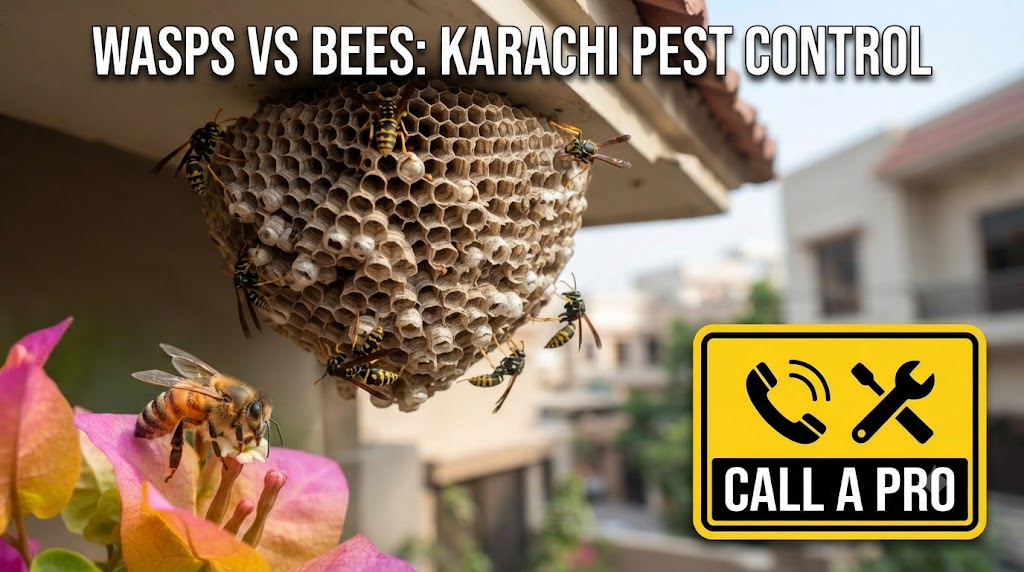
    Bees (mostly honeybees in Karachi) are rounder, fuzzier, and generally less aggressive unless their hive is directly disturbed. They build waxy, layered combs, often in wall cavities, tree hollows, or old water tank enclosures, and they play an important role pollinating garden and crop plants.

    Wasps — commonly paper wasps and mud daubers in this region — have slimmer, smoother bodies and a more defined “waist.” Paper wasps build the open, umbrella-shaped papery nests you’ll often spot under eaves, balconies, and stairwells. Mud daubers build small, tube-like mud nests along walls and window frames. Wasps are generally more defensive of their nests than bees and can sting repeatedly, since — unlike honeybees — they don’t lose their stinger after one sting.

    Misidentifying one for the other is one of the most common reasons DIY removal goes wrong, since the right approach (and the right level of caution) is different for each.

    Where Wasps and Bees Tend to Nest in Karachi Homes

    Karachi’s mix of balconies, water tanks, and older masonry gives both wasps and bees plenty of options:

    • Underneath balcony railings and window AC units
    • Inside or around rooftop water tanks and their surrounding brickwork
    • Gaps in boundary walls and parapets
    • Garden trees and hedges, especially in bungalow-style homes in DHA and Clifton
    • Ventilation shafts and unused rooms in apartment blocks

    Nests near water tanks are worth flagging specifically — a compromised or poorly sealed tank enclosure is not just a wasp risk, it’s also a contamination concern for your water supply, which is one more reason routine tank inspection and cleaning matters in older buildings.

    The Real Risks: Stings and Allergic Reactions

    For most people, a wasp or bee sting means brief pain, redness, and swelling that settles within a day or two. The bigger concern is for people with a known sting allergy, where a sting can trigger a much more serious reaction — swelling beyond the sting site, difficulty breathing, dizziness, or a rapid drop in blood pressure. This is a medical emergency and needs immediate attention, not home remedies.

    Even without an allergy, disturbed nests are dangerous simply because of numbers. A paper wasp nest that seems small can still empty a dozen or more defensive wasps in seconds if it’s knocked or sprayed incorrectly, and multiple stings at once are a different situation than one accidental sting in the garden.

    If anyone in your household has a known allergy to stings, it’s worth keeping that in mind any time a nest is spotted on the property — don’t wait until someone is actually stung to take it seriously.

    When It’s Fine to Leave a Nest Alone

    Not every nest needs to come down immediately. If you find one:

    • Far from doors, windows, walkways, or seating areas
    • Small and clearly early-stage (a handful of cells, few or no visible wasps)
    • In a spot nobody in the household needs to access regularly

    …it’s often reasonable to simply monitor it from a distance rather than disturb it, particularly if it’s a bee colony, since bees are beneficial pollinators and far less likely to be a threat if left undisturbed.

    When You Should Call a Professional

    DIY removal makes sense for very small, easily reachable nests with no allergy risk in the household. Beyond that, calling in professionals is genuinely the safer option:

    • The nest is near an entrance, window, balcony, or path you use daily. Proximity alone raises the risk of an accidental sting.
    • The nest is inside a wall cavity, ceiling void, or tank enclosure. These require opening up structure, not just spraying the visible entrance.
    • Anyone in the home has a known sting allergy. Don’t take chances here — get it removed properly.
    • The colony looks large or highly active, with wasps or bees constantly coming and going.
    • You’ve already tried spraying it yourself and it hasn’t worked, or the insects have become noticeably more aggressive since.
    • You can’t confidently tell whether it’s bees or wasps. Misidentification is exactly how avoidable stings happen.

    A trained technician has the right protective equipment, knows the safest time of day to treat a nest (usually early morning or dusk, when activity is lowest), and can fully clear a nest rather than just knocking down the visible part — which, done badly, often just relocates the colony a few feet away or makes it more defensive.

    What to Do While You Wait for Help

    If you’ve spotted a nest and are waiting for a technician:

    1. Keep children, pets, and other household members away from the area
    2. Don’t spray, poke, or throw anything at the nest
    3. Close nearby windows if the nest is close to the house
    4. Avoid strong perfumes or brightly colored clothing near the nest — both can attract more attention from the colony
    5. If someone is stung and shows signs of a severe reaction (swelling of the face/throat, difficulty breathing, dizziness), treat it as a medical emergency and seek help immediately

    Why Professional Removal Matters Long-Term

    Beyond the immediate safety issue, a professional visit also addresses why the nest formed there in the first place. A one-off spray from a can might clear what you can see, but it won’t seal the crack in your parapet wall or the gap around your water tank enclosure that made the spot attractive to begin with — which means a new colony can show up in the same place next season. Proper removal, paired with sealing entry points, is what actually keeps wasps and bees from coming back.

    FAQs

    Are the wasps in Karachi dangerous?

    Most wasp stings cause temporary pain and swelling and aren’t medically dangerous on their own. The real risk is for people with a sting allergy, or in situations involving multiple stings from a disturbed nest — both of which warrant caution and, in the case of a severe allergic reaction, urgent medical attention.

    Should I kill a bee colony or have it removed safely?

    Where possible, bees are best relocated rather than destroyed, since they’re important pollinators. If a bee colony is in a spot that genuinely needs to be clear (near a doorway, inside a wall), a professional can assess the safest and most humane way to deal with it.

    Can wasps or bees get into my water tank?

    They can nest in the surrounding brickwork or enclosure rather than the tank itself, but a poorly sealed tank area is still a concern for both pest activity and water cleanliness, which is worth checking during routine water tank cleaning.

    What time of year are wasps and bees most active in Karachi?

    Activity typically increases from spring through the hotter summer months, when colonies are actively growing, and can pick up again after monsoon rains as insects (their food source) become more abundant.

    Is it safe to remove a small nest myself?

    Only if it’s very small, easily reachable, in a low-traffic area, and nobody in the household has a sting allergy. Anything bigger, higher up, inside a structure, or near daily foot traffic is safer left to a professional.

    How much does professional wasp or bee removal cost?

    Costs vary depending on the size and location of the nest and whether structural access is needed. For an accurate estimate for your situation, it’s best to check current charges directly rather than rely on a general figure.

    The Bottom Line

    A small, out-of-the-way nest can often be left alone. But once a nest is close to where people actually move through the property, inside a wall or tank enclosure, or there’s any allergy risk in the household, it’s not worth handling yourself. Contact Accurate Fumigation for a safe, complete removal — and to make sure the same spot doesn’t attract a new colony next season.

  • Silverfish in Karachi Homes: Causes, Damage and Prevention

    Silverfish in Karachi Homes: Causes, Damage and Prevention

    If you’ve ever pulled an old book off a shelf and found tiny holes chewed into the pages, or spotted a small, silvery insect darting for cover the moment you opened a cupboard, you’ve met a silverfish. They’re not dangerous, they don’t bite, and most people barely notice them — right up until they discover the damage tucked away in a drawer, almirah, or storage box.

    Karachi’s humidity, especially through the monsoon months, makes it a fairly comfortable environment for silverfish, and older buildings with damp storage areas are particularly prone to them. Here’s what actually causes an infestation, what’s at risk in your home, and how to keep it from getting worse — starting with what to check before assuming you need a full pest control service in Karachi.

    What Silverfish Are and How to Recognize Them

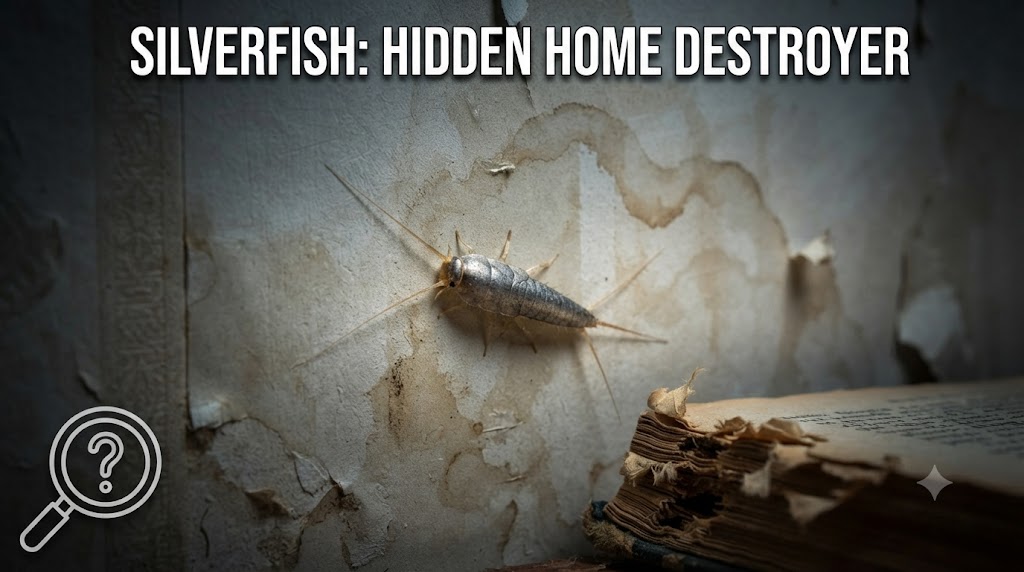
    Silverfish are small, wingless insects, usually 12–19mm long, with a flattened, teardrop-shaped body and a metallic silver-grey sheen that gives them their name. They move in a quick, wiggling motion — closer to a fish swimming than an insect walking — and they’re fast enough that most people only ever see them for a second before they vanish into a crack or under a stack of paper.

    They’re nocturnal and light-averse, which means they spend most of the day hidden in dark, undisturbed spaces: behind bookshelves, inside cupboards, under sinks, in storage boxes, and along skirting boards. If you’re seeing them out in the open during the day, that’s usually a sign of a fairly established population, since they normally go to some lengths to avoid light.

    Signs of a Silverfish Problem

    Silverfish are easy to miss until the damage is done. Watch for:

    • Irregular holes or notches in paper, book pages, or cardboard
    • Yellowish stains on paper, left behind as they digest starchy glue in bindings and paper coatings
    • Tiny silvery scales near infested areas — shed skin from their gradual growth
    • Fine, powdery droppings resembling small black pepper flecks
    • A musty smell in storage areas with poor ventilation, often alongside the humidity that draws silverfish in

    Because they’re most active at night, actually spotting a live silverfish is often the last sign people notice, after the damage is already visible.

    Why Silverfish Show Up in Karachi Homes

    Silverfish need three things: moisture, food, and undisturbed shelter — and Karachi homes can offer all three without much effort.

    Humidity and Monsoon Season

    Silverfish thrive in high humidity, and Karachi’s monsoon season, along with general coastal humidity for much of the year, creates exactly the conditions they favor. Homes near the coast, ground-floor units, and rooms with poor cross-ventilation tend to see more activity, especially store rooms, godowns, and closed-up sections of a house that don’t get much airflow.

    Water Leaks and Damp Storage

    A slow plumbing leak, a damp wall from an old WASA supply line, or a poorly sealed water tank enclosure can quietly raise humidity in a specific corner of the house for months without anyone noticing — right up until a nearby cupboard of books or files turns out to be infested. Checking your water tank and surrounding plumbing periodically isn’t just about water quality; unnoticed dampness is one of the most common root causes of a silverfish problem.

    Paper, Cardboard, and Starch-Based Materials

    Silverfish feed on carbohydrates — starches and sugars — which puts a lot of ordinary household items on the menu:

    • Book bindings and paper coatings
    • Cardboard boxes and packaging
    • Wallpaper paste
    • Certain fabrics and clothing with starch-based sizing
    • Stored documents, files, and old newspapers

    Homes, offices, and schools with paper archives, old file rooms, or basement storage are particularly at risk, since these spaces combine exactly the food source and low-disturbance environment silverfish prefer.

    Clutter and Undisturbed Corners

    Stacked boxes, piles of old newspapers, and rarely-opened almirahs give silverfish exactly what they want: dark, quiet spaces they can occupy for months without being disturbed. The less a space is cleaned or moved around, the more comfortable it becomes for them.

    What Silverfish Can Actually Damage

    Unlike termites, silverfish don’t threaten the structure of your home — but they can still cause real, sometimes irreversible loss:

    • Books and documents — holes, surface grazing, and yellow staining on pages and covers
    • Cardboard storage — boxes eaten through, sometimes exposing contents to further damage
    • Wallpaper — glue consumed from behind, causing peeling or bubbling
    • Clothing and linens — particularly items with starch-based finishing or stored for long periods
    • Photographs and albums — older photo paper and adhesive backing are vulnerable too

    For anyone storing family records, old photographs, certificates, or a personal book collection, this is the kind of damage that can’t really be undone — which is why prevention matters more than treatment after the fact.

    Prevention: What Actually Works

    Control Humidity

    This is the single biggest lever you have. Where possible:

    • Use a dehumidifier or air conditioning in consistently damp rooms
    • Improve ventilation in storage rooms, especially ones kept closed most of the time
    • Fix leaks — plumbing, roof, or tank-related — as soon as you notice them
    • Avoid storing paper items directly against exterior walls, which tend to hold more moisture

    Store Paper and Books Properly

    • Keep books on shelves rather than stacked on the floor, and dust them regularly
    • Use sealed plastic containers instead of cardboard boxes for long-term storage, since cardboard is itself a food source
    • Avoid packing storage areas so tightly that airflow and cleaning become difficult

    Reduce Clutter and Clean Regularly

    Silverfish rely on being left undisturbed. Regular vacuuming and dusting, especially behind bookshelves, under sinks, and in storage rooms, removes both their hiding spots and some of their food supply (dust and paper fibre included).

    Seal Entry Points

    Check skirting boards, pipe openings, and gaps around windows and doors. Sealing these reduces the routes silverfish use to move between damp exterior spaces and the inside of your home.

    When to Call a Professional

    DIY prevention goes a long way, but it’s worth arranging a proper inspection if:

    • You’re seeing silverfish regularly, not just the occasional stray insect
    • Damage is already visible on stored documents, books, or wallpaper
    • You’ve addressed obvious humidity sources and are still seeing activity
    • The infestation is in a space with genuinely valuable records, archives, or collections you can’t risk losing further

    A professional visit typically combines targeted treatment with practical advice on the humidity or moisture issue driving the infestation — treating the insects without fixing the underlying dampness usually just means they come back.

    FAQs

    Are silverfish dangerous to people or pets?

    No. Silverfish don’t bite, sting, or carry disease. Their impact is entirely on paper, fabric, and starchy household materials — not on people’s health.

    Why do I keep finding silverfish in my cupboard specifically?

    Cupboards are typically dark, undisturbed, and — depending on their location — can trap humidity, especially if they’re against an exterior or damp wall. That combination of shelter, low light, and moisture is exactly what silverfish look for.

    Can silverfish damage electronics or furniture?

    Not directly. They’re drawn to starch and cellulose-based materials like paper and certain fabrics, not wood, plastic, or electronics. Wooden furniture damage is more likely to be a termite issue than silverfish.

    Does Karachi’s monsoon season make silverfish worse?

    Yes, generally. Higher humidity during and after monsoon rains creates more favorable conditions, and homes with poor ventilation or existing damp spots tend to see a noticeable uptick in activity during this period.

    How do I protect old documents and photos from silverfish?

    Store them in sealed, acid-free or airtight containers rather than open cardboard boxes, keep the storage area as dry as possible, and check on them periodically rather than leaving them completely undisturbed for years.

    Will reducing humidity alone get rid of silverfish?

    It significantly reduces the conditions that support them, but an established population may need direct treatment as well, particularly if the infestation has been going on for a while before you noticed it.

    The Bottom Line

    Silverfish are more of a slow, quiet threat to your belongings than an urgent household emergency — but by the time the damage is obvious, it’s often too late to undo. If you’re noticing signs of an infestation, or you have books, files, or photographs you’d rather not risk, contact Accurate Fumigation for an inspection and a treatment plan suited to your home.

  • Houseflies in Karachi: Breeding Sources and Control Methods

    Houseflies in Karachi: Breeding Sources and Control Methods

    A stray housefly or two landing on your food isn’t usually cause for alarm. A kitchen full of them, or flies that keep coming back no matter how many times you swat them away, is a different story — and it almost always means there’s a breeding source somewhere nearby that hasn’t been dealt with.

    Karachi’s warm climate, dense population, and, in some neighborhoods, inconsistent waste collection make it a fairly easy place for houseflies to establish themselves. Understanding where they actually come from is the difference between a quick fix and a problem that keeps returning every few weeks.

    Why Houseflies Are Such a Persistent Problem

    Houseflies (Musca domestica) go through a fast life cycle — egg, larva (maggot), pupa, adult — that can complete in as little as a week to ten days in warm conditions, which describes most of Karachi’s year outside of the cooler winter months. A single female fly can lay well over a hundred eggs in one batch, and she doesn’t need much to do it: any pocket of decaying organic matter is enough.

    That combination of speed and low requirements is why a fly problem can go from “a few flies near the bin” to “flies everywhere in the kitchen” within days if the breeding source isn’t found and removed.

    Common Housefly Breeding Sources in Karachi

    Garbage and Waste Collection Gaps

    This is the single biggest driver of fly problems in most Karachi neighborhoods. Open or overflowing garbage — whether it’s a household bin left too long, an uncollected street pile, or waste sitting out in areas with irregular KMC collection — gives flies exactly what they need: exposed organic waste to lay eggs in. Restaurants, food outlets, and any business generating food waste are especially exposed here, and it’s an area that also comes up during SFA inspections, since fly activity is a direct sign of a sanitation gap.

    Standing Water and Monsoon Puddles

    Flies don’t breed in clean standing water the way mosquitoes do, but stagnant water mixed with organic debris — clogged drains, waterlogged streets after monsoon rain, or a blocked gutter collecting leaves and dirt — creates the kind of damp, decaying environment they’re drawn to. Areas with drainage issues after heavy rain, which affects several parts of the city each monsoon season, often see a fly increase alongside the flooding.

    Animal Waste

    Homes or areas near livestock, poultry, or where stray animals congregate are common hotspots, since animal waste is one of the most attractive breeding materials for flies. This is particularly relevant in and around Malir, Landhi, and Korangi, where livestock and industrial activity are more common, but it applies to any home with pets whose waste isn’t cleaned up promptly.

    Rotting Food and Produce

    Overripe fruit left out, food scraps in an open kitchen bin, or spoiled produce in a store room are all viable breeding and feeding sites. Restaurants and grocery stores need to be particularly careful here, since even a small amount of exposed rotting produce can sustain a fly population.

    Uncleaned Drains and Grease Traps

    Kitchen drains, especially in restaurants and commercial kitchens, accumulate grease and organic residue that flies are drawn to. These are easy to overlook because the buildup isn’t visible the way an overflowing bin is.

    Why Houseflies Are More Than Just Annoying

    Houseflies don’t bite, and on their own they’re not usually a direct threat — but they are what’s known as mechanical vectors of disease. They pick up bacteria, viruses, and parasites on the tiny hairs covering their legs and body from whatever they’ve landed on (garbage, waste, decaying matter), and transfer it to whatever they land on next — including your food, utensils, and kitchen surfaces.

    This is a genuine concern for foodborne illness, which is exactly why fly control is a standard part of food safety practice for restaurants, hotels, and any commercial kitchen in Karachi, not just a comfort issue. For households, it’s still worth taking seriously, particularly around food prep areas and anywhere children eat.

    Control Methods That Actually Work

    1. Eliminate the Breeding Source First

    No amount of spraying or swatting fixes a fly problem if the breeding source is still active. This means:

    • Keeping garbage bins covered and emptied regularly, rather than letting waste sit
    • Cleaning up pet or animal waste promptly
    • Disposing of rotting food and produce quickly instead of leaving it in an open bin
    • Clearing clogged drains and gutters, especially after monsoon rain

    2. Physical Barriers

    Fly screens on windows and doors, and self-closing doors in kitchens or food storage areas, are a simple but effective way to reduce how many flies get inside in the first place — particularly useful for ground-floor units and homes near open drains or waste collection points.

    3. Sanitation and Cleaning Routines

    Regular cleaning of kitchen counters, bins, drains, and any surface where food residue collects removes both the food source and the breeding material flies need. For restaurants and commercial kitchens, this also means routine grease trap and drain cleaning, not just visible surface cleaning.

    4. Traps and Targeted Treatment

    Fly traps (light-based or otherwise) are useful for monitoring and reducing numbers, but they work best alongside — not instead of — sanitation. For an established infestation, targeted professional treatment that addresses both the adult flies and the breeding site is usually needed to actually break the cycle, rather than just knocking down the visible population temporarily.

    5. Address Water Sources

    Since flies are drawn to any damp, organic-rich environment, checking your property for leaks, clogged drains, and unclean water tanks is worth doing alongside general sanitation — a poorly maintained tank area can quietly contribute to the kind of damp conditions flies (and several other pests) are drawn to.

    When to Call a Professional

    Sanitation and prevention handle most minor fly issues, but it’s time to bring in a professional service when:

    • Flies keep returning despite consistent cleaning and covered bins
    • You can’t identify or access the breeding source (a neighboring plot, a blocked drain under a slab, etc.)
    • You run a restaurant, hotel, or food business and need to meet food safety standards consistently, not just occasionally
    • The problem is large enough that DIY sprays and traps aren’t making a visible difference

    A professional visit typically starts with identifying the actual breeding source — which is often not where the flies are most visible — followed by targeted treatment and practical recommendations to prevent it from recurring.

    FAQs

    Why do I have so many flies even though my house is clean?

    The breeding source doesn’t have to be inside your home. A neighboring uncollected garbage pile, a blocked street drain, or waste accumulation nearby can support a fly population that then moves indoors, regardless of how clean your own kitchen is.

    Can houseflies actually make you sick?

    Yes, indirectly. They don’t bite or inject anything, but they can carry bacteria and other pathogens on their body from contaminated surfaces and transfer them to food or utensils they land on, which is a real route for foodborne illness.

    Do fly problems get worse after monsoon rains in Karachi?

    Often, yes. Waterlogged streets, blocked drains, and accumulated organic debris after heavy rain create ideal breeding conditions, which is why many households and businesses notice an uptick in fly activity during and just after monsoon season.

    Are fly traps enough to solve an infestation?

    Traps help reduce numbers and are useful for monitoring, but they don’t address the breeding source. Without fixing where the flies are actually coming from, new flies will keep replacing the ones caught in a trap.

    How quickly can a fly problem develop?

    Very quickly. A housefly’s life cycle can complete in about a week to ten days in warm weather, and a single female can lay well over a hundred eggs at once, which is why a small issue can escalate within days if the source isn’t addressed.

    Is professional fly control necessary for a home, or only for restaurants?

    It depends on the scale of the problem. Restaurants and food businesses need consistent control to meet food safety expectations, but a household dealing with a persistent, recurring fly problem — especially one tied to a breeding source they can’t access themselves — will also benefit from a professional inspection.

    The Bottom Line

    Houseflies are a sanitation problem before they’re a pest control problem — find the breeding source, and the flies mostly take care of themselves. If you’ve covered the basics and are still dealing with a persistent fly issue, or you need reliable, ongoing control for a restaurant or commercial kitchen, get in touch with Accurate Fumigation to have the actual source identified and treated properly.