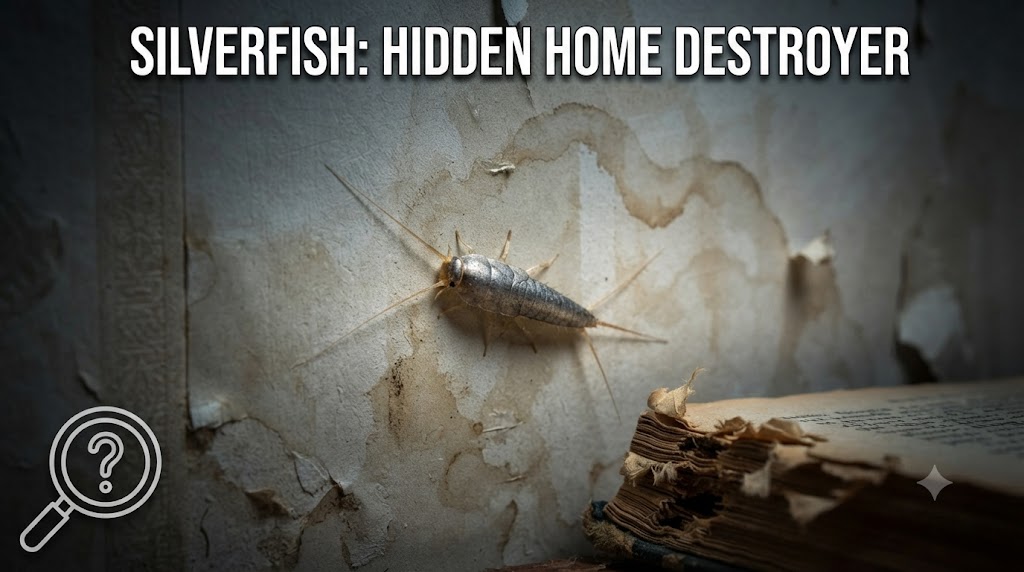
Silverfish are small, wingless, silvery insects that feed on starchy materials such as book glue, paper, cardboard and wallpaper paste. In Karachi they show up wherever humidity, damp storage and undisturbed paper meet, and the fix is to cut the moisture and move valuables into sealed containers.
If you’ve pulled an old book off a shelf and found tiny holes in the pages, or spotted a silvery insect darting for cover when you opened a cupboard, you’ve met a silverfish. They don’t bite and most people barely notice them, until they find the damage in a drawer, almirah or storage box. Karachi’s humidity, especially through the monsoon, suits them well, and older buildings with damp storage areas are particularly prone. Here is what causes an infestation, what is at risk and how to stop it, starting with what to check before assuming you need a full pest control service in Karachi.
What Do Silverfish Look Like?
Silverfish are wingless insects, usually 12–19mm long, with a flattened, teardrop-shaped body and a metallic silver-grey sheen. They move with a quick, wiggling motion, closer to a fish swimming than an insect walking, and they are fast enough that most people only see them for a second before they vanish into a crack or under a stack of paper.
They are nocturnal and avoid light, so by day they hide behind bookshelves, inside cupboards, under sinks, in storage boxes and along skirting boards. Seeing them in the open during the day usually means a fairly established population.
What Are the Signs of a Silverfish Infestation?
Silverfish are easy to miss until damage appears. Watch for:
- Irregular holes or notches in paper, book pages or cardboard
- Yellowish stains on paper, left as they digest the starchy glue in bindings and coatings
- Tiny silvery scales near infested areas, shed as they grow
- Fine, powdery droppings that look like small black pepper flecks
- A musty smell in poorly ventilated storage areas, often alongside the humidity that draws them in
Because they are active at night, a live silverfish is often the last sign people notice, after the damage is already visible.
Why Do Silverfish Show Up in Karachi Homes?
Silverfish need moisture, starchy food and undisturbed shelter, and many Karachi homes offer all three without much effort.
Humidity and the Monsoon
Silverfish thrive in high humidity, and Karachi’s coastal air, plus the monsoon, creates the conditions they favor. Ground-floor units, homes in seaside neighborhoods such as Clifton and DHA, and rooms with poor cross-ventilation tend to see more of them, especially store rooms, godowns and closed-up parts of a house. Activity picks up during and after the rains; our Karachi monsoon pest guide covers the wider seasonal picture.
Leaks and Damp Storage
A slow plumbing leak, a damp wall along an old water supply line or a poorly sealed tank enclosure can raise humidity in one corner of the house for months, until a nearby cupboard of books or files turns out to be infested. Inspect your water tank and surrounding plumbing regularly; our list of signs your water tank needs cleaning includes the dampness clues to look for.
Clutter and Older Buildings
Stacked boxes, piles of old newspapers and rarely opened almirahs give silverfish dark, quiet spaces to occupy for months. Older buildings in areas such as Saddar and Garden, with archive rooms, thick walls and long-closed storage, combine all three needs at once. The less a space is cleaned or moved around, the more comfortable it becomes for them.
What Do Silverfish Damage, and How Do You Protect It?
Silverfish don’t threaten a building’s structure the way termites do, but they cause real, often irreversible loss. They feed on carbohydrates, which puts a lot of ordinary household items on the menu:
| Item at risk | Why silverfish go for it | How to protect it |
|---|---|---|
| Books, files and documents | Starchy binding glue and paper coatings | Keep on shelves, not stacked on the floor; dust regularly; keep away from exterior walls |
| Photographs and albums | Older photo paper and adhesive backing | Store in sealed, acid-free or airtight containers |
| Cardboard boxes | Cardboard is itself a food source | Switch to sealed plastic containers for long-term storage |
| Wallpaper | Paste eaten from behind, causing peeling or bubbling | Fix damp walls first, as moisture drives the problem |
| Clothing and linens | Starch-based finishing, especially when stored a long time | Store clean and dry, and check periodically |
For anyone storing family records, certificates, old photographs or a book collection, prevention matters far more than treatment after the fact.
How Do You Prevent Silverfish?
Humidity control is the biggest lever you have. In practice:
- Use a dehumidifier or air conditioning in consistently damp rooms
- Improve ventilation in store rooms that stay closed most of the time
- Fix plumbing, roof and tank-related leaks as soon as you notice them
- Vacuum and dust regularly, especially behind bookshelves, under sinks and in storage rooms, which removes hiding spots and some of their food (dust and paper fibre)
- Avoid packing storage so tightly that airflow and cleaning become impossible
- Check skirting boards, pipe openings and gaps around windows and doors, and seal them
Do this before the rains, not after: pest-proofing your home before monsoon season is far easier than treating an established infestation. Our DIY guide to pest-proofing doors and windows covers the sealing step in detail.
When Should You Call a Professional?
DIY prevention goes a long way, but arrange a proper inspection if:
- You see silverfish regularly, not just the occasional stray
- Damage is already visible on documents, books or wallpaper
- You’ve dealt with the obvious humidity sources and still see activity
- The infestation is near valuable records, archives or collections you can’t risk losing
A professional visit combines targeted treatment with practical advice on the dampness driving the infestation; treating the insects without fixing the moisture usually means they come back. Cost depends on the size of the property and how established the problem is; see our service charges for details.
Frequently Asked Questions
Are silverfish dangerous to people or pets?
No. Silverfish don’t bite, sting or spread disease. Their impact is on paper, fabric and starchy household materials, not on health.
How do I tell a silverfish from a young cockroach?
Silverfish are silvery, teardrop-shaped, with three bristles at the rear and a fish-like wiggle. Young cockroaches are broader, darker and more oval, and move with a running scuttle. If you are seeing both, our guide to cockroach species in Karachi helps you identify them.
Can silverfish damage electronics or furniture?
Not directly. They target starch and cellulose materials like paper and some fabrics, not wood, plastic or electronics. Damage to wooden furniture is far more likely to be termites; see our guide to identifying termite damage in Karachi homes, and if you suspect them, our termite control service can inspect.
Does Karachi’s monsoon make silverfish worse?
Generally, yes. Higher humidity during and after the rains creates more favorable conditions, and homes with poor ventilation or existing damp spots see a noticeable increase in activity.
How do I protect old documents and photos from silverfish?
Keep them in sealed, acid-free or airtight containers rather than open cardboard boxes, store them in the driest part of the house, and check them periodically instead of leaving them untouched for years.
Will reducing humidity alone get rid of silverfish?
It removes much of what supports them, but an established population may need direct treatment too, particularly if the infestation ran for a while before you noticed it.
The Bottom Line
Silverfish are a slow, quiet threat to your belongings rather than an emergency, but by the time the damage is obvious it is often too late to undo. If you are seeing signs of an infestation, or have books, files or photographs you’d rather not risk, contact Accurate Fumigation for an inspection and a treatment plan suited to your home.

Rehan Khan is the founder of Accurate Fumigation and an entomologist. He holds an M.Sc. in Entomology and a B.Sc. in Environmental Science, and has worked in pest control in Karachi for three decades. He founded the company in 2005 and writes about the pest and water problems the city deals with each season. Accurate Fumigation is ISO 9001:2015 certified and a member of the National Pest Management Association.
Questions about a service, or need a certificate for an inspection? Call the office on 0330-2533480. Read Rehan’s full profile.