Author: Rehan Khan

  • Mosquito and Dengue Risk in Karachi: Post-Monsoon Fogging Guide for Homes

    Mosquito and Dengue Risk in Karachi: Post-Monsoon Fogging Guide for Homes

    For most Karachi families, the end of the monsoon rains is a relief — cooler air, lower temperatures, and the end of weeks of flooding. But for mosquitoes, the post-monsoon period is a different story entirely. Stagnant water left behind in rooftops, empty pots, blocked drains, construction sites, and roadside puddles becomes a mass breeding ground. Within days of the last major rainfall, mosquito populations explode — and with them, the risk of dengue fever.

    This guide explains the dengue risk window in Karachi, what fogging and larvicide treatment actually do, and how to protect your home and family during the most dangerous period of the year.

    Why Post-Monsoon Is Dengue Season in Karachi

    Dengue is transmitted by the Aedes aegypti mosquito — a small, black-and-white striped species that breeds in clean, stagnant water. Unlike the common house mosquito, Aedes aegypti breeds in small, contained water sources: the water-holding tray under a flowerpot, a bottle cap left outside, or the water that collects in a folded tarpaulin. It doesn’t need a large water body.

    Monsoon rains create hundreds of these micro-breeding sites across Karachi. After rains stop, the standing water lingers for days or weeks, especially in low-lying areas. Aedes mosquito eggs hatch within 24-48 hours of water contact, and the larvae mature into biting adults in as little as seven days. The dengue risk window in Karachi typically runs from August through November, with the peak usually occurring in September and October.

    In flood-prone areas like Korangi, Landhi, and Malir, water pooling after monsoon is especially severe. Drainage infrastructure in these areas is frequently overwhelmed during heavy rainfall, leaving puddles and flooded plots that persist long after the rains end.

    High-Risk Breeding Sites Around Your Home

    A thorough mosquito management strategy starts with identifying and eliminating breeding sites. Check these areas around your home:

    • Rooftop water tanks without tight-fitting lids — one of the most significant breeding sites in Karachi households
    • AC drip trays and condensate drainage outlets blocked with debris
    • Plant pot water trays, vases, and any decorative container holding water
    • Old tyres, empty buckets, and discarded containers on rooftops or in courtyards
    • Overhead water tanks with broken or missing inlet covers
    • Water cooler trays and window-mounted AC units
    • Blocked roof drains and gutters where water pools
    • Construction site water sumps and uncovered material storage

    The Role of Your Water Tank

    Many Karachi households don’t realize that their overhead water storage tank — if not properly covered and regularly cleaned — is a major mosquito breeding site. Cracks in the tank lid, absent covers, or damaged seals allow mosquitoes to access the stored water inside. Even a small gap is enough.

    Professional water tank cleaning service includes inspection of the tank’s cover, sealing of gaps, and removal of sediment and organic buildup that supports mosquito larvae. If your tank hasn’t been cleaned and inspected in the past six months, the post-monsoon period is the right time to do it.

    Fogging vs. Larvicide: What’s the Difference?

    There is significant confusion in Karachi households between fogging and larvicide treatment. Both are useful, but they target different stages of the mosquito life cycle.

    Fogging involves dispersing a fine chemical mist (typically a pyrethroid-based insecticide) into an area to kill adult mosquitoes on contact. It provides rapid knockdown of flying mosquitoes and is effective for reducing the immediate biting pressure in a neighborhood or compound. However, fogging has no effect on mosquito larvae already in standing water, and its effects on adult mosquitoes typically last only a few days.

    Larvicide treatment involves applying a biological or chemical agent directly to standing water sources that cannot be drained. The larvicide prevents mosquito larvae from maturing into adults, breaking the breeding cycle at the source. In areas like Surjani Town and New Karachi where open drainage channels and low-lying plots retain water after rains, larvicide treatment of common areas is a critical public health measure.

    For comprehensive household mosquito control, combining both approaches — source elimination, larvicide for unavoidable water sources, and fogging for adult knockdown — provides the most effective protection.

    How to Prepare Your Home for Mosquito Fogging

    Before a professional fogging treatment:

    • Remove all food items, utensils, and dishes from countertops and cover them
    • Take pets outside or to a safe room with the door closed
    • Close all windows and interior doors before fogging begins, and keep them closed for at least one hour after
    • Cover fish tanks or aquariums and disconnect their air pumps
    • Leave the premises during fogging and for 30 minutes afterward
    • After re-entry, ventilate the space by opening windows before resuming normal activity

    Household Prevention Measures That Reduce Risk

    • Drain any standing water around your home at least twice a week during and after monsoon
    • Store water only in tightly covered containers
    • Install and maintain window and door screens
    • Use mosquito nets for sleeping, particularly for children and elderly family members
    • Apply repellents when spending time outdoors in the evenings, which is peak Aedes biting time
    • Keep your surroundings clean — bags, containers, and debris outside your home can collect water after rain

    Why Professional Fogging and Fumigation Is Needed

    Municipal fogging vehicles make periodic passes through Karachi neighborhoods, but they cannot treat inside compounds, courtyards, or rooftops — the private spaces where Aedes mosquitoes breed most densely. Professional fumigation teams can reach these areas, identify hidden breeding sites, apply targeted larvicide treatment, and perform indoor and outdoor fogging on a schedule that tracks the post-monsoon risk window.

    Accurate Fumigation provides mosquito fogging and control services for residential and commercial properties across Karachi. To book a fogging treatment or inquire about mosquito control programs for housing societies or businesses, visit our contact page. You can also review our service charges to understand pricing before you get in touch.

    Act Early — Dengue Risk Rises Fast After Monsoon

    The first four to six weeks after Karachi’s monsoon rains are the highest-risk period for dengue exposure. Acting early — by eliminating breeding sites, sealing water tanks, and scheduling a professional fogging and larvicide treatment — can significantly reduce your household’s exposure risk.

    Do not wait for cases in your neighborhood before taking action. By the time reports appear, mosquito populations are already very high. Contact us via our contact page to schedule a post-monsoon mosquito control inspection for your home or commercial property today.

  • Termite Season in Karachi: Why Humidity After Rains Triggers New Colonies

    Termite Season in Karachi: Why Humidity After Rains Triggers New Colonies

    Every year after Karachi’s monsoon rains, the same scene plays out in homes across the city. A homeowner notices what looks like a crack in the wall. On closer inspection, there are thin brown tubes running along the skirting board. A door frame that was fine in June now sounds hollow when knocked. By the time these signs appear, termites have often been active inside the structure for months.

    Karachi’s monsoon season is, without question, the single biggest trigger for new termite colony formation in the city. Understanding why — and what to do about it — can save you from costly structural damage that insurance rarely covers.

    Why Post-Monsoon Humidity Is the Critical Factor

    Termites — specifically subterranean termites, which are the dominant species in Karachi — require consistent moisture to survive and expand. They build their colonies underground and forage upward in search of cellulose-rich materials: timber, wood furniture, door frames, cardboard, and even paper inside walls.

    After heavy monsoon rainfall, the soil beneath and around buildings in Karachi becomes saturated. This moisture seeps into foundations, enters through cracks in ground-floor slabs, and creates the high-humidity environment termites need to establish new satellite colonies. The months of August through November are particularly high-risk because soil moisture remains elevated long after the rains have stopped.

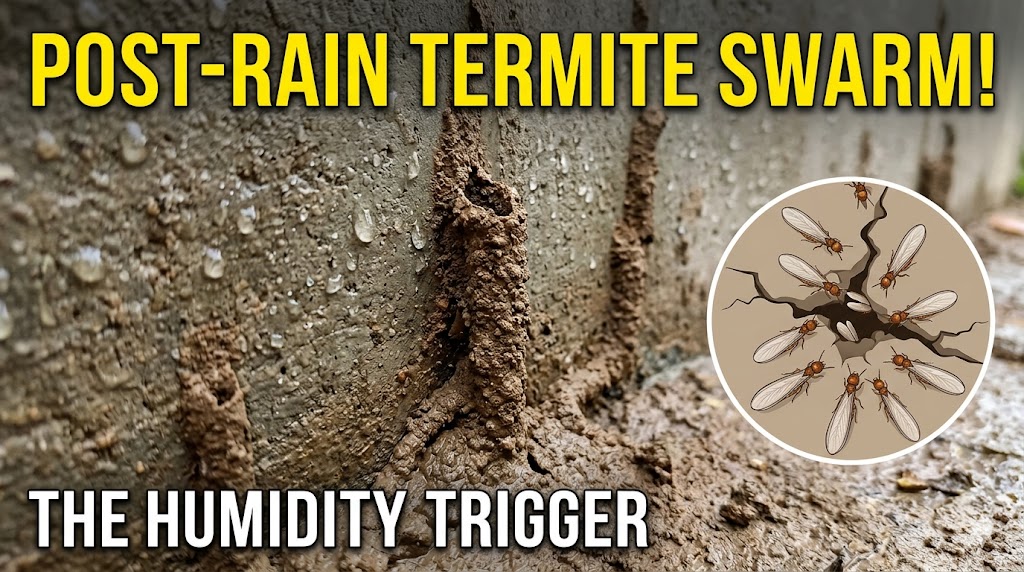
    Winged termite swarmers — the reproductive caste — emerge during or immediately after rain events to found new colonies. If you’ve seen small, winged insects gathering around lights during rainy evenings, there is a strong possibility a new termite colony is forming nearby.

    Building Types Most at Risk

    Not all buildings face equal termite pressure. Older construction in areas like PECHS, Nazimabad, and North Nazimabad often have timber-framed doors, wooden window shutters, and wooden ceiling beams that were standard in buildings constructed several decades ago. These structures provide extensive cellulose for termites to feed on and are frequently found to have advanced infestations before any external sign appears.

    In areas like Garden and Liaquatabad, dense residential housing and older drainage infrastructure means soil moisture levels remain elevated for longer after rains — creating extended windows of vulnerability. Ground-floor units in older buildings, properties with basement storage areas, and homes with wooden furniture directly in contact with the floor are at the highest risk.

    Warning Signs of a Termite Infestation

    Termites are secretive and cause damage from the inside out. These are the signs to watch for:

    • Mud tubes — pencil-thin tubes of dried mud running along walls, skirting boards, or from the floor to wooden structures. These are the termite highway system and one of the most reliable indicators of an active infestation
    • Hollow-sounding wood — knock on door frames, window frames, or wooden furniture; a hollow sound indicates the interior has been eaten away
    • Bubbling or uneven paint — termites produce moisture as they work, which causes paint to bubble or blister on walls and woodwork
    • Frass (termite droppings) — small, pellet-like droppings near wooden structures, sometimes mistaken for fine sawdust
    • Sagging or soft wooden floors — in serious infestations, floors may feel soft or springy underfoot
    • Discarded termite wings — found near windows and doors after a swarm event

    What Termites Target First in Karachi Homes

    In a typical Karachi home, termites prioritize:

    • Wooden door frames and window frames — particularly those installed directly into masonry without a moisture barrier
    • Timber ceiling joists in older constructions
    • Wooden kitchen cabinets, especially those against exterior or wet walls
    • Furniture placed directly on tiled or concrete floors — sofas, beds, wardrobes, and bookshelves
    • Cardboard boxes stored in storerooms and on lower shelves
    • Wooden staircase balusters and handrails in multi-storey homes

    DIY Prevention Steps

    There is no effective DIY cure for an active termite infestation, but these measures reduce your risk:

    • Fix all water leaks — around pipes, AC drainage, and roof — promptly after monsoon. Termites are drawn to moisture first
    • Ensure good ventilation in storage areas, under stairs, and in ground-floor rooms
    • Do not store cardboard boxes, newspapers, or wooden items directly on the floor in storerooms
    • Keep firewood, timber offcuts, or construction materials away from the exterior walls of your home
    • Check furniture for mud tubes or hollow sounds whenever you move items during seasonal cleaning
    • Seal cracks in walls and the slab around utility pipes, especially after rain expands and contracts concrete

    Why Professional Termite Treatment Is Non-Negotiable

    Unlike cockroaches or rodents, termites cannot be controlled with surface sprays or traps. The colony — which may contain hundreds of thousands of individuals — lives deep in the soil or inside wall cavities. Standard hardware-store products cannot reach it.

    Professional termite control service in Karachi uses two primary approaches. Pre-construction anti-termite soil treatment prevents colonies from establishing during building. Post-construction treatment typically involves drilling into the floor slab and injecting a termiticide into the soil beneath the building, combined with chemical barrier treatment along the perimeter and injection into affected wooden structures. This creates a treated zone that kills workers returning to the colony and prevents new entry.

    A qualified pest control technician can determine the extent of an infestation, identify entry points specific to your building’s construction type, and recommend the most appropriate treatment method. Our team is fully licensed — see our pest control license — and our about us page provides further details on our approach to termite management in Karachi.

    Act Before the Damage Becomes Structural

    Termite damage in Karachi homes is rarely covered by property insurance, and structural repair costs — replacing door frames, ceiling joists, or flooring — can run into hundreds of thousands of rupees. Early detection and treatment is almost always significantly cheaper than remediation.

    If you have seen any of the warning signs above, or if your property is in an older neighborhood and has never had a termite inspection, contact Accurate Fumigation for a professional assessment. Visit our contact page to book an inspection, and review our service charges before you call — we believe in transparent pricing from the first conversation.

  • Winter Pest Problems in Karachi — Yes, They Exist (Rodents, Bed Bugs Indoors)

    Winter Pest Problems in Karachi — Yes, They Exist (Rodents, Bed Bugs Indoors)

    Tell most Karachi residents that winter is a peak season for certain pests and you’ll get a skeptical look. Summers are brutal, monsoons are chaotic — but December and January? Surely the cold keeps pests away. The reality is more complicated.

    Karachi’s winter is mild by global standards but still represents a significant temperature drop for local wildlife. For rodents and bed bugs in particular, the cooler months trigger behavior changes that bring them directly into your home — and into your bedroom. Here’s what you need to know.

    Rodents in Winter: Why Rats Move Indoors

    Norway rats and house mice are the most common rodent species in Karachi. Through the hot months, these animals can survive in outdoor environments — in drains, in rubbish areas near buildings, in godowns, and along the edges of open plots. But when temperatures drop in December and January, outdoor conditions become less hospitable and food availability changes. The warmth, shelter, and food stores inside homes and commercial premises become far more attractive.

    Rodents enter buildings through gaps that most people never notice: gaps around pipes at floor level, gaps under doors (a rat can fit through a hole the size of a 5-rupee coin), through drainage outlets, through damaged ventilation covers, and along cable entry points in walls. Once inside, they nest in wall cavities, behind kitchen appliances, in storage rooms, and in false ceilings.

    In residential neighborhoods like North Nazimabad and Federal B Area, dense housing with shared external walls and communal rubbish areas means rodent pressure is particularly high in winter. If neighbors don’t take concurrent action, displaced rodents simply move to the next building.

    Signs of a Rodent Infestation

    • Droppings — small, dark pellets found along walls, in kitchen cabinets, in storage areas, or near food supplies
    • Gnaw marks on food packaging, wooden furniture, cables, and plastic pipes
    • Scratching or running sounds in the ceiling, walls, or under flooring, typically at night
    • Burrow holes near exterior walls, under staircases, or in garden areas adjacent to the building
    • A strong, ammonia-like urine smell in enclosed spaces like storerooms or under-sink cabinets
    • Grease marks along walls and skirting boards where rodents repeatedly travel the same routes

    Bed Bugs in Winter: Storage Is the Hidden Culprit

    Bed bugs don’t disappear in winter — in fact, winter conditions in Karachi homes can accelerate their spread in a very specific way. As temperatures drop, families bring out bedding stored since summer: extra razais (quilts), blankets, mattress toppers, and even folding beds that have been packed away in storerooms or in the upper shelves of wardrobes for months.

    If bed bugs were present in that bedding — even at low levels — they survive storage with extraordinary resilience. Bed bugs can live for months without feeding. When that stored bedding is brought out and placed on sleeping surfaces, a dormant infestation becomes an active one almost overnight. Residents in areas like Gulistan-e-Jauhar and North Nazimabad frequently report bed bug cases emerging in November and December — precisely the time seasonal bedding comes out.

    How to Identify a Bed Bug Problem

    • Red, itchy bites in linear or clustered patterns on exposed skin — arms, neck, shoulders — that appear after sleeping
    • Tiny dark spots (bed bug excrement) on mattress seams, headboards, and bed frames
    • Small rust-colored stains on bedding from crushed bed bugs
    • A sweet, musty odor in the bedroom — described as similar to overripe raspberries — in heavier infestations
    • Shed skin (casings) near mattress seams and in furniture joints
    • Visible bed bugs — small, flat, reddish-brown insects about the size of an apple seed — hiding in mattress seams or furniture crevices

    Preventing Rodent Entry This Winter

    • Seal all gaps around water pipes, gas pipes, and cable entries using steel wool packed into gaps (rats cannot chew through it) followed by cement or sealant
    • Fit door sweeps to all exterior-facing doors — this includes the door to your roof staircase if applicable
    • Inspect and replace damaged ventilation covers and drain grilles
    • Store food in sealed containers — rodents chew through cardboard, plastic bags, and thin plastic boxes with ease
    • Remove rubbish daily and ensure your building’s rubbish area is managed properly
    • Trim any tree branches or vegetation in direct contact with the exterior of the building

    Preventing Bed Bug Spread from Seasonal Storage

    • Before putting stored bedding back into use, inspect it carefully in a well-lit area for dark spots, shed skins, or live insects
    • Sun stored bedding for several hours before use — bed bugs are sensitive to heat and light
    • Consider using sealed plastic storage bags for bedding rather than open shelving in storerooms
    • When purchasing second-hand bedding, mattresses, or upholstered furniture, inspect thoroughly before bringing into the home

    Why Professional Treatment Is Required for Both

    Rodent control using shop-bought traps or poison blocks can kill individual animals but does nothing to identify and seal entry points. Without sealing entry routes, new rodents replace the ones killed within days. Professional rat and rodent control service in Karachi combines population knockdown with entry-point identification and sealing recommendations — addressing the root cause rather than the symptom.

    Bed bug infestations cannot be eliminated with over-the-counter sprays. Bed bugs hide in microscopic gaps, are resistant to many common pesticides, and require either heat treatment or a targeted professional insecticide application to all hiding spots in the room. Professional bed bug fumigation service in Karachi uses products and methods specifically formulated for bed bug control, including follow-up treatments to catch newly hatched nymphs that may survive the first application.

    If you’re dealing with either problem, verify our credentials on our pest control license page, and learn about our team at about us.

    Don’t Wait for Winter Pests to Settle In

    Winter in Karachi lasts roughly three to four months. In that time, a small rodent entry or a latent bed bug presence can turn into a significant infestation that affects multiple rooms. Acting at the first sign — rather than hoping the problem resolves on its own — saves money and protects your family’s health.

    Contact Accurate Fumigation to book a winter pest inspection for your home or building. Visit our contact page to get in touch, and see our charges page for pricing on rodent control, bed bug treatment, and combined pest management packages.

  • Ramadan and Iftar Gatherings: Managing Flies and Pests During Peak Season

    Ramadan and Iftar Gatherings: Managing Flies and Pests During Peak Season

    Ramadan changes the rhythm of every Karachi household and restaurant, and it changes the pest picture too. Kitchens run longer hours, food sits out for sehri and iftar, dastarkhwans stretch across lawns and community halls, and sugar-heavy items like dates, rooh afza, and fruit chaat are prepped in bulk. All of that is exactly what flies, ants, and cockroaches wait for. If you run a fumigation service in Karachi check before the month starts, or at least a mid-Ramadan touch-up, you avoid the scramble that usually happens in the last ten days when guests multiply and nobody has time to deal with a fly problem.

    This post is about the specific pest patterns Ramadan creates in Karachi — for homes hosting iftar dawaats, for restaurants and catering setups doing back-to-back sehri and iftar service, and for mosques and community centers running daily iftar for large crowds — and what actually works to keep flies, ants, cockroaches, and rodents away without disrupting the month.

    Why Ramadan Is a Different Kind of Pest Season

    Most pest problems in Karachi are tied to weather — heat, humidity, monsoon. Ramadan’s pest surge is different because it’s driven by human behavior layered on top of whatever the season already is. Food is left out on open dastarkhwans for longer stretches at iftar time. Fruit peels, date pits, and juice residue pile up in kitchen bins that don’t get emptied as often because everyone’s fasting and tired by the time cleanup happens. Restaurants extend hours and prep larger batches, which means more exposed food surfaces and more foot traffic in and out of kitchens.

    None of this is unmanageable, but it does mean the usual pest-control routine needs to tighten up during Ramadan rather than relax. A single missed cleanup on a busy iftar night is often enough for flies and ants to find a foothold that then takes a week to clear.

    Flies at the Iftar Table

    House flies are the most visible Ramadan pest problem, and they’re drawn to exactly what’s on the table — dates, fried items like pakoras and samosas, fruit chaat, and anything sugary or left uncovered. They breed in decaying organic waste, so an overflowing kitchen bin or a pile of fruit peels sitting out overnight is often the real source, not the food on the table itself.

    • Cover dishes with mesh food covers between the adhaan and the actual start of eating — even a 10–15 minute gap is enough for flies to land.
    • Seal and take out kitchen waste daily rather than letting it accumulate over sehri-to-iftar, since Ramadan often means fewer trips to the outdoor bin.
    • Keep standing water away from the kitchen — flies and mosquitoes both use it, and Ramadan’s extra dishwashing means more wet surfaces sitting around.
    • For restaurants and marquees doing daily iftar service, a scheduled fly-control treatment for the kitchen and service area matters more in Ramadan than any other month.

    Restaurants in food-heavy areas — Bahadurabad, Gulshan-e-Iqbal, and Saddar all have dense clusters of iftar buffets and dine-in spots — see the sharpest jump in fly complaints during the first and last ten days of the month, when volumes peak.

    Ants and the Sugar Problem

    Dates, sugar syrups, rooh afza, and dessert prep are an open invitation to ants, especially the small sugar ants common in Karachi kitchens. A single dropped date or a sticky counter overnight can turn into a visible ant trail by the next sehri. Ants are persistent because they leave scent trails for the rest of the colony to follow, so wiping up the mess doesn’t remove the trail — it needs an actual clean with soap or vinegar, not just a wipe-down.

    If ants are already showing up daily rather than occasionally, that’s usually a sign of a nest nearby rather than a one-off spill, and it’s worth getting a proper ants control service rather than repeatedly wiping counters and losing that battle every night of the month.

    Cockroaches: More Kitchen Activity Means More Sightings

    Cockroaches are naturally more active at night, which happens to line up with sehri prep in most Karachi homes. Longer kitchen hours, more dishes in the sink, and food residue sitting overnight all increase the odds of a sighting, particularly in older kitchens or ground-floor apartments in areas like Nazimabad and Liaquatabad where plumbing and drainage tend to be older.

    A single Ramadan-time gel treatment or spray for the kitchen, especially around the stove, sink, and any gaps behind cabinets, is usually enough to keep things under control through the month. Waiting until Eid to deal with it means dealing with a much larger population by then, since cockroaches breed quickly in warm, food-rich environments. A proper cockroach control service before the month starts is the cleaner option for anyone hosting regularly.

    Rodents and Food Storage

    Ramadan means more dry goods in the house — extra flour, sugar, lentils, dates, and dried fruit bought in bulk for the month. That’s an attractive food source for rats and mice, especially in older buildings or homes near open drains. Store dry goods in sealed containers rather than open bags, and check pantry corners for droppings or gnaw marks a few times during the month rather than only at the end. If there’s already evidence of rodent activity, a proper rats and rodent control service is worth arranging before Ramadan starts, since rodent baiting and food-heavy months don’t mix well without professional placement.

    Don’t Forget the Water Tank

    Ramadan means more water use overall — extra wudu, more dishwashing, more drinking water for iftar and sehri. If a home or mosque’s water tank hasn’t been cleaned recently, this is the month that extra usage will expose any sediment, algae, or contamination sitting at the bottom. A water tank cleaning service before Ramadan starts is a simple, often-overlooked step, particularly for mosques and community halls running iftar for large numbers of people daily.

    For Restaurants, Caterers, and Mosques Running Daily Iftar

    Commercial kitchens and community iftar setups deal with all of the above at a much larger scale, and they carry an added responsibility: food safety compliance. Restaurants should already have their documentation in order for SFA (Sindh Food Authority) inspections, and pest control is a standard part of that checklist. If your setup hasn’t had a professional treatment recently, or you’re not sure your current provider is licensed, it’s worth confirming — Accurate Fumigation’s pest control license and client list are there for exactly this kind of verification.

    For high-volume iftar operations, a mid-Ramadan check-in — not just a pre-Ramadan treatment — is worth scheduling, since a month of daily large-scale food service puts more pressure on pest control than a normal month does.

    A Simple Ramadan Pest Checklist

    • Get flies, ants, and cockroaches addressed before Ramadan starts, not mid-month when it’s harder to fit in.
    • Cover food between adhaan and eating, even for short gaps.
    • Empty kitchen waste daily — don’t let it build up over the fasting hours.
    • Store bulk dry goods (flour, sugar, dates, lentils) in sealed containers.
    • Get the water tank cleaned before the month starts, especially for homes and mosques expecting heavier water use.
    • Restaurants and caterers: confirm your pest control provider is licensed and schedule a mid-Ramadan check if volumes are high.

    Frequently Asked Questions

    Why do flies suddenly appear during Ramadan even in a clean kitchen?

    It’s usually the timing, not the cleanliness. Food sits uncovered for longer at iftar, dishwashing happens later in the day, and waste often isn’t taken out as promptly during fasting hours. Flies only need a small window of exposed food or standing moisture to show up.

    Is it safe to get pest control done while fasting or during Ramadan?

    Yes. Treatments can be scheduled for times that don’t disrupt sehri or iftar prep, and kitchens are cleared and ventilated as part of the process. Many households and restaurants specifically prefer to schedule treatment before the month starts to avoid any disruption once Ramadan is underway.

    How often should a restaurant get pest control during Ramadan?

    For high-volume iftar and sehri operations, a treatment before Ramadan plus a mid-month check-in is a reasonable minimum. Lower-volume home kitchens hosting occasional dawaats can usually manage with a single pre-Ramadan treatment plus the daily habits above.

    What attracts ants the most during Ramadan?

    Dates, sugar syrups, and dessert prep are the biggest draw. Even a small amount of spilled syrup left overnight is enough to start a visible ant trail by the next day.

    Does water tank cleaning matter more during Ramadan?

    Water use goes up noticeably during Ramadan for wudu, cooking, and drinking, which means any sediment or contamination in an uncleaned tank gets used more heavily too. It’s a good month to get ahead of it rather than deal with it after Eid.

    Get Ahead of It Before the Month Starts

    Ramadan is one of the busiest months of the year for Karachi households, restaurants, and mosques — the last thing anyone needs is flies over the iftar dastarkhwan or a rodent problem in the pantry. If you want your kitchen, dining area, or community hall sorted before the month begins, get in touch with Accurate Fumigation and we’ll schedule a visit that works around your Ramadan calendar.

  • Spring Pest Activity in Karachi: What to Expect Before Monsoon Hits

    Spring Pest Activity in Karachi: What to Expect Before Monsoon Hits

    Karachi doesn’t really have a dramatic spring the way colder cities do — the shift from mild winter into the hot, dry stretch that runs through April, May, and June is fairly quick. But this transitional window, before the monsoon arrives in July, is one of the more important stretches of the year for pest prevention, precisely because it’s the calm before the humidity spike. What you do — or don’t do — between February and June tends to determine how bad the monsoon months turn out to be.

    This post covers what typically shows up in Karachi homes and buildings during this pre-monsoon window, and why it’s the right time to get ahead of things rather than wait until the rain and humidity make everything harder to treat.

    Why the Pre-Monsoon Window Matters

    Once the monsoon sets in from July through September, humidity climbs sharply, and a lot of pest treatments become less effective or harder to schedule around rain. Termite colonies are also much harder to treat once soil is saturated. The dry heat of March through June, by contrast, is a good window for inspections and preventive treatment, because you’re dealing with pests before their populations spike, not after.

    Termite Swarmers: The Clearest Pre-Monsoon Warning Sign

    Termite swarming is triggered by a mix of rising temperature, humidity, and rainfall — winged reproductive termites leave an established colony to start new ones, usually on warm, still days. In Karachi, this activity tends to pick up as the pre-monsoon heat builds and any early rain or humidity spikes hit, which makes March through June a realistic window to see swarmers around windows, doors, and outdoor lighting.

    A swarm is often the first visible sign homeowners get, but it’s rarely the first sign that actually exists — by the time swarmers appear, the colony has usually been active underground or inside wall cavities for a while already. Discarded wings on windowsills, small mud tubes along walls or foundations, or wood that sounds hollow when tapped are all signs worth acting on. Older housing stock in areas like Nazimabad, North Nazimabad, and parts of Federal B Area tends to be more exposed, simply because wooden fittings and older foundations have had more time to develop entry points.

    A pre-monsoon termite control service inspection is the single most useful thing to schedule in this window — treating a colony before soil saturation and heavy rain makes the job both faster and more effective.

    Ants Coming Indoors Looking for Moisture

    As the dry heat sets in, ants start searching harder for water sources, which often means kitchens, bathrooms, and any leaking pipe becomes a target. This is a good time to check under sinks and around water coolers for small leaks that might not have been obvious in cooler months. If ant activity is already a daily occurrence rather than occasional, a proper ants control service treatment now avoids a much larger colony establishing itself by the time monsoon humidity arrives.

    Mosquitoes: Early Activity Before the Real Surge

    Mosquito populations in Karachi typically spike hardest during and after monsoon rains, when standing water is everywhere. But the pre-monsoon window still matters, because any water storage practices that build up now — uncovered drums, uncleaned coolers, clogged gutters — become breeding grounds the moment humidity and rainfall arrive. Getting into the habit of covering stored water and clearing out stagnant spots in April and May means you’re not starting from behind once the rains hit in July.

    Get the Water Tank Cleaned Before the Rains Contaminate It

    This is arguably the most overlooked pre-monsoon task. Once monsoon rain starts, runoff and debris are far more likely to find their way into rooftop tanks through poorly sealed lids or overflow pipes, and humidity accelerates algae growth inside tanks that already have sediment buildup. Getting a water tank cleaning service done in spring — before the first heavy rains — means the tank starts the wet season clean, rather than compounding a year’s worth of sediment with fresh contamination.

    This applies to individual homes, but it matters even more for buildings and housing societies with shared overhead or underground tanks, since a single contaminated shared tank affects every unit connected to it.

    Cockroaches: Steady Rather Than Seasonal, But Worth Checking Now

    Cockroaches don’t have as sharp a seasonal pattern as termites or mosquitoes, but the pre-monsoon dry heat still pushes them to seek out moisture indoors, particularly around kitchens and bathrooms. Since this window is naturally a good time for a general inspection anyway, it’s worth combining it with a check for cockroach activity, especially in ground-floor units or older buildings where drainage and plumbing gaps are more common. A cockroach control service treatment now, before humidity picks up, tends to hold longer than one done mid-monsoon.

    Rats and Rodents Before Monsoon Flooding

    Rodents that live in open drains, construction sites, and low-lying areas often get displaced once monsoon flooding starts, pushing them toward nearby homes and shops in search of dry shelter. Areas prone to waterlogging — parts of Malir, Korangi, and Landhi have all seen this pattern in past monsoon seasons — are worth a pre-monsoon check for entry points around doors, drains, and gaps in boundary walls. Sealing these now, before flooding pushes rodents to look for new shelter, is more effective than dealing with an active infestation once the rains have already started. A rats and rodent control service with exterior bait placement and entry-point sealing is the standard approach here.

    Apartment Buildings and Housing Societies: A Shared Responsibility

    For apartment buildings and housing societies, pre-monsoon pest control is best handled at the building level rather than unit by unit. Shared water tanks, common drainage, basement and ground-floor storage areas, and shared boundary walls mean that one unit’s termite or rodent problem rarely stays contained to that unit for long. Building management committees in societies across areas like Scheme 33 and Gulshan-e-Iqbal typically get better results — and better value — from a single scheduled society-wide inspection and treatment ahead of monsoon than from residents arranging individual, uncoordinated callouts after problems appear.

    If you’re on a building committee weighing this, it’s worth reviewing actual charges for a society-wide contract against what individual units would likely spend reactively over the same period — coordinated pre-monsoon treatment is almost always the more cost-effective route, and it avoids the situation where one untreated unit keeps reinfesting its neighbours.

    A Pre-Monsoon Pest Checklist

    • Book a termite inspection in March–June, before soil saturation makes treatment harder.
    • Check under sinks and around water coolers for small leaks attracting ants.
    • Clean and cover stored water containers to stop early mosquito breeding.
    • Get overhead and underground water tanks cleaned before the first heavy rains.
    • Inspect kitchens and bathrooms for early cockroach activity while it’s still manageable.
    • Seal entry points around doors, drains, and boundary walls before monsoon flooding displaces rodents toward your property.

    Frequently Asked Questions

    When do termites usually swarm in Karachi?

    Termite swarming is driven by warmth and humidity building toward the monsoon, so the pre-monsoon window from roughly March through June is when swarmers are most likely to appear, particularly around windows, doors, and outdoor lights on warm, still days.

    Is it worth getting pest control done before monsoon if I haven’t seen any pests yet?

    Yes — a lot of pre-monsoon treatment is preventive, and it’s specifically more effective before humidity and rainfall arrive. Waiting until pests are visibly active mid-monsoon usually means a bigger, harder-to-treat problem.

    How do I know if I have a termite problem versus flying ants?

    Termite swarmers have two pairs of wings of equal length and a straight, uniform body, while flying ants have a pinched waist and unequal wing lengths. If you’re not sure, a professional inspection is the safest way to confirm before assuming it’s harmless.

    Why does my water tank need cleaning before monsoon specifically?

    Monsoon rain and humidity increase the risk of runoff entering poorly sealed tanks and accelerate algae growth in tanks that already have sediment. Cleaning beforehand means the tank isn’t starting the wet season already compromised.

    Does spring pest control cost more than treating an active infestation later?

    Preventive treatment is generally simpler and less invasive than treating an established infestation, since it deals with a smaller, less entrenched problem. Exact charges depend on the property and service — you can check current charges for specifics.

    Can I wait until monsoon actually starts to book an inspection instead of doing it now?

    You can, but it puts you at a disadvantage. Once humidity and rain arrive, termite colonies and mosquito breeding sites are both harder to treat and faster-growing, and scheduling can get tighter as more people react to visible problems at the same time. Booking during the dry pre-monsoon window is simply easier on every front.

    Get Ahead of Monsoon While There’s Still Time

    The weeks before monsoon are the easiest time all year to deal with termites, water tank contamination, and early pest activity — everything gets harder once the rain and humidity arrive. If you’d like an inspection scheduled for your home, building, or business before the season turns, contact Accurate Fumigation and we’ll get you sorted while it’s still manageable.

  • Wedding Season Pest Control in Karachi: Protecting Venues and Homes During Peak Events

    Wedding Season Pest Control in Karachi: Protecting Venues and Homes During Peak Events

    Karachi’s wedding season runs roughly October through February, with December and January as the busiest stretch, when marquees, banquet halls, and family lawns across the city are booked back-to-back for mehndis, baraats, and walimas. It’s also, less obviously, a season that puts real pressure on pest control — large volumes of food, extended outdoor events, decor and rented furniture moving between venues, and homes hosting out-of-town guests for days at a stretch. None of this is usually top of mind while planning a wedding, but it’s exactly the kind of thing that turns into a visible, embarrassing problem on the actual event day if it’s ignored.

    This post covers what venue owners, caterers, and families hosting wedding events in Karachi should actually be thinking about when it comes to pests — and when to get it sorted before the big day rather than after something goes wrong.

    Why Wedding Season Strains Pest Control

    A wedding event concentrates a lot of the things pests are drawn to into one place, over a short but intense window: large-scale food prep and serving, outdoor lawns and marquees left open into the evening, decor and floral arrangements, and dozens to hundreds of guests moving through a space that’s often used for events on consecutive nights. Venues that host functions on a near-daily basis during peak season, especially in dense event hubs like DHA and Clifton, don’t always get enough downtime between events for a full pest treatment, which is exactly why scheduled, ongoing pest control matters more here than a one-time fix.

    Marquees and Lawns: Mosquitoes and Flies

    Outdoor lawn weddings, common across Karachi’s wedding scene, run straight through the evening when mosquitoes are most active. Standing water anywhere on the property — ornamental ponds, drainage channels, even decorative fountains that aren’t properly maintained — becomes a breeding source, and a lawn full of well-dressed guests being bitten through dinner is not a good look for any venue. Flies are a related problem wherever food is served buffet-style or left out for extended periods during a long event.

    • Check the venue for standing water in decorative features, drainage areas, and unused corners a few days before the event, not the morning of.
    • Schedule mosquito treatment for outdoor lawn areas ahead of peak evening hours, ideally timed to the actual event schedule rather than a generic once-a-month spray.
    • Keep food covered between serving rounds, especially for long events that run late into the night.

    Catering and Kitchen Areas: Cockroaches, Ants, and Rodents

    Wedding catering — whether it’s an in-house venue kitchen or an external caterer setting up temporary cooking stations — creates the same conditions that drive pest activity in any commercial kitchen, just compressed into a shorter, higher-volume window. Sugar-heavy dessert stations attract ants quickly, food storage areas draw rodents if bulk ingredients aren’t sealed properly, and cockroaches take advantage of any kitchen that’s running longer hours than usual with more food residue building up between cleanups.

    Venues and caterers that run events regularly should have standing arrangements for cockroach control, ants control, and rodent control rather than reactive one-off treatments, since a wedding season kitchen doesn’t get much of a break between bookings to fully reset.

    Bed Bugs: An Underrated Risk From Decor and Rented Furniture

    This is one that catches people off guard. Rented furniture, decor pieces, stage seating, and soft furnishings that move between multiple venues and storage facilities during peak season can carry bed bugs from one location to another. It’s not the most common source of bed bug infestations, but it’s a real one, particularly for venues that rent from third-party decor vendors serving multiple events a week. If guests are staying overnight at a family home for a multi-day wedding, and any rented items — mattresses, cushions, decorative bedding — are part of the setup, it’s worth a quick inspection beforehand. A bed bugs fumigation service treatment before a multi-day event is a lot less disruptive than dealing with bites and an infestation after guests have already settled in for a week of functions.

    Homes Hosting Guests for Multi-Day Wedding Functions

    Karachi weddings often mean a full week of functions — mehndi, baraat, walima, and the days in between — with out-of-town relatives staying at the family home for the whole stretch. That means more people, more luggage moving in and out, more cooking, and generally more strain on a house than it sees the rest of the year. It’s worth treating this the way a venue would: a general pest check a week or two before the first function, particularly for cockroaches and ants in the kitchen, given how much extra cooking a week of wedding functions involves.

    Water usage also spikes significantly with a house full of guests, which is a good reason to have the water tank checked and cleaned beforehand if it hasn’t been done recently — nobody wants sediment or discoloration showing up in the water supply during a week when the house is full of relatives.

    Compliance for Venues and Caterers

    Commercial venues and catering operations serving food to the public are expected to maintain proper pest control and hygiene standards as part of routine food safety compliance, including SFA and PPMA-related requirements where applicable. This matters beyond just optics — it’s part of running a defensible, professional operation, especially for venues that host events across multiple areas of the city and can’t afford a pest complaint going public during peak season. If you need to verify current pest control documentation or licensing for your venue, Accurate Fumigation’s pest control license and clients pages have what’s needed for due diligence.

    Photography Areas, Guest Seating, and Ants on the Lawn

    A detail that’s easy to miss until it’s happening in front of two hundred guests: photo backdrops, floral arches, and stage seating often sit directly on grass or soil for hours before and during an event, and any ant activity in that patch of lawn becomes very visible, very fast, once guests in formal clothing start sitting or standing there. This is worth a specific check during the venue walkthrough a few days before the event — not just the kitchen and washrooms, but the exact spots where the stage, seating, and photo areas will be set up. A localized ants control treatment on those areas ahead of time is a small step that avoids a genuinely awkward moment during the event.

    Booking Pest Control Around a Wedding Calendar

    The biggest mistake families and venues make is treating pest control as a last-minute item, squeezed in alongside decor setup the day before an event. Because Karachi’s peak wedding months (December and January especially) mean venues are booked back-to-back, and popular dates are typically reserved months in advance, pest treatments should be scheduled with the same lead time — ideally a week or two before the first function, not the night before. This gives treatments time to work and avoids any smell or disruption right before guests arrive.

    • For venues: set up a recurring pest control schedule that matches your event calendar rather than booking reactively.
    • For families hosting multi-day functions at home: schedule a general check-up and, if needed, water tank cleaning at least one to two weeks before the first event.
    • For caterers: confirm kitchen and storage areas are treated ahead of high-volume cooking days, not after a problem shows up mid-event.

    Frequently Asked Questions

    When is Karachi’s wedding season, and does that affect pest control demand?

    Karachi’s wedding season generally runs from October through February, with December and January as the peak months. Venues and caterers running events almost nightly during this stretch typically need more frequent, scheduled pest control rather than one-off treatments.

    Can rented wedding decor or furniture really bring bed bugs into a venue or home?

    It’s possible, since bed bugs can travel in soft furnishings, cushions, and furniture that move between multiple locations. It’s not the most common source, but for venues or homes hosting overnight guests with rented bedding or seating, a quick inspection beforehand is a reasonable precaution.

    How far in advance should a venue schedule pest control before a wedding event?

    At least a week or two before the first function is a reasonable minimum, giving treatments time to work fully and avoiding any disruption immediately before guests arrive.

    Do outdoor lawn weddings have a higher risk of mosquito problems?

    Yes, generally — outdoor evening events line up with peak mosquito activity, and any standing water on the property (decorative ponds, drainage areas, poorly maintained fountains) increases the risk. Treating these spots ahead of the event is more effective than dealing with it once guests have arrived.

    Is pest control necessary for a private home hosting wedding functions, or just commercial venues?

    Homes hosting a full week of functions with guests staying overnight face many of the same pressures as commercial venues on a smaller scale — more cooking, more water use, more people in the house. A general check-up beforehand is worth it even for a private home, not just banquet halls.

    Plan Pest Control Into Your Wedding Prep

    Between the marquee, the kitchen, the guest rooms, and the water supply, a wedding puts more pressure on a property than almost any other event in Karachi. Getting pest control scheduled early — as part of the planning, not an afterthought — is what keeps it from becoming a problem on the day that matters most. Reach out to Accurate Fumigation to book a pre-event visit for your venue, catering setup, or home ahead of this wedding season.

  • Summer Heatwave Pest Surge in Karachi: Why Pests Multiply Faster in Extreme Heat

    Summer Heatwave Pest Surge in Karachi: Why Pests Multiply Faster in Extreme Heat

    Karachi’s summers — roughly March through October, with May and June regularly pushing past 40°C — don’t just make life uncomfortable for people. They’re the single biggest driver of pest activity all year. Insects are cold-blooded, so their entire life cycle speeds up as temperatures climb: they eat more, breed faster, and reach adulthood sooner. Combine that with Karachi-specific summer conditions — K-Electric load-shedding pushing more households onto stored water and generators, water shortages that lead to more water being stored in open containers and tanks, and humidity from the sea breeze — and you get a pest surge that’s noticeably worse than what a hot city elsewhere might see.

    This post breaks down why heat accelerates specific pests common in Karachi homes and businesses, and what actually helps during the worst of the season, whether you’re in a breezy DHA bungalow or a mid-rise apartment in Gulistan-e-Jauhar.

    The Biology: Why Heat Speeds Everything Up

    Insects don’t regulate their own body temperature — their metabolism is set by the environment around them. As ambient temperature rises, so does their metabolic rate, which shortens the time between egg, larva, and adult stages. A cockroach or fly population that would take a certain number of weeks to establish itself in cooler weather can do it noticeably faster once temperatures are consistently in the high 30s and 40s, which is Karachi’s normal range from April through September.

    This is also why pest problems that seemed minor in February can look completely different by June — the population simply had more breeding cycles in less time.

    Cockroaches: Heat, AC Condensation, and Kitchens

    Cockroaches thrive in warm, humid environments, which makes a Karachi summer close to ideal for them. They’re also drawn to moisture, and summer AC units create a steady source of it — condensation trays, drip lines near windows, and damp spots behind units are common gathering points that people don’t check often. Add a kitchen running the stove and washing dishes multiple times a day, and you’ve got heat, food, and moisture all in one place.

    Regular cleaning around AC units and drip points, sealing gaps behind cabinets, and not leaving dishes overnight all help, but once a population is established indoors, a professional cockroach control service treatment works faster than DIY sprays, which tend to scatter roaches into wall cavities rather than eliminate the colony.

    Ants: Foraging Harder for Water

    In extreme heat, ants forage more aggressively for both food and water, which is why kitchen ant trails often get worse in peak summer even in households that haven’t changed their habits. A damp sink, a leaking pipe, or condensation from a water cooler becomes a magnet. Areas with older plumbing — parts of PECHS and Garden, for instance — tend to see this more because small leaks are more common in aging pipework.

    Fixing visible leaks helps, but if ants are showing up daily rather than occasionally, it usually means there’s an established nest close by, and an ants control service treatment is the more reliable fix than repeated spot-spraying.

    Mosquitoes: Stored Water Becomes the Problem

    Karachi’s summer water situation is unusual compared to most cities dealing with heat. Between KWSC supply gaps and load-shedding affecting pumps, a lot of households store water in drums, tanks, and buckets to get through the day — and stagnant stored water is exactly what mosquitoes need to breed. Even a small amount of standing water, left uncovered for about a week, is enough for mosquito larvae to develop into adults. This is a well-established fact in pest and public health guidance, and it’s a big part of why dengue and other mosquito-borne illness cases tend to climb through the hotter months in Karachi.

    • Keep all stored water containers covered, including drums and buckets kept as backup during load-shedding.
    • Empty and clean water coolers, plant saucers, and any tray that collects water at least once a week.
    • Check flat rooftops and terraces for pooled water after using stored supplies to wash tanks or clean outdoor areas.
    • If your building’s overhead or underground tank hasn’t been cleaned recently, get it done — sediment and organic buildup in a tank is a breeding and contamination risk, especially once usage increases in summer.

    A water tank cleaning service is worth scheduling before the peak of summer rather than after a problem shows up, since tanks that go a year or more without cleaning build up sediment that both feeds bacteria and gives mosquito larvae somewhere to hide from surface treatments.

    Termites: Pre-Monsoon Activity Starts in the Heat

    Termite swarming is triggered by a combination of warmth, humidity, and rainfall, which is why the tail end of Karachi’s hot season — as it transitions toward the monsoon — is a common window for winged termite swarmers to appear around windows, doors, and light fixtures. Seeing a swarm doesn’t mean the problem just started; by the time swarmers are visible, a colony has usually been established for a while. If you spot discarded wings on windowsills or near light fixtures during this transition period, it’s worth getting a termite control inspection rather than assuming it’s a one-off.

    Rats and Rodents: Seeking Shade and Water

    Rodents don’t handle extreme heat well either, and they gravitate toward shaded, cooler spots with access to water — under water tanks, near drains, inside garages, and in gaps around plumbing. Summer is also when open drains and construction sites (common across expanding areas like Gulistan-e-Jauhar and Surjani Town) tend to push rodent populations toward nearby homes and shops looking for both shelter and water. A rats and rodent control service that includes exterior bait station placement is more effective in summer than indoor traps alone, since a lot of the activity is happening outside before rodents ever get indoors.

    Fleas and Ticks: A Problem for Pet Owners in Peak Heat

    Fleas and ticks also reproduce faster in warm weather, and pets that spend more time outdoors — or in gardens and lawns — in the cooler evening hours are at higher risk during summer. If a pet starts scratching more than usual, or you notice small bites on ankles at home, it’s worth checking bedding and carpets, and arranging a fleas and ticks control service before an infestation spreads through soft furnishings.

    Restaurants and Businesses: Summer Heat Raises the Stakes

    For restaurants, bakeries, and food businesses, summer isn’t just uncomfortable — it’s the season where pest problems are most likely to become visible to customers and most likely to draw attention during SFA inspections. Heat pushes cockroaches and ants toward any accessible food source faster than in cooler months, and a kitchen that’s cutting corners on pest control in July is taking on real risk, both reputational and regulatory. Confirming that your pest control provider is properly licensed is a reasonable thing to check rather than assume — Accurate Fumigation’s pest control license and client history are available for exactly that kind of verification, and current charges are available if you’re comparing options for a scheduled summer contract rather than a one-off callout.

    Factories and warehouses across industrial belts also see a similar summer pattern — stored raw materials and packaging draw rodents and cockroaches looking for shelter from the heat, and a facility running at full production through summer doesn’t always have the downtime to notice a slow-building infestation until it’s already affecting output or inventory.

    What Actually Helps During Peak Summer

    • Don’t wait for a full infestation — summer’s faster breeding cycles mean a small problem in April can be a much bigger one by June.
    • Cover and regularly empty all stored water, especially anything kept as a load-shedding backup.
    • Get water tanks cleaned before peak season, not after a problem is noticed.
    • Check AC condensation points and water coolers weekly — they’re a common summer hotspot most people overlook.
    • Schedule a general pest inspection at the start of summer rather than mid-crisis in July or August.

    Frequently Asked Questions

    Why do I suddenly have more pests in summer even though I haven’t changed anything at home?

    Heat itself is the change. Warmer temperatures speed up insect breeding cycles significantly, so a population that was small and unnoticed in cooler months can grow much faster once Karachi’s summer heat sets in, even without any new food or water source appearing.

    Does stored water really cause mosquito problems?

    Yes — mosquitoes need still water to lay eggs and complete their larval stage, and uncovered stored water (common during load-shedding or supply gaps) is one of the most common breeding sources in Karachi homes during summer.

    How often should water tanks be cleaned in summer?

    There’s no single fixed interval that fits every household, since it depends on tank type, usage, and how sealed the tank is, but going into peak summer with a tank that hasn’t been cleaned in a long time is a common and avoidable risk. A professional inspection can tell you where your specific tank stands.

    Is it normal to see flying termites in Karachi before monsoon?

    Yes, this is typical termite swarming behavior triggered by rising humidity and heat ahead of the monsoon. It’s worth treating as a warning sign rather than a one-time event, since swarmers usually mean an established colony nearby.

    Can I just use store-bought sprays during summer instead of professional treatment?

    Sprays can help with visible individual insects, but for established colonies — cockroaches, ants, termites — they often just scatter the population rather than eliminate it, which can make the problem harder to treat properly later.

    Beat the Heat Before It Beats You

    Karachi’s summer heat is unavoidable, but a pest surge on top of it doesn’t have to be. Whether it’s a cockroach problem building in the kitchen, ants finding every leak in the house, or a water tank that needs attention before the season peaks, Accurate Fumigation covers homes and businesses across Karachi. Get in touch to schedule an inspection before the worst of the heat hits.

  • Why Korangi and Landhi Industrial Units Need Quarterly Fumigation Contracts

    Why Korangi and Landhi Industrial Units Need Quarterly Fumigation Contracts

    Karachi’s industrial belt stretches through Korangi and Landhi, housing everything from textile mills and food processing units to pharmaceutical warehouses and packaging facilities. These environments generate pest pressure at a scale and frequency that is simply not comparable to residential settings. A one-off treatment is not a pest management strategy for an industrial unit — it is a temporary measure that gives you a few weeks of relief before the problem returns.

    Quarterly fumigation contracts exist because industrial environments have a structural tendency to re-infest. Understanding why helps factory owners and warehouse managers build a pest control program that actually protects product, workforce, and compliance status.

    What Makes Industrial Units High-Risk for Pest Infestations

    Food-adjacent industries are the most at risk. Flour mills, food packaging units, spice processors, and cold storage facilities in Korangi attract rodents and cockroaches because they provide a continuous food source. Even non-food industries — textile stores, rubber units, chemical warehouses — provide the harbouring conditions (warmth, clutter, undisturbed spaces) that pests need to establish colonies.

    Large loading bays with open shutters are entry points that can never be fully sealed during operational hours. Every delivery that arrives — whether raw materials, packaging, or equipment — potentially carries pests. Cockroaches travel in cardboard boxes. Rodents arrive in grain shipments. Stored Product Insects (SPIs) like grain weevils and flour beetles move between facilities via contaminated raw material.

    Karachi’s summer heat, which regularly exceeds 40 degrees Celsius in poorly ventilated industrial spaces, accelerates pest reproduction cycles. A rodent problem that seems manageable in February can become a full-scale infestation by May if left untreated.

    The Case for Quarterly Contracts Over Ad-Hoc Treatments

    When an industrial unit calls for pest control only when an infestation is visible, treatment is always reactive. By that point, cockroach or rodent populations are already large, product contamination may have occurred, and a single treatment rarely eliminates an established colony.

    Quarterly contracts work differently. Each treatment is preventive rather than reactive, targeting harbouring areas, entry points, and known pest pressure zones before populations grow. The pest control team builds a site-specific understanding of your facility over time — they know where rodents are entering, which areas of the factory floor cockroaches prefer, and where stored product insects first appear in your inventory cycle.

    Between quarterly treatments, the service provider conducts monitoring using bait stations and glue traps. If numbers spike between scheduled treatments, a follow-up visit is included — meaning you are not paying emergency call-out rates every time there is an uptick.

    Pests Most Commonly Found in Korangi and Landhi Industrial Units

    Rodents: Roof rats and Norway rats are the primary species in Karachi’s industrial zones. They cause direct product loss through contamination, damage packaging and wiring, and create serious fire risks. Professional rat control in industrial settings uses tamper-resistant bait stations positioned along rodent runways — the walls, pipes, and beams they travel along — rather than random trap placement.

    Cockroaches: German cockroaches dominate food processing environments. American cockroaches are prevalent in drainage-connected spaces. Both pose serious food safety and contamination risks. Cockroach control in industrial settings typically combines gel baiting in sensitive areas with residual spray treatment in lower-risk zones.

    Stored Product Insects: Grain weevils, flour beetles, and moth larvae are a serious problem for any unit handling agricultural commodities, spices, or processed food. These insects breed inside product and are often invisible to casual inspection until the infestation is extensive. Detection requires systematic monitoring of stock rotation and targeted treatment of incoming raw materials.

    Flies: Industrial food facilities face serious fly pressure, especially during summer. Flies carry pathogens between drains, waste areas, and production surfaces. Treatment involves a combination of UV fly traps, larvicide treatment of drains, and exterior residual spraying.

    Compliance and Audit Requirements

    Food processing facilities operating in Korangi are subject to inspections by PSQCA and Sindh Food Authority. Pest infestation on inspection day can result in production shutdowns, fines, and in serious cases, export certificate cancellations for units supplying international buyers. A documented quarterly fumigation contract — with written service records, monitoring reports, and treatment logs — demonstrates active pest management to auditors.

    Pharmaceutical and FMCG facilities face ISO and GMP audit requirements that specifically address integrated pest management (IPM). These audits expect written pest control protocols, site-specific documentation, and pest sighting logs. A contracted service provider handles all of this as part of the service.

    What a Quarterly Contract Should Include

    Not all fumigation contracts are structured the same. Before signing, ensure the contract includes:

    • Initial site survey and pest risk assessment
    • Written pest management plan specific to your facility type
    • Monitoring (bait stations, glue boards) installed and checked at each visit
    • Written service reports after every treatment, including findings and actions taken
    • Defined response time for emergency call-outs between scheduled visits
    • Treatment that covers both interior and exterior perimeters, loading bays, and drainage areas
    • Separate treatment protocols for different facility zones (production, storage, utilities, canteen)

    DIY Prevention Between Treatments

    Contracted fumigation is not a substitute for good hygiene and operational discipline. To reduce re-infestation pressure between quarterly visits:

    • Inspect all incoming deliveries for signs of pest activity before moving them into storage
    • Implement strict waste management — remove waste daily and keep skips covered
    • Seal gaps around pipes, conduits, and wall penetrations in production and storage areas
    • Keep pallet storage off the ground and away from walls to allow inspection access
    • Ensure drainage channels are cleaned regularly — stagnant water in drains is a cockroach and fly breeding site
    • Report any pest sightings to your pest control provider immediately, not at the next scheduled visit

    For facilities with water storage requirements, water tank cleaning should be part of your broader hygiene program — dirty or infrequently cleaned tanks attract pests and pose their own hygiene risks.

    Protect Your Facility Year-Round

    Industrial units in Korangi and Landhi operate in one of Karachi’s highest-risk pest pressure environments. A quarterly contract is not an extra cost — it is operational insurance that protects your product, your workforce, your audits, and your reputation.

    Accurate Fumigation provides quarterly industrial fumigation contracts for factories, warehouses, and processing facilities across Karachi’s industrial zones. To discuss a contract that fits your facility size and compliance requirements, visit our contact page. For pricing information, see our charges page. Do not wait for the next audit — set up a program that keeps you compliant and protected year-round.

  • Bed Bug and Cockroach Problems in Bahadurabad Apartments: A Localized Guide

    Bed Bug and Cockroach Problems in Bahadurabad Apartments: A Localized Guide

    Bahadurabad is one of Karachi’s densest apartment neighborhoods, and that density cuts both ways. It gives residents easy access to Tariq Road, good schools, and a strong sense of community — but it also means pests move between units faster than almost anywhere else in the city. A pest control service in Karachi gets a specific kind of call from this area: not “we have an occasional cockroach,” but “our neighbor got treated and now they’ve moved into our flat.”

    If you live in a Bahadurabad apartment block — whether it’s an older building near Latifabad Chowrangi or a newer high-rise closer to Sharae Faisal — bed bugs and cockroaches behave differently here than they would in a standalone house. This guide looks at why, and what actually works.

    Why Apartment Density Changes the Pest Equation

    Detached houses have natural barriers between them — a boundary wall, open air, distance. Apartment buildings don’t. Shared walls, common risers, connected balconies, and a single building-wide plumbing and electrical duct system give pests a highway between flats that a house simply doesn’t have.

    This matters most for two pests: bed bugs, which travel through cracks, shared furniture, and even electrical conduits between adjoining units, and cockroaches, which move freely through kitchen plumbing risers and shared drainage that connects every floor.

    Bed Bugs in Bahadurabad Apartment Blocks

    How They Actually Spread Between Units

    Bed bugs don’t fly and don’t jump. They spread through direct contact — used furniture brought in from outside, luggage after travel, or secondhand mattresses — and, in apartment buildings specifically, through wall voids, baseboard gaps, and shared risers that connect adjacent flats. This is why a single infestation in a Bahadurabad building rarely stays contained to one unit for long if it isn’t treated properly and promptly.

    Recognizing an Infestation Early

    The most reliable early signs are small rust-colored spots on mattress seams and sheets (bed bug droppings), tiny pale eggs and shed skins along seams and headboard joints, and a pattern of bite marks — often in a line or cluster — that appear after sleep and weren’t there when you went to bed. Musty odor is sometimes reported in heavier infestations, but it’s not a reliable early indicator on its own.

    Why DIY Sprays Don’t Solve This

    Off-the-shelf aerosol sprays kill bed bugs on contact but do nothing to the eggs hidden deep in mattress seams, box spring frames, and furniture joints. Bed bugs also disperse when disturbed by spray — which in an apartment setting often means they move toward a shared wall and re-establish in the neighboring flat instead of dying out. Professional bed bug fumigation treatment is built around multiple treatment cycles specifically because a single pass rarely catches eggs that hatch later.

    Cockroach Problems in Bahadurabad Kitchens

    The Two Cockroaches You’ll Actually See

    Karachi kitchens generally deal with two types: the smaller German cockroach, which prefers warm, humid spots near stoves, water heaters, and under sinks and reproduces the fastest of any common household roach, and the larger American cockroach, which tends to come up through drains and risers from the building’s shared plumbing system. In an apartment block, the second type is the one that keeps coming back no matter how clean your own kitchen is, because it’s living in the building’s shared drainage, not just your flat.

    Why Building-Wide Drainage Is the Real Problem

    If your kitchen is clean and you’re still seeing roaches, the source is very often the shared riser or drain line, not anything inside your unit. Roaches travel up through floor drains and gaps around pipe penetrations, especially in older Bahadurabad buildings where pipe seals have degraded over the years. This is also why individually treating just one flat in a building often gives short-lived results — the roaches simply repopulate from the shared plumbing a few weeks later.

    What Actually Breaks the Cycle

    Effective cockroach control in an apartment setting combines gel baiting at entry points (behind appliances, around pipe penetrations, along baseboards) with sealing visible gaps where pipes pass through walls and floors. Gel baits work better than sprays here because roaches carry the bait back to the nest, affecting others that never made direct contact — important when the source population is in a shared riser you can’t spray directly.

    Getting Building Management Involved

    Because bed bugs and cockroaches in apartment buildings are frequently a building-wide issue rather than a single-unit one, coordinating with your building’s management committee — especially for a shared treatment schedule across affected floors — produces far better long-term results than individual residents treating their own flats in isolation and on different timelines.

    Frequently Asked Questions

    Can bed bugs travel through apartment walls on their own? Yes, in multi-unit buildings bed bugs can move through cracks, electrical conduits, and shared wall voids between adjoining units, which is why apartment infestations often need coordinated treatment across neighboring flats rather than a single isolated treatment.

    Why do cockroaches keep coming back even after I clean my kitchen thoroughly? In older apartment buildings, cockroaches — particularly the larger species — often live in the building’s shared drains and risers rather than in any one kitchen. A spotless kitchen won’t stop roaches that are repopulating from a shared plumbing source.

    Is it normal to still see bed bugs a few days after a treatment? Some residual activity for one to two weeks after an initial treatment is common, since eggs that survived the first treatment can still hatch. This is why professional treatments are typically scheduled as more than one visit rather than a single pass.

    Do I need to throw away my mattress if I have bed bugs? Not always. A mattress can often be treated and encased rather than discarded, depending on how established the infestation is. A technician can assess this during inspection.

    Can I just treat my own flat if my neighbor has an infestation? You can, but if the source is in a shared riser, wall void, or if your neighbor’s unit remains untreated, reinfestation is likely. Coordinating treatment timing with affected neighbors gives a much better outcome.

    Getting Help

    If you’re dealing with bed bugs, cockroaches, or both in a Bahadurabad apartment, it’s worth getting a proper inspection rather than guessing at the source — especially in a shared building where the real problem may not be inside your own flat at all. You can get in touch here to arrange an inspection, or check our service charges for an idea of what treatment typically involves.

  • PECHS Pest Control Guide: Termites and Rodents in Karachi’s Older Bungalows

    PECHS Pest Control Guide: Termites and Rodents in Karachi’s Older Bungalows

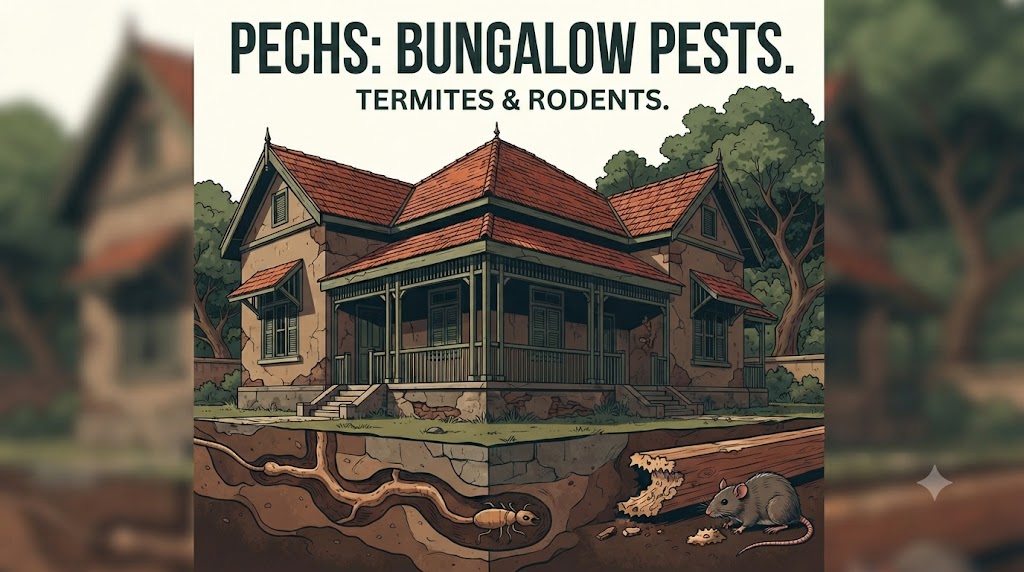
    PECHS is one of Karachi’s older planned neighborhoods, and a large share of its bungalows date back several decades — wooden window frames, old roof timber, mature gardens, and boundary walls that have settled and cracked over the years. Those same qualities that give PECHS its character are exactly what makes it a consistent source of termite and rodent calls for any pest control company in Karachi.

    This guide focuses on the two pests that older PECHS bungalows deal with far more than newer construction elsewhere in the city: subterranean termites working through structural timber, and rodents establishing themselves in gardens, roof spaces, and store rooms that have accumulated clutter over the years.

    Why Age of Construction Matters So Much Here

    Newer buildings are generally built with termite-resistant treatments applied to foundations during construction, and modern rodent-proofing (sealed gaps, mesh screens) is more common. Older PECHS bungalows were built before these were standard practice, and decades of settling, cracking, and garden growth against exterior walls have created far more entry points than a newer property would have.

    Termites in PECHS Bungalows

    Subterranean Termites: The Main Culprit

    The termites most commonly found damaging structural wood in Karachi homes are subterranean termites, which live in soil and travel up into a structure through mud tubes built along foundation walls, rather than living inside the wood itself the way some other termite species do. This is an important distinction because it means the colony’s main nest is typically underground, near or under the foundation — not inside the timber you can see damage on.

    Where to Look in an Older Bungalow

    Wooden window and door frames, especially ground-floor frames facing gardens, roof timber in older flat-roof or truss constructions, wooden almirahs and built-in cupboards fixed against exterior walls, and mud tubes — thin brownish tunnels running up foundation walls or pillars — are the areas worth inspecting first. Mud tubes are one of the most reliable visual signs of subterranean termite activity and are often visible on boundary walls even before any wood damage becomes obvious inside the house.

    Why “I Sprayed and It Went Away” Doesn’t Actually Work

    Surface sprays kill termites they directly contact but don’t reach the underground colony, which can contain a large number of termites and will simply rebuild any damaged foraging tubes and continue working elsewhere in the structure. Effective termite control targets the colony itself — typically through soil treatment around the foundation perimeter, and in more established infestations, bait stations that termites carry back into the colony. This is a fundamentally different approach from spraying visible mud tubes or damaged wood.

    Rodents in Older Bungalow Gardens and Store Rooms

    Why Bungalows Attract Rodents More Than Apartments

    A standalone bungalow with a garden gives rats and mice far more to work with than a sealed apartment unit: garden beds and compost areas, gaps under boundary walls, store rooms and servant quarters that go unused for stretches of time, and older drainage and sewage lines with degraded joints. Mature gardens in particular — common throughout PECHS — provide both food sources and cover that newer, more sparsely landscaped properties don’t have.

    The Health Risk Worth Knowing About

    Rodents are a recognized carrier of several diseases transmissible to humans, including leptospirosis (spread through contact with water or soil contaminated by rodent urine) and salmonella (through contamination of stored food). This is well-established public health information, not a scare tactic — it’s the reason rodent control in a garden-heavy property matters beyond just the annoyance of seeing them.

    What Effective Rodent Control Actually Involves

    A proper approach to rodent control starts with identifying entry points — gaps under gates, cracks at the base of boundary walls, unsealed vents — because bait alone without sealing entry points tends to just attract more rodents from outside rather than reducing the population inside the property. Bait station placement, sealing of identified entry points, and a follow-up inspection to confirm the population has actually been reduced (not just temporarily suppressed) are the core components.

    The Garden-Termite Connection Homeowners Miss

    One detail specific to bungalow properties: garden beds, tree stumps, and wood mulch placed directly against exterior walls create an ideal moisture-retaining bridge between soil-based termite colonies and the structure itself. Simply moving garden beds a short distance away from foundation walls and avoiding wood mulch touching the house removes one of the easiest access routes termites use — a small change that costs nothing but meaningfully reduces risk in older properties.

    Frequently Asked Questions

    How do I know if it’s termite damage or just old wood? Termite-damaged wood typically sounds hollow when tapped and may show a honeycomb or layered pattern when broken open, along with visible mud tubes nearby. Simple aging or water damage doesn’t usually produce that hollow, tunneled pattern.

    Can termites cause structural damage to a bungalow, or is it just cosmetic? Left untreated over years, subterranean termites can compromise structural timber — roof trusses, load-bearing wooden elements, and window/door frames — to the point of requiring repair or replacement, not just surface-level cosmetic damage.

    Do I need to treat the whole property or just the affected room? Because subterranean termite colonies operate from the soil around the entire foundation, effective treatment is generally applied around the full foundation perimeter, not just the room where damage was first noticed.

    Are rodents in the garden a serious problem or just something to live with? Given the disease risk associated with rodent contamination of food, water, and soil, an established rodent population in a garden or store room is worth addressing rather than ignoring, even if it hasn’t caused visible property damage yet.

    How often should an older bungalow be inspected for termites? There’s no universal fixed interval, but older properties with a history of termite activity, mature gardens against the walls, or wooden structural elements benefit from periodic inspection rather than waiting for visible damage to appear.

    Getting Help

    If you own or manage an older bungalow in PECHS and want a proper inspection rather than guesswork, you can get in touch here to arrange a site visit, or read more about our approach before booking.