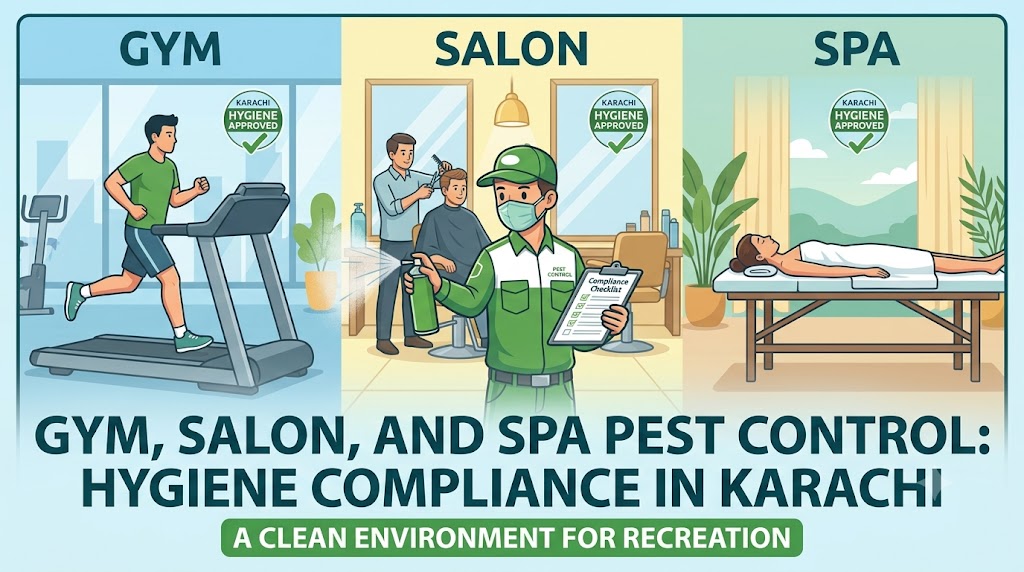
Gyms, salons, and spas sell one thing above all else: a feeling of cleanliness. A member who spots a cockroach near the locker room, or a client who notices something crawling near the pedicure station, doesn’t file a complaint quietly — they leave a review, and in Karachi’s increasingly crowded fitness and beauty market, a single bad review carries more weight than most owners want to admit. This is a category where pest control isn’t really about damage prevention, it’s about protecting the trust the entire business is built on.
These spaces also present a genuinely different pest profile than a restaurant or office — constant moisture from showers, steam rooms, and pedicure basins, shared towels and linens moving between clients, and upholstered furniture and mats that create hiding spots most cleaning routines never reach. A pest control service in Karachi built for a kitchen or a warehouse doesn’t automatically transfer to this environment, and this post covers what actually needs attention.
Why Gyms, Salons and Spas Carry a Different Pest Risk
The common thread across gyms, salons, and spas is moisture combined with fabric and upholstery — locker rooms, showers, steam rooms, yoga studios with foam mats, salon towels, and spa linens all create conditions that a dry retail shop or office never has to manage. Moisture supports cockroaches and, in poorly maintained facilities, even mould that compounds the hygiene problem.
Fabric and soft surfaces are the second distinguishing risk. Bed bugs don’t need blood-borne exposure to travel — they hitch rides on clothing, gym bags, and towels, and a spa or salon with upholstered treatment chairs and shared linens is exactly the kind of environment where an introduced problem can spread between clients before anyone notices.
There’s No Dedicated Government Rulebook — Here’s What Actually Applies
Worth being upfront about: Pakistan doesn’t have a specific pest-control regulation written for gyms, salons, or spas the way food businesses have the Sindh Food Authority framework. If your facility includes a café, juice bar, or any food and beverage service — increasingly common in gyms and spas — that specific area does fall under standard food-business hygiene expectations, but the treatment floor, locker rooms, and salon stations themselves aren’t governed by a dedicated pest law.
What actually drives standards in this sector is closer to reputational and franchise-level pressure than government inspection. International gym and salon franchises often carry their own internal hygiene audit standards as part of the franchise agreement, and increasingly, Karachi’s more established local operators voluntarily adopt similar internal checklists simply because member and client expectations have risen. There’s no license to point to, but there’s a competitive standard that functions almost as strictly.
The Pests That Actually Show Up
Cockroaches are the most frequent issue, drawn to the combination of moisture and, in gyms with a café or juice counter, food residue — cockroach control in this setting has to account for locker rooms and drainage, not just the front-of-house area. Bed bugs are the risk owners worry about most because of how visible and reputation-damaging a single confirmed sighting is; bed bug treatment for a spa or salon needs to cover upholstered furniture, linen storage, and treatment beds specifically, not just a general spray.
Ants show up around reception areas with snacks or drinks on offer, and a targeted ants control plan usually resolves this quickly once the entry point is traced. Fleas and ticks are a narrower risk but worth mentioning for any facility with a pet-friendly policy or adjoining grooming service — fleas and ticks control is worth budgeting for if pets are ever brought onto the premises.
Water and Steam Areas Need Their Own Attention
Steam rooms, jacuzzis, and shower blocks generate exactly the humid, warm conditions pests and mould thrive in, and the water feeding these systems needs to be part of the same maintenance conversation as the pest programme, not a separate facilities line item. Overhead or underground water tank cleaning should be scheduled on a fixed calendar, since sediment buildup in a tank feeding a spa’s water features is both a pest and a client-facing hygiene issue if it’s ever noticed.
Building a Programme That Protects the Client Experience
A workable programme for this sector typically runs monthly inspections with particular attention to locker rooms, treatment rooms, and any food or beverage counter, paired with a linen and towel handling protocol that reduces how easily bed bugs or other pests move between clients in the first place. Treatment scheduling matters here more than almost anywhere else — visits need to happen outside peak hours or on off-days, since a technician walking through a spa mid-treatment undoes the exact atmosphere the business is selling.
Discretion is also part of the service in this category in a way it isn’t for a warehouse or school — most gym, salon, and spa clients want the problem handled without staff, let alone members or clients, knowing there was ever an issue. A pest control partner working in this space needs to operate quietly, in low-visibility slots, with minimal disruption to the client-facing areas.
Staff Protocols Matter as Much as Treatment
A pest control visit only solves half the problem in this sector — staff behaviour around linen handling, equipment cleaning, and reporting is what determines whether a problem gets caught early or discovered by a client first. Simple protocols make a disproportionate difference: laundering towels and linens at a high enough temperature and frequency, inspecting upholstered furniture and treatment beds during routine cleaning rather than only when someone complains, and giving front-desk and treatment staff a clear, low-friction way to flag something unusual without it turning into a public conversation in front of other clients.
Facilities that build this into staff training tend to catch issues at the “one unusual observation” stage rather than the “client complaint” stage, which is the difference between a quiet, same-week fix and a review that follows the business online for months.
Choosing the Right Partner
Look for a company with actual experience in hospitality or wellness environments rather than only residential or industrial work — the discretion, scheduling, and chemical selection requirements are different enough that general experience doesn’t fully transfer. Our background and client history cover this kind of commercial work, and charges for a gym, salon, or spa are scoped around facility size and the specific zones needing coverage. Facilities across DHA, Clifton, and Bahadurabad — where much of Karachi’s fitness and salon business is concentrated — are a good reference point for the kind of scope this typically involves.
Frequently Asked Questions
Is pest control legally required for gyms and salons in Karachi?
There’s no dedicated government regulation specifically for gyms, salons, or spas the way there is for food businesses. If your facility includes a café or juice bar, that food-service area is expected to meet standard food-hygiene practices, but the rest of the facility isn’t governed by a specific pest law — it’s driven more by client expectations and, for franchises, internal brand standards.
How do bed bugs actually get into a salon or spa?
Almost always by hitching a ride — on a client’s clothing, a gym bag, or personal items — rather than originating in the facility itself. Upholstered furniture and shared linens are what allow an introduced bed bug to establish and spread once it arrives.
Can pest control be done without disrupting business hours?
Yes, and for this sector it usually needs to be — most gyms, salons, and spas schedule treatment during off-peak hours or closed days specifically to avoid disrupting the client experience or drawing attention from members and clients.
Do steam rooms and jacuzzis need special pest control attention?
The humidity and standing water in these areas create ideal conditions for pests and mould, so they need to be included in routine inspections rather than assumed to be self-cleaning simply because they involve water and heat.
How often should a gym or spa be inspected?
Monthly is a reasonable baseline for most facilities, with more frequent attention to locker rooms, treatment rooms, and any food and beverage counters given their higher risk.
Get Started
A single pest sighting can undo months of member or client trust in a business built on cleanliness. If you run a gym, salon, or spa anywhere in Karachi, get in touch to set up a discreet inspection and treatment schedule built around your actual operating hours.

Founder, Accurate Fumigation — B.Sc. Environmental Science, M.Sc. Entomology
Most pest control operators in Karachi learn the trade on the job. Rehan studied it first — a B.Sc. in Environmental Science followed by an M.Sc. in Entomology — before spending 30 years applying that background in the field, the last 20 of them running Accurate Fumigation, which he founded in 2005.
That distinction matters more than it sounds. A technician who’s only ever sprayed knows what worked last time. Someone trained in entomology understands why a species nests where it does, how a colony’s life cycle affects treatment timing, and why a generic spray often fails to reach the actual breeding site. It’s the difference between treating symptoms and treating the source — and it’s why Accurate Fumigation’s termite work carries a warranty of up to 5 years rather than the usual 3-month terms most Karachi operators offer.
Rehan’s team is PPMA registered and FBR/SRB compliant, works exclusively with WHO-approved chemicals, and has handled everything from termite proofing in DHA’s older bungalows to full-scale fumigation contracts for restaurants and warehouses in Korangi. Every job — residential or commercial — closes with a written warranty and, where required, a certificate accepted by KMC, WASA, and the Sindh Food Authority.
Questions about a specific pest problem, or want a certificate for a compliance inspection? Reach Rehan’s office directly at 0330-2533480, or visit at Office-307/2, Razeen Blessings, Block 1, Gulistan-e-Johar, Karachi.