To get rid of fleas in a Karachi home, you have to treat three things at once: your pet (with a vet-approved product), your home (daily vacuuming, hot washes, and a treatment that targets eggs and larvae in carpets and soft furnishings), and whatever keeps bringing fleas back, such as stray cats or rodents. Killing the adult fleas you can see is not enough, because they are only a small fraction of the infestation.
If your pet scratches constantly, tiny dark specks are turning up near the skirting boards, and bites are appearing on your ankles, you already have a flea problem. This guide explains why fleas are so stubborn in Karachi homes, how to spot them early, and what it takes to clear them for good.
Why Does Karachi’s Climate Make Fleas So Hard to Beat?
Fleas thrive in warmth and humidity, and Karachi has both for much of the year. Infestations run year-round and peak in the warm, humid months from roughly April to September. In these conditions a flea can complete its life cycle in as little as two to three weeks, compared with several months in cooler climates.
The monsoon adds to the problem. Wet weather keeps pets indoors, raises humidity in carpeted rooms, and limits the ventilation that dries bedding and floor coverings. Eggs hatch and larvae develop faster, and a population can explode within a month. Our Karachi monsoon pest guide covers what else to expect.
Older apartments in Federal B Area (see our guide to pest control in Federal B Area), North Nazimabad, and Gulistan-e-Jauhar often have wall-to-wall carpets installed years ago and never deep-cleaned. These become reservoirs of eggs and larvae that survive routine surface vacuuming.
How Do Fleas Get Into Karachi Homes?
- Pets that go outdoors, even briefly. A short walk, a park, or a stairwell shared with strays is enough for a flea to hitch a ride home.
- Stray cats on balconies, courtyards, or rooftops. A single stray resting on your balcony can drop many flea eggs.
- Second-hand furniture and rugs. A carpet or sofa bought from a market in Saddar without inspection is a common way fleas are introduced.
- The Eid-ul-Adha period. Animal markets and slaughter areas draw strays and bring ticks into residential streets, so pets and shoes can carry fleas and ticks home. See our guides to Karachi’s Eid pest surge and tick identification and health risks.
- Ground-floor apartments. Fleas from strays near the entrance or compound can migrate upward through common corridors.
What Are the Signs of a Flea Infestation?
Do not wait until you see fleas jumping. Earlier signs are:
- Your pet scratches, bites, or grooms obsessively, especially at the base of the tail, belly, and inner legs, and may be restless at night.
- Small, intensely itchy red bites on human ankles and lower legs, often in clusters of two or three.
- Flea dirt: tiny dark specks in your pet’s fur, on bedding, or on light floors. Press a speck onto a damp white paper towel; if it smears reddish-brown, it is digested blood, not ordinary dirt.
- Small, fast-jumping insects near floor level, around pet sleeping areas and carpets.
- The white-sock test: walk through carpeted rooms in white socks, and fleas and flea dirt show up against the fabric.
Why Can’t You Just Treat the Pet? The Flea Life Cycle Explained
This is the most important thing to understand about flea control. The adult fleas on your pet are commonly estimated at only around 5% of the total infestation. The other 95% is eggs, larvae, and pupae in your home: in carpet fibers, sofa cushions, under beds, in pet bedding, and in the gaps between skirting boards and floor tiles.
| Stage | Where it lives | Approximate duration | What deals with it |
|---|---|---|---|
| Egg | Falls off the pet into carpet, bedding, and sofas | Hatches within a few days | Vacuuming, hot washing, insect growth regulator (IGR) |
| Larva | Deep in carpet fibers and dark cracks, away from light | About one to two weeks | IGR plus residual insecticide, vacuuming |
| Pupa | Sticky cocoon in carpets, skirting gaps, and pet bedding | A week to several months, hatching when it senses a host | Daily vacuuming and professional residual products (cocoons resist many insecticides) |
| Adult | On the pet, feeding and laying eggs | Weeks to a couple of months | Vet-approved pet treatment plus adulticide in the home |
Because pupae can sit dormant until they sense the vibration, warmth, and carbon dioxide of a passing host, a home can look flea-free for weeks after treatment and then flare up again. Effective control has to hit every stage together.
How Do You Get Rid of Fleas at Home? Step by Step
These steps reduce flea numbers and help prevent reinfestation, but they will not clear a moderate to severe infestation on their own.
- Treat your pet first with a vet-recommended product (an oral tablet, spot-on treatment, or collar), before any home treatment, so the pet does not reintroduce fleas straight away.
- Vacuum daily during an active infestation: carpets, rugs, upholstery, under beds, and along skirting boards. Empty the canister or dispose of the bag outside the home straight after each session.
- Wash pet bedding, blankets, and soft toys in hot water (above 60°C) and dry them on the highest heat setting. Wash your own bed linen too if pets sleep on or near your bed.
- Comb your pet daily with a fine-tooth flea comb, dipping the comb in soapy water to kill any fleas you remove.
- Clear clutter from floors so vacuuming and treatment reach every surface.
- Keep your pet away from strays and the places strays gather.
When Is DIY Not Enough? What Professional Flea Treatment Involves
Homes with carpets, several pets, or an infestation older than a few weeks usually need professional treatment. The flea population in the environment is too large and too spread out for surface sprays and vacuuming alone. Our guide to DIY pest control versus professional fumigation helps you judge where your home sits.
Professional treatment applies an insect growth regulator (IGR) together with an adulticide across floors, furniture, and soft furnishings. The IGR stops eggs and larvae developing into breeding adults. Without it, you kill the adults and the next generation hatches within days.
Our fleas and ticks control service treats the whole home systematically, targeting every life stage with the right combination of products, and we advise on post-treatment steps to prevent quick reinfestation.
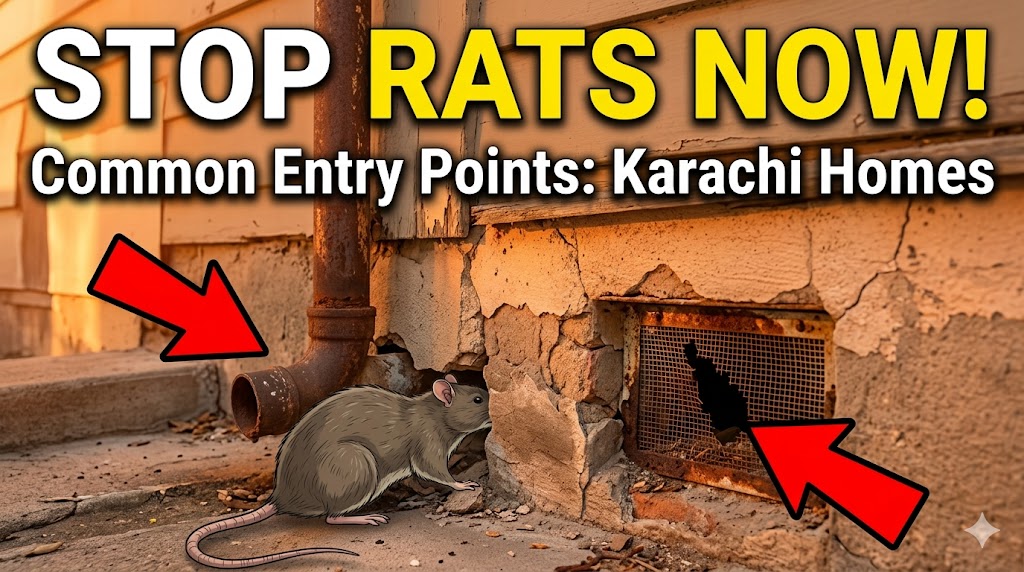
If your building also has rodents, which is common in older Karachi construction, they act as secondary flea hosts and keep reintroducing fleas even after your pet is treated. Our rats control service can be combined with flea treatment, and our guide to rat-proofing your Karachi home shows how to stop them coming back.
What Should You Do With Carpets After a Flea Treatment?
Thick-pile carpets that have never been professionally steam-cleaned can hold flea larvae at depths that vacuuming and surface sprays cannot reach. If fleas persist despite repeated treatments, have the carpets deep-cleaned or, in severe cases, replaced.
After a professional treatment, follow your technician’s instructions on when to resume vacuuming. Once it is safe to start, vacuum daily for two weeks to remove pupae as they hatch, before they can mature and breed.
Frequently Asked Questions
Can fleas live on humans?
Not for long. Cat and dog fleas prefer furry hosts, so they bite people, mainly on the ankles and lower legs, but rarely stay. Fresh bites keep appearing for as long as an untreated pet or infested carpet is the source, so treating the source matters more than treating the bites.
How can I tell flea bites from bed bug bites?
Flea bites are small, itchy red spots on the ankles and lower legs, often in clusters, and usually come with a scratching pet. Bed bug bites tend to appear on skin exposed during sleep, such as the arms, neck, and face, often in a line, sometimes with blood spots on the bedding. If the pattern does not fit fleas, read our guide to bed bug identification and behavior.
Will fleas go away on their own in winter?
No. Karachi’s winters are mild, and indoor carpets and bedding stay warm enough for fleas to keep breeding. Activity may ease slightly, but an established infestation carries on all year until it is treated.
Is professional flea treatment safe for pets and children?
It is when trained technicians apply products suited to homes and follow the label. Keep pets and children out of treated rooms until surfaces have dried, or for as long as your technician advises. Our article on whether pest control is safe for children and pets covers what to expect.
How much does flea treatment cost in Karachi?
Cost depends on the size of the property, how much carpet and upholstery needs treating, the number of pets, and how severe the infestation is. Our service charges page shows current pricing.
Book a Professional Flea Treatment
A flea infestation does not resolve on its own, and delay only lets fleas embed deeper in your home. If you are dealing with persistent scratching pets, unexplained bites, or visible fleas in your carpet, contact Accurate Fumigation to book an inspection and treatment. Our service charges are listed transparently, so you know what to expect before we arrive.
We serve pet owners across Karachi, including families in PECHS, Bahadurabad, and North Nazimabad.

Rehan Khan is the founder of Accurate Fumigation and an entomologist. He holds an M.Sc. in Entomology and a B.Sc. in Environmental Science, and has worked in pest control in Karachi for three decades. He founded the company in 2005 and writes about the pest and water problems the city deals with each season. Accurate Fumigation is ISO 9001:2015 certified and a member of the National Pest Management Association.
Questions about a service, or need a certificate for an inspection? Call the office on 0330-2533480. Read Rehan’s full profile.