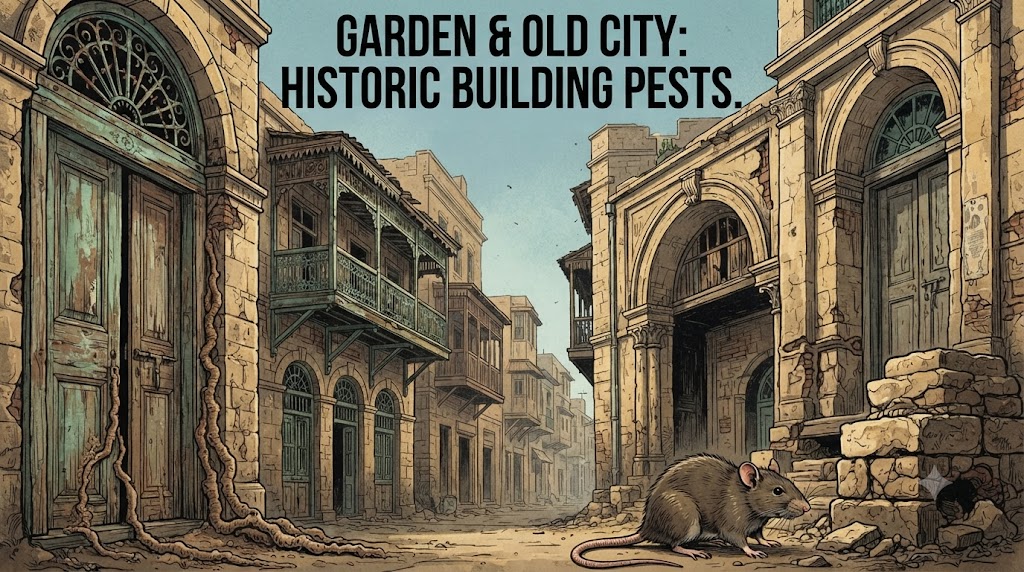
The Garden area and Karachi’s surrounding old city neighbourhoods hold some of the city’s oldest residential and commercial buildings — many with original timber beams, wooden staircases, and drainage systems that predate most of the plumbing standards used in newer construction. That age is part of what gives these buildings their character, but it’s also exactly what makes them vulnerable to termites and rodents in ways newer buildings simply aren’t.
If you own or manage a property in Garden or one of the older surrounding neighbourhoods, pest control here isn’t just about eliminating an infestation — it’s about doing it in a way that doesn’t damage a structure that can’t easily be replaced.
Why Karachi’s Old City Fabric Is Different
Buildings in this part of the city were often built decades before modern damp-proofing and pest-resistant construction practices became standard. Original wooden beams, door frames, and staircases have had far longer exposure to Karachi’s humidity and monsoon seasons than anything in a newer development, and many have been through multiple rounds of minor water damage that was never fully addressed. Old city and heritage-adjacent neighbourhoods across Karachi share this pattern — our broader look at pest control challenges in old Karachi buildings covers it beyond Garden specifically.
Old Buildings vs Modern Construction: Why the Risk Differs
| Risk factor | Older Garden / old city properties | Newer construction elsewhere |
|---|---|---|
| Timber exposure | Original structural and decorative wood, decades of humidity exposure | Minimal structural timber; treated or engineered materials common |
| Drainage system | Old, often cracked or unsealed pipe networks | Sealed, modern piping standards |
| Termite treatment approach | Must protect original woodwork; not all methods are suitable | Standard treatment methods generally apply |
| Recommended inspection frequency | Annual, given the cost of undetected damage | Can typically follow a longer routine schedule |
Termites in Century-Old Timber
Subterranean termites are the primary threat to old timber in this area, and by the time damage is visible — sagging beams, hollow-sounding wood, or crumbling near the base of a staircase — the colony has usually been established for a long time. Our guide to identifying termite damage in Karachi homes covers the early warning signs worth checking before damage gets to that stage. Termite control in a heritage or century-old structure needs a different approach than a newer building: assessing which timber elements are structural versus decorative, and choosing treatment methods that don’t require removing or heavily disturbing original woodwork.
Regular inspection matters more here than almost anywhere else in the city, simply because the cost of discovering termite damage late — in a beam that can’t be easily replicated — is much higher than in standard modern construction. Our overview of termite season in Karachi is worth reading alongside this if you want to time inspections around the periods when termite activity picks up, and our breakdown of termite treatment cost in Karachi covers what factors affect pricing for a job like this. The same structural sensitivity applies in other older or heritage-adjacent parts of the city — see our note on why DHA and Clifton homes get termite infestations for how the risk shows up differently in newer construction nearby.
Rodents and Karachi’s Aging Drainage Network
Old city drainage systems, in many cases, are decades old and were not built with the sealed, modern piping standards used today. Cracked or open sections of old drains give rodents a direct route into basements and ground-floor storage areas, and rodent activity in this part of the city is very often traced back to the drainage network itself rather than anything a specific property is doing wrong. Our guide to rat-proofing your home covers the entry points worth sealing first, wherever a property sits.
This means rodent control in old city properties often needs to look beyond the building’s own boundary — sealing entry points where old drains meet the foundation, not just placing bait indoors.
Treating Historic Structures Without Causing Damage
A few practical considerations that matter specifically for older and heritage-adjacent buildings:
- Termite treatment methods should be chosen based on whether timber is structural or decorative — some treatments require drilling, which isn’t appropriate for original decorative woodwork.
- Chemical treatments near old plaster or lime-based finishes need care, since some modern products can react badly with older building materials.
- Access points for treatment should be planned with a structural view in mind, not just the shortest route to the infestation.
Balancing Heritage Preservation With Pest Control
Property owners in this part of Karachi are often caught between wanting to preserve a building’s original character and needing to deal with a real, ongoing structural threat. The two aren’t actually in conflict if treatment is planned properly — the goal is to eliminate the colony or infestation while disturbing as little of the original material as possible, and to follow up with prevention (moisture control, sealing) rather than repeated invasive treatment. Our post-renovation pest prevention guide covers a related version of this same principle for properties that have recently had repair or renovation work done.
Practical Steps for Old City Property Owners
- Get a termite inspection done annually rather than waiting for visible damage — this is the single most cost-effective step for an older property.
- Address any moisture source (leaking pipes, poor roof drainage) before or alongside pest treatment, since damp timber will keep attracting termites regardless of chemical treatment.
- Ask about the specific building’s drainage connections when booking rodent control, so entry points from old shared drains are included in the treatment plan.
- Keep a record of any past treatment and structural repairs — this helps a technician assess which areas have already been addressed.
Frequently Asked Questions
How do I know if my old building has termite damage if I can’t see it?
Tapping timber for a hollow sound, checking for fine mud tunnels along walls or foundations, and getting a professional inspection are the most reliable ways to catch damage before it becomes visible or structural.
Can termite treatment damage original woodwork in a heritage building?
It can if the wrong method is used, which is why treatment on structural versus decorative timber should be assessed separately before any work begins.
Why do old city buildings seem to have more rodent problems than newer ones?
It’s very often linked to aging, cracked drainage networks that give rodents a direct route into buildings, rather than anything specific to how a given property is maintained.
Is it worth treating an old building if I’m not sure I’ll fix the underlying moisture issue?
Treatment will still help in the short term, but termites and dampness-related pests will likely return until the moisture source itself is addressed alongside treatment.
How often should a century-old property be inspected?
Annual inspection is generally recommended for older structures, given how much more costly undetected termite damage becomes in original timber.
Protect What Can’t Be Replaced
If you own or manage an older property in Garden or a nearby old city neighbourhood, it’s worth getting a proper structural pest assessment rather than a standard treatment visit. Contact us to arrange an inspection that takes the building’s age and materials into account.

Rehan Khan is the founder of Accurate Fumigation and an entomologist. He holds an M.Sc. in Entomology and a B.Sc. in Environmental Science, and has worked in pest control in Karachi for three decades. He founded the company in 2005 and writes about the pest and water problems the city deals with each season. Accurate Fumigation is ISO 9001:2015 certified and a member of the National Pest Management Association.
Questions about a service, or need a certificate for an inspection? Call the office on 0330-2533480. Read Rehan’s full profile.