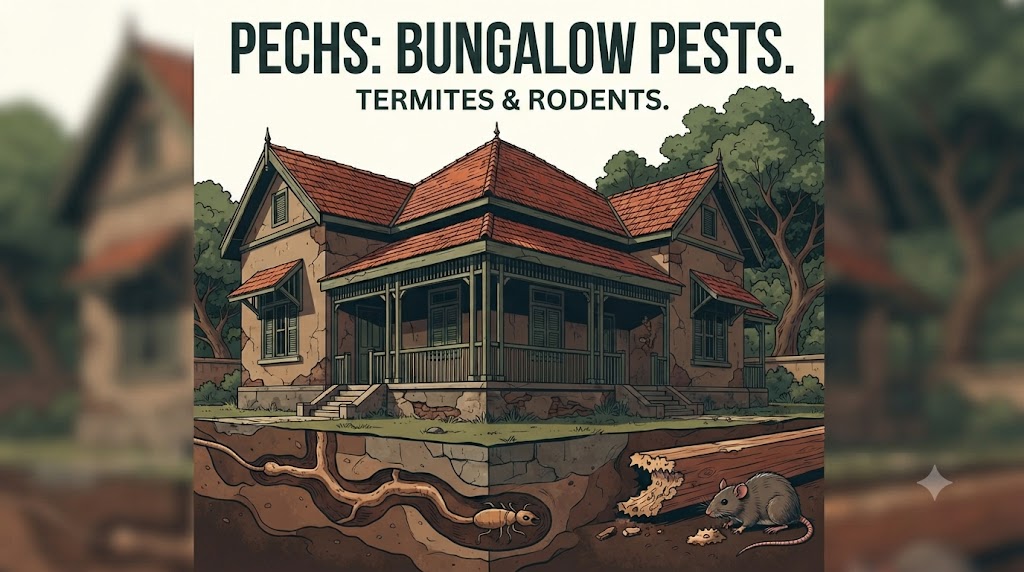
PECHS is one of Karachi’s older planned neighborhoods, and a large share of its bungalows date back several decades — wooden window frames, old roof timber, mature gardens, and boundary walls that have settled and cracked over the years. Those same qualities that give PECHS its character are exactly what makes it a consistent source of termite and rodent calls for any pest control company in Karachi.
This guide focuses on the two pests that older PECHS bungalows deal with far more than newer construction elsewhere in the city: subterranean termites working through structural timber, and rodents establishing themselves in gardens, roof spaces, and store rooms that have accumulated clutter over the years.
Why Age of Construction Matters So Much Here
Newer buildings are generally built with termite-resistant treatments applied to foundations during construction, and modern rodent-proofing (sealed gaps, mesh screens) is more common. Older PECHS bungalows were built before these were standard practice, and decades of settling, cracking, and garden growth against exterior walls have created far more entry points than a newer property would have. It’s a similar pattern to what we see in why DHA and Clifton homes get termite infestations, though the driver in PECHS is age of construction rather than the proximity to greenbelt landscaping that pushes it in those areas.
Termite and Rodent Risk at a Glance
| Pest | Main source in older bungalows | Reliable early sign |
|---|---|---|
| Termites | Soil-based subterranean colony near the foundation | Mud tubes on boundary walls or pillars |
| Rodents | Garden beds, unused store rooms, degraded drainage joints | Gnaw marks, droppings near boundary walls and stores |
Termites in PECHS Bungalows
Subterranean Termites: The Main Culprit
The termites most commonly found damaging structural wood in Karachi homes are subterranean termites, which live in soil and travel up into a structure through mud tubes built along foundation walls, rather than living inside the wood itself the way some other termite species do. This is an important distinction because it means the colony’s main nest is typically underground, near or under the foundation — not inside the timber you can see damage on. Colonies also tend to send out winged swarmers around Karachi’s termite season, usually during or just after the monsoon months, so a swarm sighting is a sign an established colony is already nearby rather than a new, unrelated pest.
Where to Look in an Older Bungalow
Wooden window and door frames, especially ground-floor frames facing gardens, roof timber in older flat-roof or truss constructions, wooden almirahs and built-in cupboards fixed against exterior walls, and mud tubes — thin brownish tunnels running up foundation walls or pillars — are the areas worth inspecting first. Mud tubes are one of the most reliable visual signs of subterranean termite activity and are often visible on boundary walls even before any wood damage becomes obvious inside the house. Our guide to identifying termite damage has more detail on telling early activity apart from ordinary wood ageing.
Why “I Sprayed and It Went Away” Doesn’t Actually Work
Surface sprays kill termites they directly contact but don’t reach the underground colony, which can contain a large number of termites and will simply rebuild any damaged foraging tubes and continue working elsewhere in the structure. Effective termite control targets the colony itself — typically through soil treatment around the foundation perimeter, and in more established infestations, bait stations that termites carry back into the colony. This is a fundamentally different approach from spraying visible mud tubes or damaged wood. Cost for this kind of treatment scales with foundation perimeter and how established the colony is — our breakdown of termite treatment cost in Karachi covers what actually drives the price.
Rodents in Older Bungalow Gardens and Store Rooms
Why Bungalows Attract Rodents More Than Apartments
A standalone bungalow with a garden gives rats and mice far more to work with than a sealed apartment unit: garden beds and compost areas, gaps under boundary walls, store rooms and servant quarters that go unused for stretches of time, and older drainage and sewage lines with degraded joints. Mature gardens in particular — common throughout PECHS — provide both food sources and cover that newer, more sparsely landscaped properties don’t have.
The Health Risk Worth Knowing About
Rodents are a recognized carrier of several diseases transmissible to humans, including leptospirosis (spread through contact with water or soil contaminated by rodent urine) and salmonella (through contamination of stored food). This is well-established public health information, not a scare tactic — it’s the reason rodent control in a garden-heavy property matters beyond just the annoyance of seeing them.
What Effective Rodent Control Actually Involves
A proper approach to rodent control starts with identifying entry points — gaps under gates, cracks at the base of boundary walls, unsealed vents — because bait alone without sealing entry points tends to just attract more rodents from outside rather than reducing the population inside the property. Bait station placement, sealing of identified entry points, and a follow-up inspection to confirm the population has actually been reduced (not just temporarily suppressed) are the core components. Our rat-proofing guide lists the specific gaps and gate/vent details worth checking on a garden property like this.
The Garden-Termite Connection Homeowners Miss
One detail specific to bungalow properties: garden beds, tree stumps, and wood mulch placed directly against exterior walls create an ideal moisture-retaining bridge between soil-based termite colonies and the structure itself. Simply moving garden beds a short distance away from foundation walls and avoiding wood mulch touching the house removes one of the easiest access routes termites use — a small change that costs nothing but meaningfully reduces risk in older properties.
Frequently Asked Questions
How do I know if it’s termite damage or just old wood?
Termite-damaged wood typically sounds hollow when tapped and may show a honeycomb or layered pattern when broken open, along with visible mud tubes nearby. Simple aging or water damage doesn’t usually produce that hollow, tunneled pattern.
Can termites cause structural damage to a bungalow, or is it just cosmetic?
Left untreated over years, subterranean termites can compromise structural timber — roof trusses, load-bearing wooden elements, and window/door frames — to the point of requiring repair or replacement, not just surface-level cosmetic damage.
Do I need to treat the whole property or just the affected room?
Because subterranean termite colonies operate from the soil around the entire foundation, effective treatment is generally applied around the full foundation perimeter, not just the room where damage was first noticed.
Are rodents in the garden a serious problem or just something to live with?
Given the disease risk associated with rodent contamination of food, water, and soil, an established rodent population in a garden or store room is worth addressing rather than ignoring, even if it hasn’t caused visible property damage yet.
How often should an older bungalow be inspected for termites?
There’s no universal fixed interval, but older properties with a history of termite activity, mature gardens against the walls, or wooden structural elements benefit from periodic inspection rather than waiting for visible damage to appear.
Getting Help
If you own or manage an older bungalow in PECHS and want a proper inspection rather than guesswork, you can get in touch here to arrange a site visit, or read more about our approach before booking.

Rehan Khan is the founder of Accurate Fumigation and an entomologist. He holds an M.Sc. in Entomology and a B.Sc. in Environmental Science, and has worked in pest control in Karachi for three decades. He founded the company in 2005 and writes about the pest and water problems the city deals with each season. Accurate Fumigation is ISO 9001:2015 certified and a member of the National Pest Management Association.
Questions about a service, or need a certificate for an inspection? Call the office on 0330-2533480. Read Rehan’s full profile.