Author: Rehan Khan

  • Pest Control Challenges in Old Karachi Buildings: Saddar, Nazimabad, Lyari

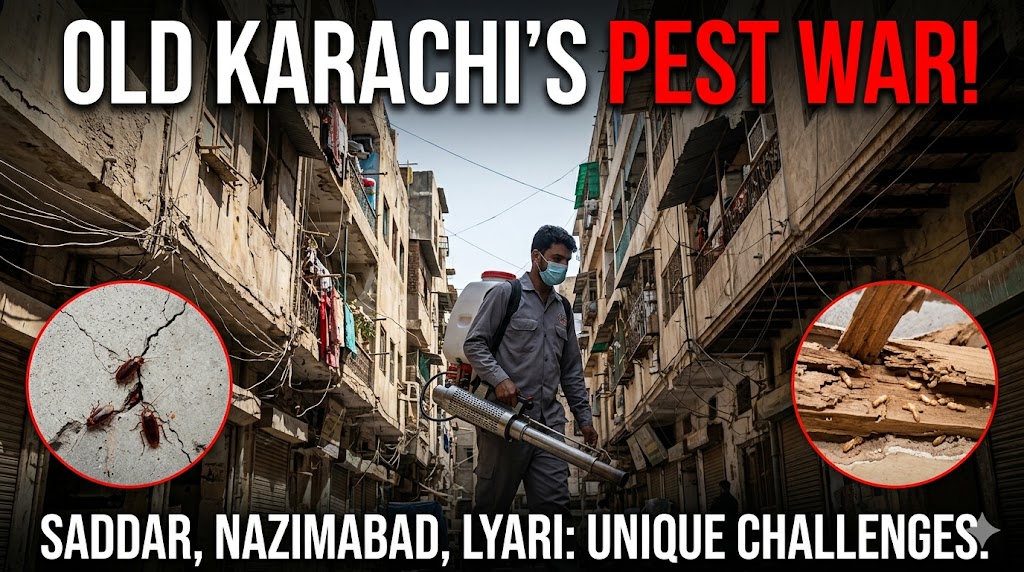
    Pest Control Challenges in Old Karachi Buildings: Saddar, Nazimabad, Lyari

    Karachi’s oldest residential and commercial zones carry the city’s architectural history in every cracked wall and narrow stairwell. But age comes with a cost that goes beyond maintenance: older buildings in Saddar, Nazimabad, Liaquatabad, and Lyari present a unique and particularly difficult set of pest control challenges that modern apartment towers simply do not face.

    This is not about cleanliness. Well-maintained old buildings still attract pests at far higher rates than newer construction. The reasons are structural, and they require a very different fumigation strategy.

    Why Old Buildings Attract More Pests

    Old construction in these areas typically features thick masonry walls with natural cracks and voids that develop over decades. Plumbing is often original, with joints that leak behind walls or under flooring — moisture that never fully dries. False ceilings and wooden mezzanines, common in older Saddar commercial buildings, create ideal harbouring spaces for cockroaches, rodents, and bed bugs.

    Many older residential buildings in Nazimabad and Liaquatabad use shared plumbing risers and drainage stacks. When one flat has an infestation, pests travel freely between units through pipe gaps, cable ducts, and broken wall cavities. Treating one apartment without coordinating with the building is almost never effective long-term.

    In Lyari and parts of old Saddar, some buildings pre-date Partition. Ground floors and basements in these structures often have earthen or poorly sealed concrete floors that allow subterranean termites and rodents to move in from the soil below.

    The Cockroach Problem in Old Buildings

    German and American cockroaches are the dominant species in old Karachi buildings, and both exploit the gaps that come with age. German cockroaches (the smaller, faster ones) breed inside electrical panels, behind refrigerators, and inside kitchen cabinet hinges — areas that old buildings have in abundance. Our cockroach control service in Karachi uses gel baiting for German cockroaches specifically because sprays do not penetrate the microhabitats they use.

    American cockroaches (the large red-brown ones) enter through drainage and sewer systems. Old buildings with deteriorating drainage pipes essentially provide direct underground access. Killing cockroaches in the living areas without sealing drainage entry points achieves nothing lasting.

    Rodents: A Structural Problem, Not Just a Hygiene One

    Rats in old Karachi buildings are not primarily a food hygiene issue — they are a structural one. The extensive void spaces inside old walls, between floor slabs, and within false ceilings give them entire hidden networks to live in undisturbed. Rat and rodent control in these buildings requires physical inspection of these void spaces and targeted placement of tamper-resistant bait stations, not surface-level traps near kitchens.

    In older commercial zones around Saddar, rodents also move between adjacent buildings and shops through connected ceiling voids and subfloor spaces. A grocery store treated in isolation will re-infest within weeks if the buildings on either side are untreated.

    Termites in Ground-Floor Units and Basements

    Ground-floor and basement units in old buildings are at very high risk for termite infestation. Termite control in these settings is complicated because the soil treatment barrier that protects the foundation was either never applied or has degraded completely over the decades. Re-treatment requires drilling through existing flooring and injecting termiticide into the substrate — a job that disrupts the space and must be done by professionals.

    In buildings where multiple tenants share a ground floor, gaining access to all affected areas simultaneously is logistically difficult. Many building owners delay until infestation has moved upward through the structure.

    Bed Bugs in Multi-Occupancy Buildings

    Old residential buildings in these areas often have high tenant turnover, which is a primary driver of bed bug infestations. Bed bugs travel in luggage, second-hand furniture, and clothing. Once they establish in one flat, they spread through shared wall cavities and door gaps to neighbouring units. A single-flat treatment rarely resolves a building-wide bed bug problem — the entire floor, at minimum, should be treated simultaneously.

    Signs of Pest Problems in Old Buildings

    Watch for these indicators specific to old Karachi construction:

    • Cockroach activity in daytime (a sign of overcrowding — the infestation is large)
    • Scratching sounds inside walls or ceilings at night (rodents in void spaces)
    • Mud tubes at the base of walls or along skirting boards in ground-floor units (termites)
    • Small blood stains or dark spots on mattress seams (bed bugs)
    • Persistent musty smell in closed rooms despite regular cleaning
    • Pest sightings despite regular tenant-level treatments that never fully resolve

    DIY Prevention in Old Buildings

    Tenants and building owners can reduce but not eliminate risk with these steps:

    • Seal all pipe entry points with foam or cement — gaps around pipes are the primary entry for both rodents and cockroaches
    • Do not allow gaps between skirting boards and walls to go unrepaired
    • Check second-hand furniture for bed bugs before bringing it into the building
    • Keep drains covered and ensure drainage pipes are watertight
    • Report leaking pipes to building management immediately — do not allow moisture to persist inside walls

    Why Building-Wide Coordination Is Essential

    The fundamental challenge with old Karachi buildings is that individual flat treatments in isolation are ineffective. Pests re-enter from adjacent units, from void spaces, and from building-wide drainage systems within weeks. Effective pest management in these buildings requires the building owner or management to coordinate treatment across all units and common areas simultaneously.

    Accurate Fumigation offers building-wide pest control contracts for residential buildings and commercial properties across Saddar, Nazimabad, and Liaquatabad. Coordinated treatment across the full building — with gap-sealing and follow-up inspections — is the only approach that delivers lasting results in old construction.

    To discuss a building-wide pest control plan or arrange an inspection, visit our contact page. For treatment costs, refer to our charges page. Old buildings deserve modern pest management — done right, once, rather than repeatedly and ineffectively.

  • Why DHA and Clifton Homes Get Termite Infestations Near the Coast

    Why DHA and Clifton Homes Get Termite Infestations Near the Coast

    If you live in DHA or Clifton and have noticed thin mud trails along your walls, hollow-sounding wooden frames, or paint that bubbles for no obvious reason, termites are the most likely culprit. Coastal proximity is not just a lifestyle perk — it is a structural risk factor that most homeowners do not account for until significant damage is already done.

    Karachi’s two most prestigious residential zones sit metres from the Arabian Sea. That coastal air carries moisture, and moisture is exactly what subterranean termites need to thrive. Understanding why your home is especially vulnerable is the first step to protecting it.

    The Coastal Factor: Salt Air, Humidity, and Wood Degradation

    Salt air corrodes metal fasteners and slowly degrades the surface integrity of timber. When wood begins to lose its outer hardness — even slightly — termites find it dramatically easier to penetrate. Homes in DHA Phase 1 through 6 and older Clifton blocks sit in a salinity corridor that effectively pre-conditions timber for termite attack.

    Karachi’s summer months (April to July) bring humidity levels that regularly exceed 80 percent in coastal areas. That ambient moisture seeps into foundations, wooden door frames, built-in cabinetry, and roof beams. Subterranean termites build their colonies underground and use mud tubes to travel upward through moist pathways — making the damp soil beneath coastal homes an ideal breeding ground.

    Monsoon season adds another layer of risk. Between July and September, water pools against boundary walls and soaks into the soil around foundations. Any home with poor drainage becomes a termite invitation. DHA plots with manicured lawns that are over-irrigated year-round face this problem even outside monsoon.

    Why Older Homes in These Areas Are at Greater Risk

    A significant portion of Clifton’s housing stock was built decades ago using construction methods that pre-date modern termite-proofing standards. Many older bungalows used untreated timber in roof structures, window frames, and flooring — wood that has had years to absorb salt-laden air and become structurally compromised.

    DHA also has a mix of old and new construction. Pre-2000 homes in Phases 1, 2, and 4 often lack soil treatment barriers beneath their slabs. Even newer construction in these phases, if not given proper pre-construction termite proofing, is vulnerable because the underlying soil conditions were never treated.

    Renovation work is a hidden risk as well. When you knock down a wall, install new piping, or excavate for an extension, you break the continuity of any existing chemical barrier in the soil. Termites exploit those gaps almost immediately.

    Signs of Termite Infestation in Coastal Karachi Homes

    Catch an infestation early by watching for:

    • Mud tubes running along the base of walls, behind pipes, or in corners of store rooms
    • Wooden door frames or skirting boards that sound hollow when tapped
    • Paint or plaster that bubbles, blisters, or cracks without obvious water leakage
    • Discarded termite wings near window sills or light fixtures after rain (a sign of swarming)
    • Fine powdery frass (termite droppings) accumulating near wooden furniture or built-ins

    In coastal homes, check the wooden members of any pergola or outdoor structure. Salt air plus ground moisture makes these the first points of attack.

    DIY Prevention Steps for DHA and Clifton Homeowners

    No DIY method replaces professional soil treatment, but these steps reduce risk:

    • Fix all plumbing leaks immediately — even a slow drip under a sink creates moisture that draws termites
    • Ensure your boundary wall drainage slopes away from the house foundation
    • Keep firewood, old timber, and cardboard stacked away from the structure and off the ground
    • Do not store wooden furniture or boxes directly on ground-floor storage room floors
    • Trim plants and hedges so they do not touch exterior walls — roots and mulch retain moisture
    • After any renovation or plumbing work, have the soil around the affected area re-treated

    Why Professional Termite Treatment Is Non-Negotiable Near the Coast

    Over-the-counter termite sprays treat surfaces, not colonies. Subterranean termites nest deep underground and send workers up through concealed tunnels. Unless the soil around and beneath the foundation is treated with a professional termiticide barrier, you are managing symptoms, not the infestation.

    Professional termite control in Karachi involves two approaches depending on your situation: soil treatment (pre- or post-construction chemical barriers) and baiting systems. For homes already built, post-construction soil treatment is injected under pressure around the perimeter and through drilled holes in the flooring — a process that requires specialist equipment and licensed chemicals not available to the public.

    If your home is in a high-humidity coastal pocket or sits on a plot with a high water table, a baiting system may be recommended alongside soil treatment. This is especially true for DHA properties near the creek areas and for older Clifton bungalows with complex foundations.

    Any treatment should be carried out by a company holding a valid pest control license, as the chemicals involved are regulated. You can verify licensing credentials at our pest control license page before hiring any service.

    Don’t Wait Until the Damage Is Visible

    Termites are known as the ‘silent destroyer’ because by the time you see physical damage, the colony has often been active for one to three years. In a coastal environment, structural timber deteriorates faster under combined salt and termite attack than in inland areas.

    Annual inspections are the minimum for DHA and Clifton homes. Properties that have already been treated should be re-inspected every 12 months to confirm the barrier remains intact, especially after any construction or plumbing work.

    Accurate Fumigation provides termite inspection and treatment across DHA and Clifton. To book an inspection or understand what a treatment plan for your property involves, visit our contact page. For a clear breakdown of what professional termite control costs, see our charges page. Protect your home before the damage is done.

  • 5 Questions to Ask Before Hiring Any Fumigation Company in Karachi

    5 Questions to Ask Before Hiring Any Fumigation Company in Karachi

    The fumigation market in Karachi ranges from professionally licensed operators with trained staff to roadside sprayers with a pump and a generic chemical. The difference is not always visible in marketing. It becomes visible in results — or when something goes wrong.

    Before you hand over money or allow anyone to treat your home, office, or warehouse, ask these five questions. The answers will tell you more than any brochure or WhatsApp message can.

    Question 1: Are You Registered with PPMA and Do You Hold a Valid Pest Control License?

    This is the foundational question. PPMA (Pakistan Pest Management Association) registration and a valid government-issued pest control license mean the company is legally authorized to purchase and apply regulated pesticides. Unregistered operators are not just less reliable — they are operating illegally in terms of chemical use.

    Ask for the license number and registration details. A legitimate company will provide these without hesitation. You can verify PPMA membership by contacting the association directly. Do not accept a printout that looks like a certificate with no verifiable registration number.

    You can review what a licensed operator’s credentials look like on our pest control license page.

    Question 2: Which Chemical Will You Use and What Is Its Active Ingredient?

    This question separates trained professionals from informal sprayers immediately. A trained technician will know the active ingredient by name — cypermethrin, bifenthrin, imidacloprid, fipronil, chlorpyrifos — and will be able to tell you what it targets, how it works, and what safety precautions are required.

    If the answer is “we use good spray” or the technician cannot name the active ingredient, that is a serious red flag. Unidentified chemicals in enclosed spaces — particularly in Karachi’s high-density apartment buildings and older housing stock — pose real health risks, especially for children, elderly residents, and anyone with respiratory conditions.

    Also ask: is the chemical approved for indoor residential use? Some agricultural-grade chemicals are used by informal operators because they are cheap. They are not formulated for enclosed living spaces.

    Question 3: What Does the Treatment Process Actually Involve?

    A professional fumigation or pest control treatment is not just spraying the perimeter and leaving. Ask for a step-by-step explanation of what will happen. For cockroach treatment, this should include gel bait placement in harborage areas, spray application in wall voids and plumbing access points, and post-treatment guidance. For termite treatment, it should include inspection, drilling, injection, and sealing. For bed bugs, it should include treatment of all harborage points, not just the mattress surface.

    If the explanation is vague or the technician cannot describe what they’ll do inside the affected rooms, the treatment is unlikely to be thorough.

    Our cockroach control service and termite control service pages describe the treatment methodology in detail, so you know what to expect from a professional service.

    Question 4: Is There a Written Report and a Re-Treatment Guarantee?

    A professional company documents every treatment. This includes: the property address, the pest type treated, the chemical applied and its concentration, the treatment date, and the technician’s name. This documentation protects you legally and practically — it is proof of service and a reference point if the infestation returns.

    Equally important is the re-treatment clause. Ask explicitly: if the infestation returns within the warranty period, what happens? Is a re-treatment included at no cost? Under what conditions? A company confident in its work will commit to this in writing. An informal operator who cannot provide documentation obviously cannot offer a warranty.

    In Karachi’s climate — where cockroach and mosquito pressure is seasonal and continuous — a re-treatment clause is not a luxury. It is a basic quality assurance mechanism.

    Question 5: What Precautions Should My Family Take, and for How Long?

    The answer to this question reveals whether the company is actually managing chemical safety or just completing a transaction. After treatment, residents typically need to vacate for a specified period, ventilate the space thoroughly, cover or wash food contact surfaces, and keep children and pets away from treated areas for a defined window.

    The specifics depend on the chemical used. A trained technician will give you precise, chemical-specific guidance. If the answer is “just open windows for one hour” with no further detail, that is not adequate safety communication.

    This matters most in Karachi’s apartment buildings where shared HVAC, narrow balconies, and adjacent units mean chemical drift is a genuine concern for neighbors, not just the treated unit.

    For any treatment involving stagnant water sources — tanks, drains, or wet areas that increase pest pressure — consider also asking about our water tank cleaning service, which removes a common breeding environment for mosquitoes and cockroaches.

    How to Use These Questions Before Booking

    You do not need to ask all five questions in a formal interview. Most of them come up naturally when you call to inquire. How a company responds to these questions — whether they answer with specifics or with vague reassurances — tells you what kind of service you are likely to receive.

    Serving clients across Karachi including PECHS, North Nazimabad, and Clifton, we’re prepared to answer all of these questions directly — and in writing when relevant.

    Ready to ask us these questions directly? Use our contact page to get in touch. You can also review our pricing page so there are no surprises when you request a quote.

  • Bed Bug Treatment in Karachi: Heat Treatment vs Chemical Spray — Which Lasts Longer

    Bed Bug Treatment in Karachi: Heat Treatment vs Chemical Spray — Which Lasts Longer

    Bed bugs are among the most difficult pest problems to eliminate in Karachi. They are small enough to hide in mattress seams, wall cracks, and electrical outlets. They reproduce quickly. And they are increasingly resistant to some commonly used pesticides. When an infestation is confirmed, the two main professional treatment options are heat treatment and chemical spray. Choosing the right one depends on the severity of the infestation, the structure of your property, and the level of disruption you can tolerate.

    This article gives you an honest comparison of both methods — what each does, what it can’t do, and which one tends to hold up longer in Karachi’s conditions.

    How Bed Bugs Behave in Karachi’s Climate

    Karachi’s heat and humidity create year-round conditions for bed bug survival and reproduction. Unlike many pests that have a defined peak season, bed bugs thrive throughout the year in Karachi — accelerating reproduction during the humid monsoon months and remaining active through the winter cold because indoor temperatures rarely drop low enough to disrupt their lifecycle.

    The most common introduction routes in Karachi are second-hand furniture and mattresses, shared transport upholstery, and hotel stays. Once inside a property, they spread rapidly between rooms and — in older apartment buildings with shared walls and utility ducts — between units.

    Chemical Spray Treatment: How It Works

    Chemical spray treatment for bed bugs in Karachi typically involves two to three rounds of insecticide application using contact killers (pyrethroids like cypermethrin) and residual products (neonicotinoids like imidacloprid or chlorpyrifos in some formulations). Gel baits are sometimes used in combination.

    The technician treats mattress seams, box spring bases, bed frames, headboards, skirting boards, wall cracks, behind electrical outlets, and any other harborage point. A professional application requires stripping the bed, moving furniture away from walls, and treating all surfaces — not just the visible mattress top.

    Chemical treatment requires residents to vacate for several hours and typically includes a follow-up application two to three weeks later to catch newly hatched nymphs that survived the first treatment in egg form, since most pesticides do not penetrate egg cases.

    Heat Treatment: How It Works

    Heat treatment (also called thermal remediation) kills bed bugs at all lifecycle stages — eggs, nymphs, and adults — by raising the temperature in the affected space to above 48-50 degrees Celsius for a sustained period. At this temperature range, bed bugs cannot survive, and crucially, their eggs are also killed — something most chemical products cannot achieve in a single application.

    Professional heat treatment requires specialized equipment: industrial heaters and fans to circulate hot air uniformly throughout the space, and temperature sensors to confirm that all areas — including inside mattresses, wall voids, and furniture joints — reach and hold the lethal temperature range for enough time.

    In Karachi, where summer ambient temperatures already reach 40+ degrees Celsius, the equipment requirement is still significant because the target temperature must be achieved uniformly inside enclosed spaces including furniture interiors.

    Comparing Effectiveness: What the Evidence Shows

    Heat treatment is widely considered to offer a higher single-treatment success rate than chemical spray alone. The reason is straightforward: heat penetrates all harborage points simultaneously, and it kills eggs — which chemical residuals typically do not. A properly executed heat treatment can achieve elimination in a single session.

    Chemical spray treatment is effective but almost always requires a follow-up application to address the egg hatching cycle. In a well-executed two-treatment protocol by trained technicians using appropriate chemistry, the results are strong. The challenge in Karachi’s market is that many informal operators use only one application at incorrect concentrations — which results in partial knockdown and infestation rebound within weeks.

    Resistance is a growing concern. Pyrethroid-resistant bed bug populations have been documented in multiple regions globally, and while Pakistan-specific resistance data is limited, the concern is valid given the heavy reliance on pyrethroids in informal pest control operations across Karachi.

    Which Lasts Longer in Practice?

    A properly executed heat treatment tends to have a higher rate of single-treatment resolution, meaning less likelihood of infestation return immediately after treatment. However, heat treatment does not provide residual protection — once the heat is off, the space is as vulnerable to re-introduction as it was before.

    A professional chemical treatment with residual products does leave active chemistry on surfaces for weeks after application, which provides some protection against newly introduced bed bugs. For properties with ongoing risk of re-introduction — high-footfall businesses, guest rooms, or apartments in buildings with confirmed bed bug problems in multiple units — this residual protection has practical value.

    In practical terms for Karachi homeowners: heat treatment offers a faster resolution with less risk of treatment failure from chemical resistance. Chemical treatment, when done correctly over two applications with appropriate chemistry, is also highly effective and more accessible since heat treatment equipment is less widely available in the market.

    Our bed bug fumigation service uses a professional chemical protocol designed specifically for the harborage patterns and resistance profile relevant to Karachi infestations.

    What a Professional Bed Bug Treatment Must Include (Regardless of Method)

    • Full inspection of the room including furniture, baseboards, wall cracks, and adjacent rooms
    • Treatment of all harborage points, not just the mattress
    • Pre-treatment preparation guidance for residents (stripping beds, clearing floor space)
    • Post-treatment ventilation and re-entry instructions specific to the chemical used
    • A follow-up visit within two to three weeks (for chemical treatment)
    • Written report of treatment and warranty terms

    If a quoted bed bug treatment does not include inspection, follow-up, and documentation, it is unlikely to achieve lasting resolution regardless of which method is used.

    Location Considerations Across Karachi

    Bed bug pressure is not confined to older properties or lower-income areas. Hotels, apartments, and even newer residential buildings in Bahadurabad, Shahra-e-Faisal, and Karsaz report infestations. The common thread is introduction from outside — not the age or quality of the property.

    The Bottom Line

    Heat treatment offers higher single-treatment efficacy and eliminates eggs that chemical products often cannot. Chemical spray treatment, done correctly over two sessions, is also highly effective and more widely available in Karachi. The method matters less than the quality of execution — an incomplete heat treatment fails just as badly as an under-dosed chemical spray.

    Choose a licensed professional, verify the treatment protocol, and ensure a follow-up visit is included in whatever you book.

    To book a professional bed bug assessment and treatment in Karachi, contact us via our contact page. For pricing details, see our charges page before you call.

  • DIY Pest Control vs Professional Fumigation in Karachi: When DIY Actually Works

    DIY Pest Control vs Professional Fumigation in Karachi: When DIY Actually Works

    Walk into any Karachi hardware market or pharmacy and you’ll find a shelf full of pest control options: spray cans, gel baits, coil traps, ultrasonic devices, and chemical concentrates sold loose. It’s tempting to reach for these before calling a professional. Sometimes that’s the right call. Often it isn’t.

    This article gives you an honest breakdown of when DIY works, when it doesn’t, and what the difference in outcome actually looks like — based on the types of infestations common in Karachi homes, apartments, and commercial spaces.

    When DIY Pest Control Is a Reasonable First Step

    DIY is appropriate when the infestation is recent, localized, and the pest type responds to retail-grade solutions. Here are situations where it can work:

    Cockroaches (early-stage): A handful of cockroaches appearing in a newly moved-in apartment is not necessarily an infestation. Gel baits containing fipronil or hydramethylnon — available in Karachi’s pest control supply shops — can be effective if placed correctly: under the sink, behind appliances, and along plumbing runs. The key is placement precision and patience over several days.

    Ants (minor trail incursions): A small ant trail entering through a window or door gap can often be disrupted with a retail-grade ant gel or by sealing the entry point and applying a boric acid barrier. This works if the colony is not nested inside the wall cavity.

    Flies and mosquitoes (preventive): For seasonal mosquito and fly pressure — which peaks in Karachi during and after the monsoon from July through September — mesh screens, standing water elimination, and coil or electric vaporizer use is genuinely effective as prevention. These are not treatments for infestations; they are environmental controls.

    When DIY Fails — and Often Makes Things Worse

    The failure modes of DIY in Karachi are predictable. They fall into a few categories:

    Scattering without eliminating: Spraying a visible cockroach trail with a surface spray disperses the colony. Individual cockroaches scatter into wall voids and other rooms. The problem becomes harder to treat because the population is now spread across more of the property.

    Treating symptoms not the source: Bed bugs in a mattress require heat or chemical treatment that penetrates seams and joints. A retail aerosol spray will kill exposed adults on the surface but will not reach eggs or bugs in wall cracks, electrical outlets, or adjacent furniture. The infestation rebounds within two to three weeks.

    Incorrect dilution or application: Chemical concentrates sold in Karachi markets without labels or instructions are frequently misused. Overdilution makes them ineffective. Underdilution creates chemical hazards in enclosed, poorly ventilated apartments — particularly dangerous in the heat of Karachi’s April-to-June summer when windows are often closed due to dust and heat.

    For cockroach and bed bug problems that have progressed past the early stage, see our cockroach control service and bed bug fumigation service pages to understand what professional treatment involves.

    Pest Types That Should Not Be DIY’d in Karachi

    Some infestations in Karachi’s environment are structurally complex enough that DIY attempts are consistently ineffective:

    • Termites: Subterranean termites in Karachi require soil injection under the building slab. No retail product reaches this
    • Bed bugs (established): Once bed bugs have spread to multiple pieces of furniture or to wall cracks, professional treatment is the only reliable solution
    • Rodents (active colony): A rat or mouse entry point in an older property requires professional exclusion work, not just traps
    • Fleas and ticks: These require simultaneous treatment of pets, bedding, and premises — a coordination that DIY rarely achieves properly

    Our rats control service and fleas and ticks service pages explain the scope of professional treatment for these pest types.

    The Hidden Cost of Failed DIY

    The most expensive DIY mistake is delayed professional treatment. When a cockroach infestation is treated with surface sprays for six to eight weeks without success, the colony grows. The professional treatment required to address a large, scattered infestation is more intensive — and more costly — than treating the same problem early.

    In Karachi’s older apartment buildings, where infestations can travel between units through shared plumbing and wall voids, a delayed response in one unit often becomes a building-wide problem within a few months.

    DIY Prevention That Actually Works Long-Term

    Prevention is where DIY genuinely outperforms professional treatment in cost-effectiveness. These measures, done consistently, significantly reduce infestation risk:

    • Seal gaps around pipes entering the kitchen and bathroom with silicone or cement
    • Fix dripping taps and standing water in the bathroom — moisture attracts cockroaches and mosquitoes year-round
    • Store dry food in sealed containers, not open bags
    • Empty kitchen waste bins daily, especially during Karachi’s summer months when decomposition is rapid
    • Check second-hand furniture and clothing for bed bugs before bringing them inside
    • Keep the area under beds and in storage rooms free of cardboard boxes, which are a favored harborage for cockroaches

    Location Considerations Across Karachi

    Ground-floor units, basement-level spaces, and properties adjacent to open drains — common in areas like Korangi and Landhi — face higher structural pest pressure. DIY prevention works in these settings, but periodic professional treatment is often necessary to maintain control.

    If you’ve tried DIY and the problem persists, contact us via our contact page for a professional assessment. Review our service charges to understand what professional treatment costs relative to what you’ve already spent on retail products.

  • PPMA Registered vs Unregistered Pest Control Companies in Karachi: What’s the Real Difference

    PPMA Registered vs Unregistered Pest Control Companies in Karachi: What’s the Real Difference

    When a cockroach infestation hits your kitchen or a termite colony starts eating through your walls, the instinct is to call whoever you can find fastest. In Karachi, that often means a roadside sprayer, a WhatsApp contact, or someone with a hand-painted van. But choosing an unregistered operator over a PPMA-registered company is not just a gamble on quality — it can be a gamble on your family’s health.

    This article explains what PPMA registration actually means, why it matters, and how to verify a company’s credentials before letting anyone into your home or business.

    What Is PPMA and Why Does It Exist?

    PPMA stands for the Pakistan Pest Management Association. It is the industry body that sets professional standards for pest control operators across Pakistan, including licensing, chemical handling protocols, and ethical service practices. PPMA works alongside government regulatory authorities to ensure that pest control chemicals — which are classified as hazardous substances — are used safely and responsibly.

    A company listed on Accurate Fumigation’s pest control license page has passed baseline checks that unregistered operators simply bypass.

    What Registration Actually Requires

    Getting PPMA registered and maintaining legal compliance involves more than filling out a form. Registered companies must:

    • Use only approved, licensed pesticides that meet regulatory standards
    • Employ trained technicians who understand dilution ratios, application methods, and safety protocols
    • Maintain proper documentation for every treatment, including chemicals used and dosages
    • Follow label instructions legally — misuse of a registered pesticide is a violation
    • Carry liability in case of chemical damage or health incidents

    Unregistered operators have none of these obligations. They can use expired chemicals, wrong concentrations, or even industrial-grade substances meant for agricultural fields — not enclosed residential spaces.

    The Real Risks of Hiring Unregistered Operators

    The most common risk is ineffective treatment. Unregistered operators often use cheap, generic sprays at incorrect concentrations. The pests return within days, sometimes worse than before because knockdown sprays disturb colonies without eliminating the source.

    The second risk is chemical harm. Incorrect use of organophosphates or pyrethroid compounds in enclosed apartments — especially in older housing stock in areas like Saddar or Liaquatabad — can cause respiratory irritation, neurological symptoms in children, and contamination of food surfaces. Karachi’s summer heat worsens chemical evaporation in poorly ventilated spaces.

    If you’re dealing with a severe infestation and need treatment immediately, see our cockroach control service page or our termite control service page to understand what a professional treatment actually involves.

    How to Verify a Company’s Registration Status

    Do not rely on a logo on a van or a certificate printed on paper. Here is how to actually verify:

    • Ask for their PPMA membership number and cross-check it directly with PPMA
    • Ask to see their pesticide purchase receipts — registered companies buy from licensed distributors
    • Ask which active ingredient is being used and at what concentration — trained technicians will know this immediately
    • Check whether the company has a physical office address, not just a mobile number
    • Look for documented treatment reports, not just verbal assurances

    Price Differences: What You’re Actually Paying For

    Unregistered operators are cheaper — often significantly so. A registered company charges more because it absorbs the cost of proper chemicals, trained staff, equipment maintenance, and documentation. That price difference is not profit margin. It is the cost of doing the job correctly and safely.

    If you want a clear picture of what professional fumigation costs in Karachi, our charges page breaks this down transparently.

    Location Matters: Registered Coverage Across Karachi

    Registered operators typically cover broader geographic areas with consistent service standards. Whether you’re in a high-rise in DHA or a ground-floor unit in Federal B. Area, the treatment protocol should be the same.

    We serve clients across Karachi, including DHA, Federal B. Area, and Gulshan-e-Iqbal — with the same trained technicians and documented treatment process at every location.

    Bottom Line

    The difference between registered and unregistered is not about brand names or marketing. It is about accountability. When something goes wrong — and with unregistered operators, it often does — you have no recourse. No documentation, no liability, no follow-up.

    Registered companies operate under professional standards that protect both the client and the technician. In a city where pest infestations are a year-round reality, this matters.

    Ready to book a treatment from a licensed, professional team? Visit our contact page to schedule a service, or review our pricing before you call. You can also learn more about our credentials on the about us page.

  • How Much Does Termite Treatment Cost in Karachi? A Realistic Price Breakdown

    How Much Does Termite Treatment Cost in Karachi? A Realistic Price Breakdown

    Termites in Karachi are a slow disaster. They work inside walls, under flooring, and through wooden fixtures for months before the damage becomes visible. By the time you see mud tubes or hollow-sounding wood, the colony is already established. At that point, the question is no longer whether to treat — it’s how much it will cost and what you’ll actually get for that money.

    This article gives you a realistic breakdown of termite treatment pricing in Karachi, what drives cost variation, and what a genuine professional service includes versus what cheap alternatives typically skip.

    Why Termite Treatment Pricing Varies So Much in Karachi

    The price range for termite treatment in Karachi is wide — and the variation is not arbitrary. The key factors that determine cost are property size, infestation severity, treatment method, and whether it’s a residential unit or a commercial godown or warehouse.

    A ground-floor apartment in an older building in Nazimabad with subterranean termites reaching the ground slab is a fundamentally different job from a newer construction in Scheme 33 with a dry wood infestation in one set of cupboards. The chemical volumes, application depth, and labor time differ significantly.

    Common Termite Treatment Methods and Their Cost Implications

    There are two primary approaches used in Karachi for active infestations:

    Soil treatment (pre- and post-construction): This involves drilling into the floor at regular intervals and injecting termiticide directly into the soil beneath the slab. It is the most effective method for subterranean termite colonies, which is the most common type in Karachi’s older residential areas. It requires more labor, more chemical volume, and proper drilling equipment — all of which add to cost.

    Surface and injection treatment: For dry wood termites in wooden structures, furniture, or cupboards, technicians inject termiticide directly into galleries and apply it to affected surfaces. This is less invasive but may require multiple visits depending on infestation extent.

    Bait stations are used in some international markets but are less common in standard residential Karachi treatments due to cost and the need for long-term monitoring.

    What Drives the Final Price Up or Down

    • Property size: Treatment is typically quoted per square foot or per unit. Larger properties with more surface area and more potential entry points cost more
    • Infestation severity: A localized infestation in one room costs less to treat than a whole-building colony with multiple active galleries
    • Access difficulty: Crawl spaces, false ceilings, and inaccessible wall cavities add labor time
    • Chemical grade: Licensed termiticides — bifenthrin, imidacloprid, fipronil-based products — cost more than generic substitutes that unregistered operators often use
    • Warranty or follow-up included: Professional services that include a re-treatment guarantee or follow-up inspection are priced higher but often deliver better long-term value

    Red Flags in Low-Cost Quotes

    In Karachi’s pest control market, very low quotes almost always mean one or more of the following: diluted chemical concentrations, missing soil treatment steps, no drilling (just surface spray), no documentation, and no warranty. A proper soil treatment for termites is not a one-hour job. It involves mapping entry points, drilling at precise intervals, injecting under pressure, and sealing drill holes.

    For a transparent look at what professional termite treatment actually costs from a licensed company, see our charges page.

    Signs You Need Termite Treatment Before It Gets Expensive

    Early intervention costs less. Watch for these signs:

    • Mud tubes running along walls, skirting boards, or pipes
    • Hollow sound when tapping wooden frames, doors, or flooring
    • Discarded wings near windows or light fixtures (reproductive swarmers)
    • Blistering or bubbling paint that looks like water damage but isn’t near a water source
    • Frass — fine, sand-like pellets — near wooden furniture or baseboards

    If you spot any of these in Karachi’s post-monsoon months (September to November), act quickly. The humidity from the rainy season accelerates colony activity.

    DIY Termite Control: What It Can and Cannot Do

    Retail termite sprays available in Karachi markets can provide temporary surface knockdown but they do not reach soil colonies or internal gallery networks. For a localized, early-stage dry wood infestation in a single piece of furniture, a retail product may slow the spread. For anything in your walls, floors, or structural wood, professional soil injection is the only effective approach.

    Our termite control service page outlines the full treatment methodology used by our licensed technicians.

    Location-Specific Considerations in Karachi

    Older housing stock in areas like Garden, Saddar, and Liaquatabad tends to have higher termite pressure due to aging concrete slabs, deteriorating damp-proof courses, and established colony networks in the soil. Newer construction in DHA or Gulistan-e-Jauhar may face termite risk during and after construction if soil treatment was skipped.

    We provide termite treatment across Karachi, including Garden, Gulistan-e-Jauhar, and Nazimabad.

    What a Professional Quote Should Include

    A credible termite treatment quote in Karachi should specify: the treatment method, the active chemical and its concentration, the area covered, the number of drilling points (for soil treatment), whether a re-treatment clause is included, and the treatment timeline. If a quote just gives you a number with no details, ask for a written breakdown before agreeing.

    To get an accurate quote for your property, reach out via our contact page and describe your property size and the signs you’ve observed. You can also review our standard charges as a reference point before comparing quotes.

  • Karachi’s Eid Pest Surge: Why Cattle Markets and Slaughter Waste Attract Flies and Rodents

    Karachi’s Eid Pest Surge: Why Cattle Markets and Slaughter Waste Attract Flies and Rodents

    In the days leading up to Eid-ul-Adha, Karachi transforms. Open plots, roadsides, and vacant land across the city fill with temporary cattle markets — mandis — where hundreds of thousands of animals are bought, sold, and kept for days before the holiday. Then, on the day of sacrifice and in the days that follow, the city generates an extraordinary volume of animal waste: blood, offal, bones, hides, and organic matter that exceeds the capacity of any regular waste collection system.

    For flies, rodents, and certain ant species, this period represents an annual feast. And because cattle markets and slaughter sites are often in or near residential areas, the pest surge doesn’t stay at the mandi — it spills into surrounding homes and businesses.

    Where Karachi’s Cattle Markets Operate

    Temporary cattle mandis during Eid-ul-Adha are found across Karachi, but they concentrate heavily in areas with available open land. The major market zones include areas in and around Malir, Korangi, and Landhi — three of the city’s most densely populated outer districts, where open plots and low-cost land make temporary market setup feasible.

    In Surjani Town and adjacent areas of northern Karachi, cattle markets also appear along roadsides and on government land. These markets generate significant quantities of animal waste — urine, dung, feed remnants, and mud — that accumulate over several days before the holiday.

    Why Blood and Offal Attract Flies at Scale

    House flies and blowflies (commonly called ‘green flies’ in Karachi) are drawn to organic matter, particularly protein-rich waste. Animal blood, offal, and intestinal contents are among the most potent attractants for these species. A single animal carcass left unmanaged can attract thousands of flies within hours.

    During Eid-ul-Adha, even households that manage their own slaughter waste carefully are affected by waste left by neighbors, on public roads, or near municipal drains. Flies do not respect property boundaries. A waste pile 200 meters away can generate a fly population that enters every home within that radius.

    Female flies lay eggs in batches of 100 to 150 on decaying organic matter, and under Karachi’s Eid-period temperatures — which typically range from 28°C to 35°C depending on the calendar year — larvae (maggots) can develop into adult flies in as little as 72 hours. The arithmetic is alarming: one day’s waste can produce a significant adult fly population within three days.

    The Rodent Surge: Following the Food

    Norway rats and black rats (roof rats) operate as opportunistic scavengers. They follow food sources — and the combination of animal waste, discarded meat, and reduced waste collection during Eid creates an abundant supply. Rodents that normally forage along drains, behind markets, and in rubbish areas move closer to residential buildings when large quantities of slaughter waste are available in open areas.

    The specific risk to homeowners near cattle market zones is that rodents establish new foraging routes during Eid that persist after the holiday. A rat that finds a route into your kitchen during Eid-ul-Adha does not leave voluntarily after the holiday — it has found a food source and will remain. Professional rats and rodent control service is particularly in demand in the two weeks following Eid in areas adjacent to cattle market zones.

    Ants: The Overlooked Eid Pest

    Meat-eating ant species, including trailing ants and fire ants, also surge after Eid. Blood splattered on outdoor surfaces during slaughter, fat remnants, and bone marrow draw ant colonies out of their underground nests in search of protein. Colonies that were previously foraging in your garden or on public ground can shift their trail lines directly into your home when protein-rich material is present.

    Post-Eid cleanup is critical for deterring ants, but if trails have already been established inside the building, professional ants control service in Karachi may be necessary to break foraging patterns and treat the colony. Bait-based ant treatments are particularly effective because workers carry the bait back to the queen — addressing the colony rather than just the visible ants.

    Fly Control: What Residents Can Do

    • Complete slaughter activities in one location and manage all waste immediately — do not leave blood or offal on the ground overnight
    • Sprinkle lime (chuna) on blood and organic waste on hard surfaces before hosing down
    • Place all slaughter waste in heavy-duty bags, tie them tightly, and arrange for immediate pickup or take them to municipal collection points
    • Keep all windows and doors screened or closed during peak fly activity (midday and afternoon)
    • Do not leave meat uncovered at any time — whether pre-slaughter or post-processing
    • Clean all outdoor surfaces — courtyard, roof, driveway — with disinfectant after slaughter

    Rodent-Proofing Your Home Before Eid

    • Inspect and seal all gaps at floor level around pipes and cable entries before the holiday
    • Ensure all food is stored in sealed containers during and after Eid, including meat in the refrigerator or freezer
    • Do not leave cooked meat or raw offal scraps in open bins — use sealed bags inside sealed bins
    • Check that drain covers and ventilation grilles are intact before the holiday period begins

    Why Professional Pest Control Is Essential Post-Eid

    The days immediately following Eid-ul-Adha are the highest-impact period for fly and rodent activity near cattle market zones in Karachi. For homes and businesses in affected areas, professional pest control treatment — fly space sprays, residual surface treatments, and rodent baiting programs — significantly reduces the time it takes to return pest populations to baseline.

    Fogging for flies is particularly effective when done in the first 48 to 72 hours after Eid, targeting adult fly populations before they can lay a second generation of eggs. For rodent management, bait stations placed along known rodent travel routes around the building perimeter can intercept animals before they establish indoor entry points. To inquire about fly control treatment for your property, contact us via our contact page and we’ll advise on the right approach for your situation.

    Housing societies, restaurants, butchers, and cold storage facilities in affected areas of the city can also benefit from a pre-Eid and post-Eid treatment contract. Our about us page outlines our service philosophy, and our pest control license confirms our authorizations for commercial pest management.

    Clean Up Fast — Pests Move Faster

    The post-Eid pest surge in Karachi is predictable and preventable with the right preparation. The key is speed: flies and rodents establish themselves within 24 to 72 hours of a food source appearing. Rapid cleanup, sealing of entry points, and professional treatment in the first few days after the holiday can contain an infestation before it becomes a weeks-long problem.

    If you live or operate a business near a cattle market zone in Malir, Korangi, or Landhi, contact Accurate Fumigation before Eid to schedule a pre- and post-holiday treatment. Visit our contact page to make a booking and check our charges page for transparent pricing with no surprises.

  • Why Cockroaches Take Over Karachi Apartments in Summer (and How to Stop Them)

    Why Cockroaches Take Over Karachi Apartments in Summer (and How to Stop Them)

    Every May, as temperatures in Karachi push past 38°C and the air turns thick with humidity, something stirs inside apartment buildings across the city. Inside kitchen cabinets, behind refrigerators, and along wet bathroom pipes, cockroaches begin multiplying at a pace that catches most residents completely off guard. By the time you spot one scurrying under the stove, there are likely hundreds more hiding in the dark.

    Summer in Karachi is cockroach season — and for apartment dwellers, the problem is far worse than for those in independent houses. This guide explains why, and what you can actually do about it.

    Why Summer in Karachi Creates the Perfect Cockroach Environment

    Cockroaches are cold-blooded insects that become most active when temperatures stay consistently above 25°C. Karachi’s summer months — April through August — maintain heat levels that allow cockroach eggs to hatch up to twice as fast as they would in cooler conditions. Each egg capsule (called an ootheca) can contain 30 to 40 eggs, and a single female German cockroach can produce multiple capsules during her lifespan.

    What accelerates this further in Karachi is the combination of heat and moisture. Humidity from sea breezes, damp kitchens, and condensation on pipes provides cockroaches with the water they need to survive. Even a slow drip under your sink or a leaking pipe inside the wall is enough to sustain an entire colony.

    Why Apartment Buildings Are Especially Vulnerable

    If you live in a multi-story building in areas like DHA, Clifton, or Gulshan-e-Iqbal, you already know that pest problems rarely stay contained to one flat. Cockroaches travel freely through shared plumbing risers, electrical conduits, drainage pipes, and gaps around shared walls. Treating one apartment without treating the building means the infestation simply migrates and returns.

    Ground-floor units face particular risk due to their proximity to drains, rubbish disposal areas, and soil. Cockroaches enter through floor drains, gaps around utility pipes, and under doors. In densely packed residential towers — common across Federal B Area and Bahadurabad — a single infested unit on the ground floor can seed the entire block within weeks.

    Common Entry Points to Know

    Cockroaches don’t need large gaps to enter. Here are the primary entry routes in Karachi apartments:

    • Kitchen drains and U-traps — especially when water seals dry out during load-shedding
    • Shared plumbing walls between kitchens and bathrooms
    • Gaps around gas pipes, electrical conduits, and cable lines entering the flat
    • Beneath the front door and around window frames that haven’t been sealed
    • Grocery bags and cardboard boxes brought in from wholesale markets
    • Secondhand furniture and appliances

    Signs You Have a Cockroach Infestation

    Cockroaches are nocturnal and expert at hiding, which means an infestation can grow large before you realize it. Watch for these signs:

    • Cockroach droppings — small black or brown specks resembling ground pepper, found in drawers, along skirting boards, and inside cabinets
    • A musty, oily odor that’s particularly strong near the kitchen or bathroom
    • Egg cases (oothecae) — brown capsule-shaped objects stuck in hidden corners
    • Smear marks along walls and skirting boards near moisture sources
    • Seeing cockroaches during the day, which usually signals severe overcrowding in the colony

    DIY Prevention Steps That Actually Work

    Professional treatment is necessary to eliminate an existing infestation, but these steps help prevent one from taking hold:

    • Fix all leaking taps, pipes, and drainage connections without delay — cockroaches need water above all else
    • Keep kitchen bins sealed and empty them daily in summer
    • Store dry goods (flour, sugar, rice) in airtight containers rather than open bags
    • Pour water down all floor drains weekly to maintain the water seal that blocks cockroach entry
    • Seal gaps around pipes using waterproof silicone sealant
    • Clean behind and under the refrigerator and stove regularly — these warm, dark spaces are favored nesting zones
    • Do not leave dirty dishes in the sink overnight

    The Water Tank Connection

    One overlooked contributor to cockroach activity in Karachi apartments is the overhead or underground water tank. Poorly maintained tanks with cracks, uncovered openings, or algae buildup attract cockroaches looking for water sources. When tanks are left uncleaned for months, organic matter accumulates and creates a secondary harborage point that feeds cockroach activity throughout the building.

    If you haven’t had your water tank inspected recently, consider booking a water tank cleaning service alongside any pest control treatment. Clean tanks reduce moisture access points and also protect your family from contaminated water.

    Why Professional Cockroach Control Is Necessary

    DIY sprays from hardware stores in Karachi can kill the cockroaches you see but do nothing to the ones you don’t. In apartments, colonies nest inside wall cavities, false ceilings, and under flooring — areas that aerosol sprays cannot reach. Over-the-counter products also cause cockroaches to scatter deeper into the building, spreading the infestation further.

    Professional cockroach control service in Karachi uses gel bait treatments, residual sprays, and crack-and-crevice applications designed to reach hidden nesting sites. Gel baits are particularly effective because cockroaches carry the bait back to their colonies, eliminating populations that never come into contact with the treatment directly. A licensed pest control provider can also identify structural entry points specific to your building type and advise on a treatment schedule that accounts for Karachi’s seasonal pest pressure.

    For apartment building management committees considering a building-wide approach, coordinated treatment across all units and common areas is far more effective than individual flat treatments. Check our pest control license and learn more about our team on the about us page.

    Take Action Before Summer Peaks

    Cockroach populations grow fastest between May and August in Karachi. Acting before the peak — or at the very first sign of activity — significantly reduces the scale of treatment required and the cost involved.

    Contact Accurate Fumigation to book a cockroach control inspection for your apartment or building. Visit our contact page to reach us directly, and review our service charges for transparent, upfront pricing with no hidden fees.

  • Ant Trails in Karachi Kitchens: Species, Causes, and Permanent Solutions

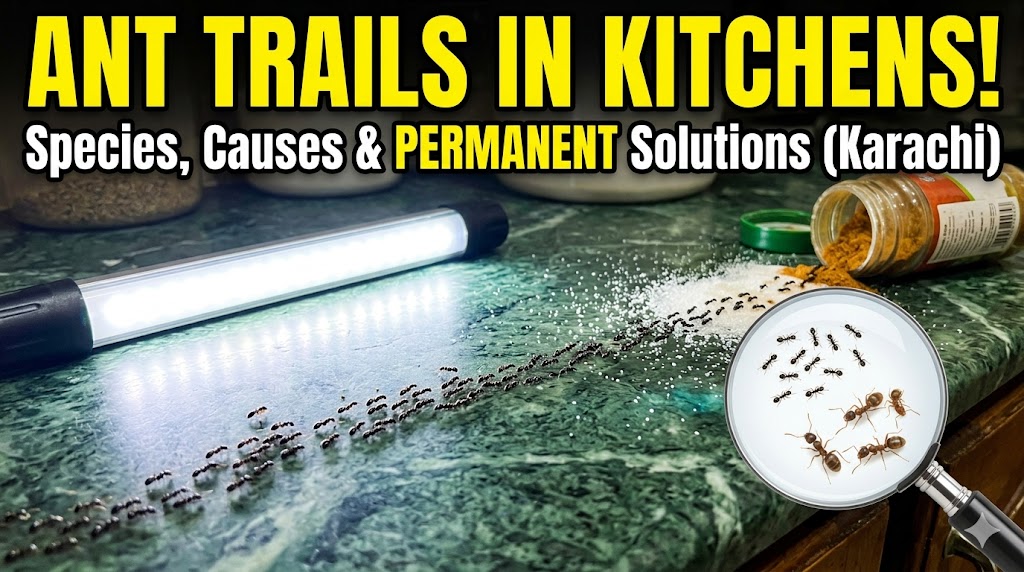
    Ant Trails in Karachi Kitchens: Species, Causes, and Permanent Solutions

    A line of ants crossing your kitchen counter toward the sugar container is one of the most common pest complaints in Karachi. It seems minor — even ignorable — until you open your atta container and find it swarming, or discover trails running through cracks in the wall into your pantry shelf. Ants are persistent, organized, and in Karachi’s climate, active for most of the year.

    Unlike roaches or rats, people tend to underestimate ant infestations because the insects are small and non-threatening in isolation. But ant colonies in Karachi can number in the thousands to hundreds of thousands, and a few visible workers on your counter represent only a tiny scouting fraction of a much larger, hidden colony. Killing the workers you see does nothing to address the colony — which is why ants come back every time, no matter how often you spray or wipe down surfaces.

    This guide covers the ant species most commonly found in Karachi kitchens, why they keep coming back, and what permanent control actually requires.

    Common Ant Species in Karachi Homes

    Not all ants behave the same, and correctly identifying the species helps determine the right control approach.

    Pharaoh Ants (Monomorium pharaonis)

    Small (1.5–2mm), yellowish-brown ants that form large colonies with multiple queens. Pharaoh ants are the species most commonly found inside Karachi apartments and kitchens. They nest inside wall voids, behind tiles, under appliances, and in any warm, humid cavity near a food source. They are attracted to sweet foods, fats, and proteins.

    Pharaoh ants are notoriously difficult to eliminate because of a behaviour called ‘budding’ — when the colony is threatened (for example, by an insecticide spray), it splits into multiple sub-colonies that relocate deeper into the structure. This means spraying a Pharaoh ant trail can actually make the infestation worse, spreading it to new areas.

    Black Garden Ants (Lasius niger)

    Larger, black ants that typically nest outdoors in garden soil, under paving stones, or along compound walls. They enter kitchens in search of sweet foods, particularly sugary liquids and fruit. Black garden ants are easier to control because they maintain a single, locatable outdoor nest.

    Carpenter Ants (Camponotus species)

    Large (6–12mm), black or dark-brown ants that excavate galleries inside damp wood — not to eat it, but to nest. In Karachi homes with damp wooden structures (window frames, door frames, roof beams), carpenter ants signal the presence of moisture damage. Their activity leaves behind coarse sawdust-like material (frass) near entry points.

    Fire Ants (Solenopsis invicta)

    Reddish-brown and aggressive when disturbed, fire ants are increasingly common in Karachi’s outdoor areas and can enter ground-floor homes. Their sting causes a sharp burning sensation followed by a raised, itchy welt. Fire ant mounds are typically found in compound areas, gardens, and along boundary walls.

    Why Ants Keep Coming Into Your Karachi Kitchen

    Understanding ant behaviour explains why standard household sprays fail. Worker ants follow pheromone trails left by scouts who have located food or water. These trails are invisible to humans but very precise — other workers follow them reliably. Killing the visible workers or disrupting the trail temporarily with spray or detergent only forces scouts to establish a new route. The colony itself is unaffected.

    In Karachi, several conditions consistently attract ants to kitchens:

    • Open or loosely covered food storage — uncovered sugar, atta, biscuits, dates, and rice are the most commonly targeted items.
    • Moisture — a dripping tap, condensation under the sink, or water pooled under the fridge creates a reliable water source that ants will return to regardless of food availability.
    • Cooking residues on counters, behind the stove, and under appliances — even tiny amounts of oil, sugar, or food particle residue maintain pheromone trails.
    • Gaps and cracks in kitchen tiles, skirting boards, and the spaces behind fitted cabinets — these become nest sites and trail routes.
    • The hot, humid conditions of Karachi summer — particularly from April through September — accelerate ant colony growth and foraging activity.

    Signs of a Serious Ant Infestation (Beyond the Visible Trail)

    • Ants appearing in multiple separate locations simultaneously, not just one trail.
    • Ants inside sealed containers that were not tightly closed — indicating they have nested very close to the food source.
    • Small piles of sandy or granular material near wall junctions or under appliances (excavated soil from a nest inside the wall).
    • Winged ants (alates) appearing indoors during the pre-monsoon period — this indicates a mature colony about to swarm and establish new nests.
    • Persistent ant activity despite repeated surface spraying — suggesting a large colony with a well-established nest site inside the structure.

    DIY Prevention Steps That Actually Help

    These measures address the conditions that attract ants. They will reduce ant activity significantly but will not eliminate an established colony inside your walls:

    • Store all sugar, atta, grains, lentils, biscuits, and dried fruits in airtight containers — glass jars with rubber-sealed lids or hard plastic containers. Never leave them in open bags or loosely folded packaging.
    • Fix all dripping taps and pipes under the sink immediately. Wipe down the area under the sink regularly and ensure it stays dry.
    • Clean behind and under kitchen appliances (fridge, microwave, toaster, mixer) weekly — grease and food particles accumulate there and are invisible from above.
    • Wipe kitchen counters with a mild detergent solution after cooking — this breaks down the pheromone trails scouts have laid.
    • Seal gaps in kitchen tiles, the junction between the counter and the wall, and any visible cracks in the kitchen wall using waterproof tile sealant or silicone.
    • Do not leave dirty dishes or wet dishcloths overnight — both attract ants.
    • Keep outdoor garbage bins away from the kitchen wall and ensure they have tight-fitting lids.

    For Pharaoh ants specifically: do not spray a visible trail with a surface insecticide. This causes budding and worsens the infestation. Use bait products instead — but given the risk of spreading the colony incorrectly, professional bait application is strongly recommended.

    Why Over-the-Counter Sprays Do Not Solve the Problem

    The ant products available in most Karachi hardware and general stores — chalk lines, surface sprays, and aerosol cans — are contact insecticides. They kill ants they touch. They do nothing to reach or affect the colony, and for Pharaoh ants, they actively make things worse.

    Permanent ant control requires getting toxicant to the colony — specifically to the queen or queens, who are the reproductive source of all workers. The only reliable way to do this at a colony level is through ant bait: a slow-acting toxicant mixed into a food substance that worker ants carry back to the nest and share with the queen and other colony members.

    But baiting Pharaoh ants incorrectly — using the wrong bait formulation or placing it in the wrong locations — produces poor results. Different ant species respond to different bait food matrices. A protein-based bait attracts some species and is ignored by others. Getting this right is a matter of species identification and professional experience.

    Our ants control service in Karachi identifies the species involved, targets the colony with appropriate bait or treatment, and seals the access points workers are using to enter. For kitchens where ant activity coincides with cockroach presence — a very common combination in Karachi — combining treatments is more effective and cost-efficient.

    If you are dealing with both ants and cockroaches, our cockroach control service can be scheduled alongside ant treatment for comprehensive kitchen pest management.

    Carpenter Ants: A Special Case

    If you are seeing large, dark ants — particularly near wooden door or window frames, wooden kitchen cabinets, or structural beams — do not treat this as a standard kitchen ant problem. Carpenter ants signal moisture damage in the wood they are nesting in. Eliminating the ants without addressing the underlying damp or decayed wood means the colony will re-establish or another pest will take advantage of the same weakness.

    A professional inspection can confirm carpenter ant presence and identify the moisture source feeding the problem. Address the moisture first, then treat the nest.

    Seasonal Patterns: When Karachi Ant Problems Peak

    Ant activity in Karachi is largely driven by temperature and moisture. The main surge begins in April as temperatures rise, and peaks between May and August. During this period, colony growth is rapid and foraging range expands — meaning ants that were never seen in your kitchen during winter suddenly appear in large numbers.

    A second, smaller surge can occur immediately after monsoon — the combination of moisture in walls and the lingering food odors from Eid-ul-Adha preparations (large quantities of meat, sweets, and cooking residues) creates an extended peak of activity through September and October in many Karachi homes.

    We provide ant control services across Karachi, including Gulistan-e-Jauhar, Scheme 33, and Shahra-e-Faisal. Whether you are in a high-rise apartment or an older bungalow, we tailor treatment to your building type and ant species.

    Get Permanent Ant Control

    If you have tried spraying, chalk lines, and home remedies and the ants keep coming back, the colony is established inside your structure and surface-level products will not reach it. Permanent resolution requires targeting the colony. Contact Accurate Fumigation to book a professional assessment. You can also review our service charges for straightforward, transparent pricing. Do not let a problem that looks small today turn into an infestation that has colonized your entire kitchen wall cavity.