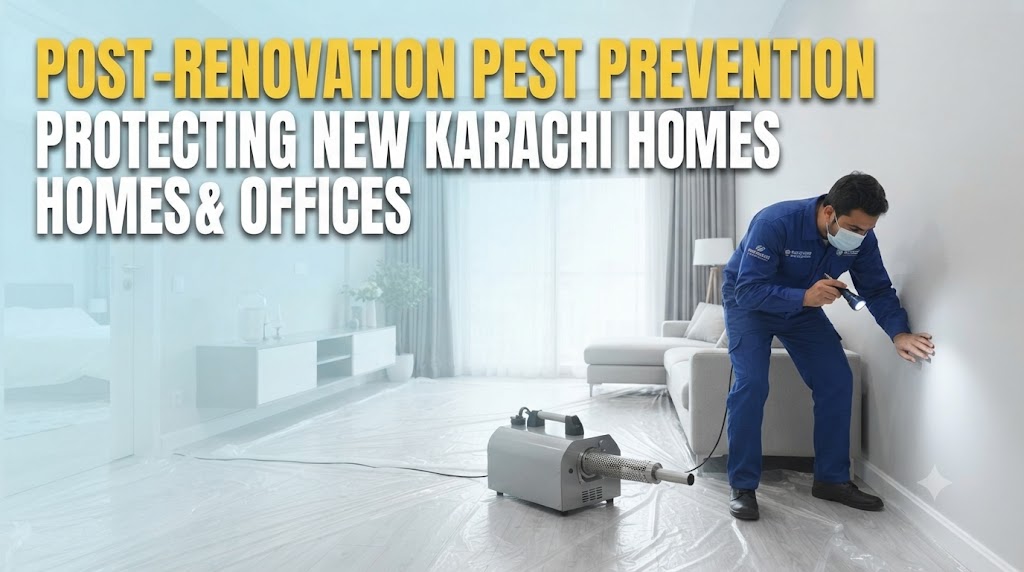
No, a new build or freshly renovated space is not automatically pest-free, and the first year after handover is often when problems start. To protect it, confirm the termite soil treatment records, inspect new furniture on delivery, seal every new pipe and cable gap, clear all construction debris, and have kitchens treated before a commercial space opens. All of this is easiest before you move in.
Renovation and new-build sites can add pest risk rather than remove it. Fresh timber, disturbed soil around the foundation, and gaps left by contractors who’ve moved on to the next job all invite pests in. This matters to two groups: homeowners taking handover of a newly built house, and businesses (restaurants, offices, retail units) moving into a renovated commercial space. Both are vulnerable right after handover, and both are better off treating pest prevention as part of the project close-out than as something to think about once there’s already a problem.
Why Isn’t New Construction Automatically Pest-Free?
Construction disturbs the soil around a building’s foundation. If pre-construction soil treatment wasn’t done properly, or at all, subterranean termites can reach untreated wood more easily. Fresh timber in doors, frames, and fitted furniture is also more attractive to termites than older, treated wood, because it has no barrier treatment yet.
Beyond termites, renovation sites create exactly the conditions pests look for: leftover debris, gaps around new plumbing and electrical work that haven’t been finished off, and, in commercial fit-outs especially, food waste from workers on site that draws cockroaches and rodents before the business has opened. The same applies to new developments such as Scheme 33, where bare plots and ongoing building nearby push pests toward newly finished homes; see our guide to pest control in Bahria Town and Scheme 33 new construction.
Is Termite Risk the Biggest Concern After Renovation?
For most properties, yes. If pre-construction soil treatment wasn’t carried out before the foundation was laid, post-construction treatment becomes the priority, since it is the only way to establish a chemical barrier afterwards. It involves drilling and injecting termiticide around the foundation and at any point where wood meets soil or masonry. It is far easier to do properly before floors are covered, cabinetry is fitted, and finishes go in.
If you’re unsure whether soil treatment was done during construction, ask the contractor for documentation. A reputable builder should have a record of it, because pre-construction anti-termite treatment is widely recommended in a city where termite damage is so common. Where there’s no record, book a termite control inspection before you move in. It costs far less than replacing damaged door frames or flooring a year or two later, and our guide to how much termite treatment costs in Karachi explains what affects the price.
Can New Furniture and Fixtures Bring Pests In?
Yes. Wooden furniture stored in a warehouse before delivery can pick up termites or wood-boring insects. Upholstered pieces such as sofas, mattresses, and office chairs are a known route for bed bugs to enter a property that never had them, particularly if they came through secondhand channels or sat in shared storage. On delivery day, check for small holes, frass (a fine, sawdust-like residue), and seams that look disturbed. If you’re unsure what bed bugs look like, our guide to bed bug identification and behavior shows the signs.
When Should a Restaurant or Commercial Kitchen Handle Pest Control?
Before opening, in the gap between the end of construction and the first customer. Check grease traps, new plumbing runs, and storage areas for sealed entry points before shelving and equipment make them hard to reach. Food businesses in Karachi are also subject to hygiene inspections by the Sindh Food Authority (SFA), so a documented pre-opening treatment is worth having ready if you’re asked. Our guide to fumigation certificate requirements for Karachi restaurants covers what to keep on file, and our kitchen pest prevention guide covers day-to-day habits once you’re open.
Post-Renovation Pest Prevention Checklist: What to Do and When
| Check | When | DIY or professional |
|---|---|---|
| Confirm termite soil treatment records, or arrange an inspection if none exist | Before move-in | Ask the contractor; inspection by a professional |
| Inspect new wooden furniture and fixtures for holes, frass, or damaged seams | On delivery | DIY |
| Seal plumbing and electrical penetrations through walls, not just make them functional | Before finishes and shelving go in | DIY; see our guide to pest-proofing doors and windows |
| Clear all debris, including offcuts and packaging left in storage areas | Before move-in | DIY |
| Inspect and treat kitchens and food storage areas | Before a commercial space opens | Professional |
| Clean water tanks that are new or were exposed to construction dust | Before the property is occupied | Professional |
Tanks are the item most often forgotten. Cement dust, offcuts, and debris can end up in a tank during construction, so a water tank cleaning service is a sensible final step before anyone moves in. For a fuller handover routine, our pre-handover pest inspection guide explains what an inspection covers, and moving into a new Karachi home or office covers the first week after you’re in.
How Do Commercial Fit-Outs Differ From Homes?
Offices, restaurants, and retail spaces carry the same structural risks as homes, plus a few of their own. Foot traffic brings in pests from surrounding units, shared walls may border a business that already has an issue, and food businesses have almost no tolerance for visible pest activity once open. In plazas and mixed-use buildings, you can’t control what happens next door, so having a pest control plan before opening day is the difference between a minor prevention step and an emergency closure risk.
Frequently Asked Questions: Pest Prevention After Renovation or New Construction
Do I really need a termite inspection if the house is brand new?
Yes, particularly if you can’t confirm that pre-construction soil treatment was carried out. New construction disturbs soil and introduces fresh, untreated timber, both of which can increase termite risk rather than reduce it.
Can new furniture bring pests into a home that never had any?
It can, especially wooden furniture stored in shared warehouses or upholstered pieces that passed through secondhand channels. A quick visual check on delivery for holes, frass, or disturbed seams is a reasonable precaution.
How soon after renovation should I get a pest inspection?
Ideally before you move furniture and belongings in, while entry points and foundation areas are still easy to reach. Waiting until the space is fully set up makes both inspection and any treatment more disruptive.
Is post-construction termite treatment as effective as pre-construction treatment?
It can be effective, but it is more limited. It involves drilling and injecting termiticide around an already-built structure, rather than laying a continuous barrier underneath it from the start. That’s why the pre-construction record matters.
What should a restaurant or commercial kitchen prioritize before opening?
Grease trap and drain sealing, storage area entry points, and a documented pre-opening pest control treatment. These are the areas inspections typically focus on, and the ones most likely to develop problems once the kitchen is in daily use.
How much does a pre-move-in inspection and treatment cost?
It depends on the size of the property, the pests involved, and whether treatment is needed or only inspection. See our charges page for details, or contact us with your property type and area for a quote.
Build Pest Prevention Into Your Move-In Plan
New construction and fresh renovations create their own pest risks, from disturbed soil and untreated timber to furniture that has passed through shared storage before reaching you. Treating prevention as part of handover is far less disruptive than dealing with an established problem in a space you’ve only just finished building. If you’re planning a move-in or opening date, get in touch and we’ll help you schedule inspection and treatment around your timeline.

Rehan Khan is the founder of Accurate Fumigation and an entomologist. He holds an M.Sc. in Entomology and a B.Sc. in Environmental Science, and has worked in pest control in Karachi for three decades. He founded the company in 2005 and writes about the pest and water problems the city deals with each season. Accurate Fumigation is ISO 9001:2015 certified and a member of the National Pest Management Association.
Questions about a service, or need a certificate for an inspection? Call the office on 0330-2533480. Read Rehan’s full profile.